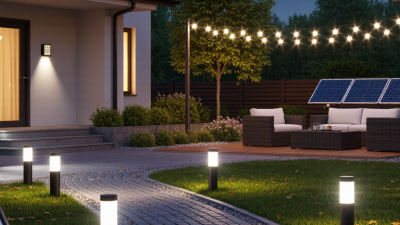
How to Choose Solar Powered LED Lights in 2026?

Choosing solar powered led lights in 2026 requires more than comparing brightness and price. Real performance depends on sunlight, battery capacity, weather resistance, and installation quality. A lamp that shines brightly in a showroom may produce weak light after two cloudy days.

This guide focuses on practical selection methods. It explains how to read lumen ratings, battery specifications, solar panel efficiency, and protection ratings such as IP65. It also considers color temperature, motion sensors, operating hours, and replacement costs. For example, a pathway light near a shaded fence needs different features from a security floodlight on an open roof. Small details matter.

Look beyond attractive packaging. Check manufacturer testing information, warranty terms, and user feedback from similar climates. Established safety certifications can provide useful reassurance, but they do not guarantee perfect performance. No product fits every property. That is worth remembering.

Field experience also reveals weaknesses that product descriptions often hide. Batteries can lose capacity in freezing weather. Dust may reduce panel charging. Motion sensors may trigger too often near busy roads. Careful buyers should measure the available sunlight and define the lighting goal before purchasing. A reliable choice balances illumination, durability, maintenance, and long-term value. This article offers a practical framework for making that decision with greater confidence, while recognizing that even well-researched products can perform differently in real homes.
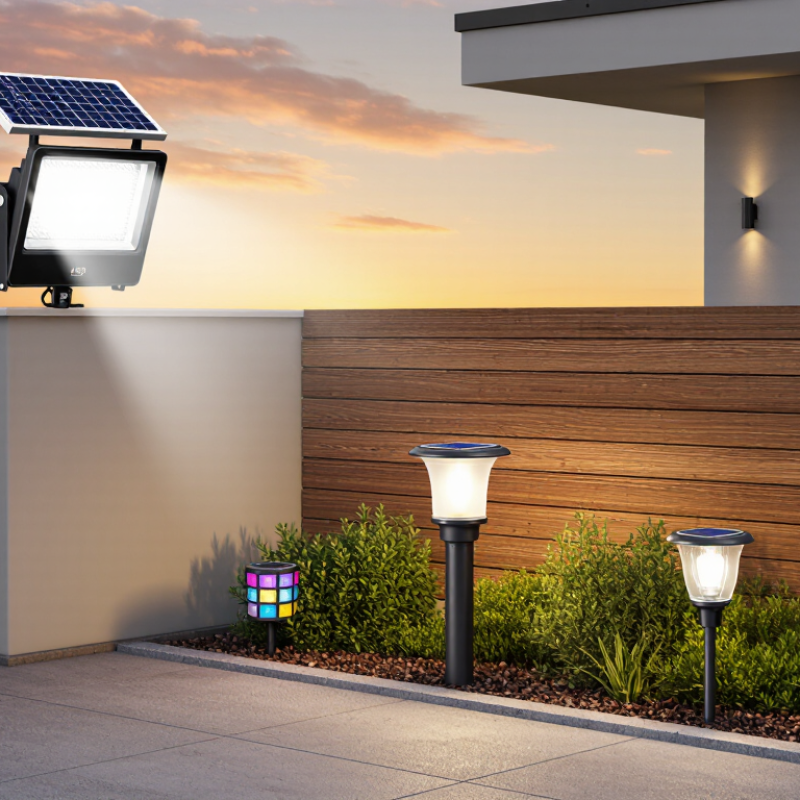
How to Choose Solar Powered LED Lights in 2026?

Define Brightness Needs: Compare 100–150 lm/W LED Efficacy and Lux Targets

How to Choose Solar Powered LED Lights in 2026?

Brightness should begin with lux, not lumens. Lumens describe total light output, while lux shows light received on a surface. A pathway may need about 10–20 lux, while an entrance often benefits from 50–100 lux. Work areas can require 300 lux or more, depending on the task and local guidance.

Check LED efficacy carefully. Quality solar fixtures commonly deliver around 100–150 lumens per watt under controlled conditions. However, the advertised figure may describe the LED chip, not the complete fixture. Lens losses, heat, battery voltage, and optical design reduce actual output. Ask for measured fixture lumens and a photometric report. That detail matters.

Measure the target area at night. Place a lux meter at walking height, then check the darkest point beneath nearby trees or roof edges. I would also inspect glare from eye level. Excessive brightness can feel harsh and waste stored energy. A small garden path rarely needs stadium lighting.

There is a catch.

Cloudy weather changes everything. Higher output may drain the battery faster, especially during short winter days. My first estimate would usually be too optimistic without checking shadows and seasonal sunlight. Choose a practical lux target, then compare runtime, panel size, battery capacity, and lighting distribution together. A bright first hour is not enough if the light fades before dawn.

Size the Solar Panel: Account for 20–23% PV Efficiency and Sun Hours

How to Choose Solar Powered LED Lights in 2026?

Solar lighting begins with an honest energy estimate, not panel size alone. Calculate the lamp’s daily watt-hours, including operating time and controller losses. Then divide that figure by peak sun hours and realistic PV efficiency. In 2026, use 20–23% as a practical efficiency range for quality photovoltaic modules. For example, a 30 Wh daily load needs about 30 watts with 4.5 peak sun hours and 22% efficiency. That is only the baseline. Cloudy weeks, dust, heat, and imperfect panel angles can reduce production.

Peak sun hours are not the same as daylight hours. A winter site may receive six daylight hours but only three effective sun hours. Measure the location carefully, or consult reliable local solar data.

I usually add 25–40% panel capacity for seasonal losses and battery charging limits. A 40-watt panel may therefore be safer than a tightly calculated 30-watt model. Over-sizing is not always perfect, though. Small charge controllers and weak batteries can waste the extra energy.

Tips: Check the panel’s clear-sky output at midday. Keep it away from shade, even partial shade. Clean dusty surfaces every few months. Record battery voltage for one week after installation. If the light fades before dawn, the original assumption was probably too optimistic. Recalculate using winter sun hours, not the best summer day.

Select Battery Storage: Require 2–3 Nights’ Autonomy and 2,000+ Cycles

How to Choose Solar Powered LED Lights in 2026?

Battery storage decides whether a solar light survives cloudy nights. Specify two to three nights of autonomy, not merely a large battery label. If one light uses 40 watt-hours nightly, three nights require 120 usable watt-hours. At 80% maximum depth of discharge, the battery needs at least 150 watt-hours. Add aging capacity, and approximately 180–190 watt-hours becomes more realistic.

If one light uses 40 watt-hours nightly, three nights require 120 usable watt-hours. At 80% maximum depth of discharge, the battery needs at least 150 watt-hours. Add aging capacity, and approximately 180–190 watt-hours becomes more realistic.

A neat spreadsheet can still lie. Winter temperatures, dirty panels, and shaded installation can reduce charging sharply.

Require a rated life above 2,000 cycles, while checking the test conditions behind that figure. The U.S. Department of Energy’s Energy Storage Grand Challenge Roadmap identifies cycle life, depth of discharge, and operating temperature as essential storage metrics. IRENA’s Electricity Storage and Renewables report notes that lithium-ion systems can achieve thousands of cycles, but actual life varies with heat and discharge intensity.

NREL’s 2024 Annual Technology Baseline also treats battery replacement and calendar life as important project assumptions. Ask for test data, not marketing language. A battery cycling 2,000 times at shallow discharge may perform differently at 80% discharge.

In practice, choose thermal protection, a documented warranty, and reserve capacity for weak winter sunlight. The 2–3-night target is useful, but it is not universal. Coastal fog and mountain snow may demand more.

Check Weather Protection: Choose IP65+ Housing Under IEC 60529 Standards

How to Choose Solar Powered LED Lights in 2026?

Weather protection should be a buying priority, not a small specification. Under IEC 60529, an IP65 enclosure is dust-tight and protected against water jets from any direction. It is not designed for continuous submersion. That distinction matters after heavy rain, roof runoff, or accidental flooding.

Check the complete housing, not only the printed rating. Inspect the lens seal, cable glands, charging-port cover, and screw joints. One weak opening can reduce real protection. IP66 offers stronger water-jet resistance, while IP67 adds temporary immersion protection. However, a higher rating does not automatically guarantee long outdoor life.

Look for UV-resistant materials, sealed battery compartments, and drainage paths that prevent trapped condensation. In coastal areas, salt exposure can damage metal hardware even when the enclosure passes an IP test. Cold weather also reduces battery performance, especially during long winter nights. Place the panel where snow, leaves, and shadows will not block sunlight.

Read the manufacturer’s test documentation carefully. A laboratory rating applies to tested conditions. Installation mistakes can change the result. Avoid drilling into the housing or leaving a port partly closed. Small details matter.

I once treated IP65 as waterproof in every situation. That was too simplistic. Rain protection and immersion protection are different needs. Choose the rating for your actual site, then inspect the seals again after installation.

Evaluate Controls and Lifespan: Verify PIR Sensors and 50,000-Hour LEDs

When choosing solar-powered LED lights in 2026, inspect the control system before trusting the brightness rating. A passive infrared (PIR) sensor should detect movement across the intended path, not only directly in front of the fixture. Check its detection angle, range, trigger delay, and adjustable hold time. A narrow sensor may miss someone approaching from the side. A long delay can waste stored energy after every movement.

Field conditions matter.

The International Energy Agency reports that lighting still represents about 10% of global electricity consumption. Solar controls can reduce unnecessary operating hours, especially around driveways and storage areas. However, PIR performance can change with temperature, rain, clothing, and mounting height. Test the light at dusk with a person walking from several directions. Do not rely only on laboratory claims.

A 50,000-hour LED rating sounds impressive, but it usually describes expected lumen maintenance, not total product life. The U.S. Department of Energy’s solid-state lighting guidance emphasizes thermal management, driver quality, and measured lumen depreciation. IES LM-80 and TM-21 methods provide a more credible basis for evaluating LED aging. Ask whether the 50,000-hour figure means L70, and request the test temperature and current. Heat can shorten performance noticeably. The battery and controller may fail earlier.

This is where specifications become imperfect. A light can use a long-life LED but deliver weak illumination after cloudy days. Choose PIR sensitivity, battery capacity, and thermal design together, rather than selecting the largest hour figure.

Go to Top