
What Are the Top Types of Solar Lighting?
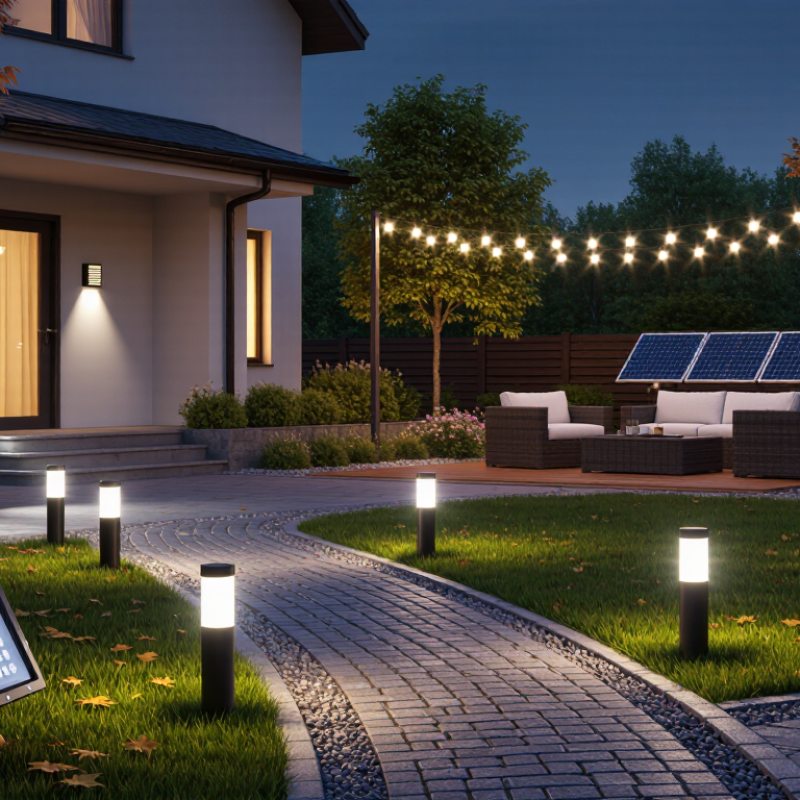
Choosing the right solar lighting begins with understanding how each type performs in real spaces. Pathway lights can mark garden edges and walkways, while floodlights cover driveways, patios, and wider outdoor areas. Wall-mounted fixtures improve visibility near doors. Post lights add height and a more traditional appearance. String lights create atmosphere, but they usually provide less practical illumination.
In this guide, we compare the top types of solar lighting by purpose, brightness, installation, and daily reliability. A product’s lumen rating matters, but it does not tell the whole story. Battery capacity, panel placement, motion sensors, and weather resistance also affect performance. For example, a shaded pathway may receive weak charging during winter afternoons. That difference becomes obvious after several cloudy nights.
Practical testing often reveals details that product descriptions overlook. Some lights switch on quickly, yet fade before dawn. Others offer strong brightness but need careful positioning for direct sunlight. Look for durable housings, replaceable components where available, and clear operating information. User reviews can help, although they may reflect very different climates and expectations. No single fixture suits every property. The best choice balances safety, appearance, maintenance, and available sunlight. Even experienced buyers can misjudge brightness. That is worth remembering.
What Is Solar Lighting and How Does It Work?
Solar lighting converts sunlight into usable light after dark. A photovoltaic panel captures solar energy during the day and produces electricity. That electricity charges a rechargeable battery inside the fixture. At night, a light sensor activates the lamp automatically.
The system is simple, but its performance depends on several parts. The panel needs a clear view of the sky. A shaded location may produce weak charging, even in summer. A controller manages charging and prevents excessive battery discharge. Some models also include motion sensors, which increase brightness when someone approaches.
Common types include pathway lights, wall lights, floodlights, string lights, and solar street lamps. Pathway lights create small pools of light along walkways. Wall lights can illuminate doors, steps, or outdoor seating areas. Floodlights cover wider spaces, although their brightness may fall after several cloudy days. String lights suit patios and gardens, but they usually provide atmosphere rather than strong visibility.
Placement matters more than many buyers expect. I have seen lights installed beneath trees that looked attractive but barely worked at night. Battery capacity also changes with temperature and age. Cold weather can shorten operating time. Dust on the panel reduces charging efficiency. Solar lighting is practical, but it is not completely maintenance-free.
What Are the Top Types of Solar Lighting? - What Is Solar Lighting and How Does It Work?
| Solar Lighting Type | How It Works | Typical Applications | Key Advantages | Important Considerations |
|---|---|---|---|---|
| Solar Pathway and Garden Lights | A photovoltaic panel converts sunlight into electricity during the day. A rechargeable battery stores the energy, and a light sensor switches the LED on after dark. | Walkways, flower beds, driveways, patios, and decorative landscaping. | Easy to install, usually wireless, and suitable for low-level accent or guidance lighting. | Light output and operating time depend on sunlight exposure, battery capacity, panel cleanliness, and seasonal weather. |
| Solar Street and Roadway Lights | A standalone solar module charges a battery during daylight. A controller manages charging and powers a high-efficiency LED fixture at night, often according to a preset schedule. | Public roads, residential streets, parking areas, pathways, and remote locations. | Can operate independently of the electrical grid and reduce trenching and cable-installation requirements. | System sizing must account for local solar radiation, required illumination, winter conditions, battery autonomy, and pole spacing. |
| Solar Floodlights | A larger solar panel charges a battery that powers a broad-beam LED fixture. Many models use motion detection or dusk-to-dawn controls. | Building exteriors, yards, entrances, storage areas, and security zones. | Provides wide-area illumination without requiring a conventional power connection. | Motion-activated operation can conserve stored energy, while continuous high-output operation requires a larger panel and battery. |
| Solar Security Lights | A photovoltaic panel charges a battery, and a passive infrared sensor detects changes in infrared radiation from moving people or animals to trigger the LED. | Doorways, garages, side passages, fences, and perimeter areas. | Uses energy only when movement is detected and can improve visibility around vulnerable areas. | Sensor range and detection reliability can be affected by mounting height, obstructions, temperature, and nearby movement. |
| Solar Wall and Porch Lights | An integrated or remotely mounted solar panel supplies stored energy to an LED fixture controlled by a light sensor, timer, or motion sensor. | Porches, balconies, exterior walls, entrances, and outdoor living spaces. | Useful for exterior lighting where installing electrical wiring would be inconvenient or costly. | A shaded wall may limit charging; a separate-panel design can provide more flexibility when the fixture does not receive direct sunlight. |
| Solar Lanterns | A compact solar panel charges an internal rechargeable battery, which powers one or more LEDs. Some designs also support charging through another power source. | Emergency lighting, camping, travel, outdoor dining, and areas with unreliable electricity. | Portable, relatively simple to use, and practical for temporary or backup illumination. | Brightness and runtime are generally more limited than those of larger fixed solar systems. |
| Solar Sign and Billboard Lights | A dedicated solar panel and battery supply adjustable LED fixtures that illuminate a sign during selected nighttime hours. | Directional signs, information boards, advertising signs, and entrance markers. | Enables sign illumination in locations without nearby grid power and can use timers to reduce energy consumption. | Panel placement should avoid shade from the sign structure, trees, and nearby buildings. |
| Solar Traffic and Hazard Lights | A solar panel charges a battery that powers flashing or steady LEDs. A controller regulates the light pattern and battery charging. | Roadwork zones, warning markers, traffic islands, gates, and remote hazards. | Highly visible and suitable for temporary or remote locations where mains power may not be available. | Products used on public roads should meet applicable safety, visibility, and installation requirements. |
| Solar Indoor Lighting Systems | An outdoor solar panel sends electricity to a charge controller and battery. The stored energy powers indoor LED lamps through low-voltage wiring or an appropriate power converter. | Sheds, cabins, remote offices, emergency shelters, and buildings without dependable grid access. | Provides basic indoor illumination without requiring a full utility connection. | The battery and wiring system must be correctly sized for the required number of lamps, daily usage, and expected days of limited sunlight. |
How Solar Lighting Works
| Component | Primary Function | Factors Affecting Performance |
|---|---|---|
| Photovoltaic Panel | Converts sunlight into direct-current electricity for charging the battery. | Sun exposure, panel orientation, shading, dirt, temperature, and panel condition. |
| Charge Controller | Regulates energy flowing from the panel to the battery and helps prevent overcharging or excessive discharge. | Controller quality, system compatibility, battery chemistry, and operating temperature. |
| Rechargeable Battery | Stores solar energy for use when sunlight is unavailable. | Capacity, age, temperature, charging pattern, depth of discharge, and the number of cloudy days. |
| LED Light Source | Converts stored electrical energy into visible light with relatively high efficiency and low heat output. | LED efficiency, optical design, brightness setting, operating temperature, and fixture maintenance. |
| Control System | Uses a light sensor, timer, motion sensor, or combination of controls to determine when and how the light operates. | Sensor placement, programmed schedule, motion activity, ambient light, and user-selected brightness modes. |
Related Posts
-
10 Solar Lighting Buying Tips for Global Buyers
-
10 Best Solar Lighting Systems for Global Buyers
-

Unleashing the Power of the Sun: How Solar Powered Lights Transform Outdoor Spaces
-

The Future of Sustainable Spaces How Solar Lighting Transforms Outdoor Environments
-
Top 10 Benefits of Solar Lighting Systems for Your Home and Garden
-
What is a Solar Street Light and How Does It Work for Energy Efficiency?