China Top 10 Solar Lighting Manufacturers for Global Buyers

Choosing reliable solar lighting suppliers in China requires more than comparing product photos and quoted prices. Global buyers must examine manufacturing depth, export experience, product consistency, and long-term service. A bright lamp means little if its battery fades after one rainy season.

This guide introduces ten leading Chinese solar lighting manufacturers for international buyers. The selection considers factory capabilities, engineering expertise, product range, and evidence of overseas supply experience. It also reviews practical details, including LED output, panel efficiency, battery chemistry, IP ratings, working temperatures, warranty terms, and replacement support. These factors matter on a warehouse road, a rural pathway, or a remote construction site.

Real purchasing decisions happen beyond the catalog.

A dependable supplier should explain how its products perform under cloudy weather, high humidity, dust, and repeated charging cycles. Buyers should request test reports, sample units, installation instructions, and clear production timelines before placing large orders. Certifications and compliance documents also deserve careful verification for the destination market. They should never be treated as decorative paperwork.

The companies discussed here may differ in scale, specialization, and communication quality. Some excel at customized streetlights, while others focus on compact garden systems or commercial projects. Not every manufacturer will suit every buyer. That is an important limitation. Supplier rankings can also change as technology, pricing, and service capacity develop. This overview therefore works best as a practical starting point, not a final purchasing decision. With careful comparison and direct factory communication, buyers can identify solar lighting partners that match their site conditions, budget, and performance expectations.
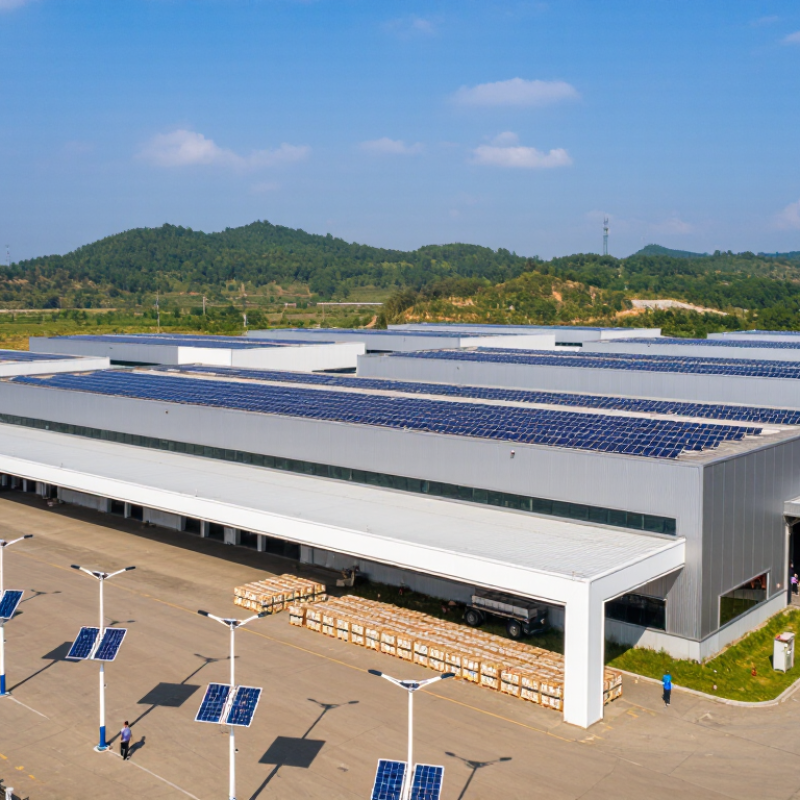
China Top 10 Solar Lighting Manufacturers for Global Buyers

China’s Solar Lighting Industry and Its Role in Global Markets

China’s solar lighting industry has become a major production base for global buyers. Its strength comes from dense supply chains, skilled assembly teams, and competitive component sourcing. Manufacturers can develop streetlights, garden lamps, floodlights, and off-grid systems at different price levels. Many factories now combine photovoltaic panels, lithium batteries, LED modules, controllers, and remote monitoring in one product line.

The companies commonly placed among China’s top solar lighting manufacturers serve Africa, Southeast Asia, the Middle East, Europe, and Latin America. Export experience has improved their understanding of heat, dust, humidity, and seasonal sunlight. In factory audits, buyers should inspect battery testing, waterproofing procedures, aging tests, and spare-part records. Certifications also require careful checking because market rules differ by destination. A laboratory report alone may not prove reliable field performance.

Quality varies. Cheaper products may use smaller batteries or optimistic lighting claims. Those choices can reduce operating hours during cloudy weeks. Real projects need practical calculations based on local sunlight, pole spacing, traffic needs, and maintenance access. Weather matters. Some suppliers provide excellent engineering support, while others mainly compete through low prices. This unevenness deserves honest attention. Global buyers should request sample testing, clear warranty terms, installation guidance, and measurable performance data before placing large orders. Even experienced purchasers can underestimate shipping damage, replacement costs, or battery aging.

How the Top 10 Solar Lighting Manufacturers Were Selected

How the Top 10 Solar Lighting Manufacturers Were Selected

Selecting the top ten manufacturers required more than checking online visibility. The review focused on production experience, engineering capability, and export reliability. Each candidate was examined through factory information, product catalogs, technical documents, and customer feedback. Evidence mattered more than attractive claims. We checked whether companies could provide clear specifications for battery capacity, LED output, charging time, and operating hours. Sample details were also considered. A reliable supplier should explain how products perform during cloudy weeks, heavy rain, and high temperatures.

Tips: Ask for test reports, warranty terms, installation guides, and recent project references. Request a sample before placing a large order. Inspect the housing, cable seals, controller, and mounting hardware. Small parts often reveal production quality.

The selection also considered quality control and after-sales support. Manufacturers with traceable inspections, stable component sourcing, and responsive technical teams received stronger consideration. Compliance documents were reviewed carefully, but documents alone were not treated as final proof. Actual testing can reveal weaker battery performance or inaccurate lighting claims. Public information is sometimes incomplete, and this creates uncertainty. A ranking may need revision when new evidence appears. We also considered customization, minimum order flexibility, packaging protection, and shipping experience. The strongest candidates showed practical understanding, not just polished marketing language. Reliability is built through repeated delivery, honest specifications, and support after installation.

China Top 10 Solar Lighting Manufacturers for Global Buyers

How the Top 10 Solar Lighting Manufacturers Were Selected

The ranking framework evaluates manufacturers using seven practical criteria commonly considered by international buyers. Manufacturing capability and product quality receive the highest weights, followed by export experience, solar system performance, customization, after-sales support, and sustainability. The percentages represent the editorial evaluation model used to compare shortlisted suppliers, not individual company results.

Profiles of China’s Top 10 Solar Lighting Manufacturers

China Top 10 Solar Lighting Manufacturers for Global Buyers

Profiles of China’s Top 10 Solar Lighting Manufacturers

China’s solar lighting sector benefits from strong photovoltaic manufacturing capacity. The International Energy Agency reported that China installed about 60% of global solar PV capacity additions in 2023. This advantage supports competitive pricing, faster component sourcing, and flexible production.

The ten manufacturers profiled here represent different capabilities. One focuses on integrated solar street lights with lithium batteries. Another specializes in high-efficiency LED optics for roads and industrial yards. A third produces compact garden lamps for hospitality projects. Other factories concentrate on rural lighting kits, smart controllers, floodlights, portable lanterns, marine-grade housings, and custom engineering. The remaining producers serve wholesalers with private-label assembly and rapid sample development.

Details matter.

Experienced buyers should inspect battery cycle data, LED lumen maintenance, ingress protection, and controller behavior during cloudy periods. IEC testing can support reliability claims, while ISO 9001 certification indicates process control, not product perfection.

The World Bank’s Lighting Global quality framework emphasizes verified performance, durability, warranty support, and consumer safety in off-grid products. These criteria remain useful for comparing Chinese suppliers.

Some factories publish impressive autonomy figures. Real installations may perform differently in dusty regions or during extended winter rain. That gap deserves attention.

Requesting independent test reports, production samples, and field references can reveal weaknesses before bulk purchasing. Supplier communication also matters, especially when replacement batteries or spare controllers are needed years later.

Product Capabilities, Certifications, and Export Strengths Compared

China’s leading solar lighting manufacturers differ sharply in product depth, certification control, and export readiness. Strong suppliers usually offer integrated solar street lights, garden lamps, floodlights, and customized roadway systems. Their engineering teams should explain panel efficiency, battery chemistry, controller settings, and lighting distribution without relying on vague claims.

Certification evidence matters. Buyers should request current CE, RoHS, EMC, and IEC-related test reports where applicable. ISO 9001 can indicate structured quality management, but it does not guarantee every product performs well. Check the actual model number. Also review IP65 or higher protection, thermal testing, battery cycle data, and impact ratings for outdoor installations. Factory audits and sample testing remain valuable. Paperwork is not enough.

Export strength appears in practical details. Experienced manufacturers provide clear datasheets, multilingual manuals, neutral packaging, spare parts, and stable container loading plans. They may support OEM designs, remote monitoring, and project-based lighting calculations. Reliable suppliers also understand regional grid conditions, import documents, warranty handling, and after-sales communication. Ask for installation photos from similar climates. Small details reveal experience.

No supplier is perfect. Some catalogs look impressive but hide inconsistent battery capacity or unclear warranty limits. Delivery promises can also change during peak seasons. A careful buyer should compare samples, inspection records, certification validity, and response speed before placing a large order. That process takes time. It often prevents expensive field repairs.

Key Factors for Global Buyers Choosing a Chinese Solar Lighting Supplier

Choosing a Chinese solar lighting supplier requires more than comparing catalog prices. A reliable manufacturer should explain its battery chemistry, LED efficiency, charging time, and expected nighttime runtime. Ask for test reports, not only attractive product photographs. IP ratings, corrosion resistance, and temperature performance matter in coastal, tropical, or cold regions.

Factory verification can reveal important details. Review production equipment, quality-control records, and sample consistency. Request a sample with the same housing, battery, controller, and solar panel used in mass production. Check illumination after several cloudy days. Small differences matter. A supplier should provide clear documentation for relevant safety and environmental requirements in your target market. Export experience also helps with packaging, labeling, customs documents, and replacement parts.

Communication is another practical test. Technical answers should include measurements, tolerances, and realistic delivery dates. Be careful with unusually low quotations. They may reflect weaker batteries, thinner aluminum, or limited testing. Warranty terms should identify coverage, response time, and the process for defective units. Custom logos and colors are useful, but stable quality is more important. Some suppliers promise too much during early discussions. Put every critical specification into the contract and review it again before production. This extra step feels slow, yet it can prevent expensive failures in remote installations.

China Top 10 Solar Lighting Manufacturers for Global Buyers - Key Factors for Global Buyers Choosing a Chinese Solar Lighting Supplier
An anonymized supplier-screening comparison based on commercially common Chinese solar-lighting product specifications, international compliance requirements, purchasing terms, and project-delivery factors. All technical, warranty, MOQ, and lead-time details should be confirmed with the supplier before contracting.
Rank Anonymous Supplier Profile Primary Product Focus Typical Solar System Configuration Outdoor Protection Battery Options Common Compliance Documents Typical Warranty Range Typical MOQ Typical Production Lead Time Export Readiness Buyer Evaluation Score
1 Supplier Profile 01
Large-scale integrated solar lighting manufacturer
Solar street lights All-in-one luminaires Municipal projects Monocrystalline photovoltaic modules, lithium iron phosphate battery, programmable LED controller, optional motion sensing IP65–IP66 luminaire housing; IK08–IK10 impact protection commonly available LiFePO4; lithium-ion options available for selected models CE, RoHS, EMC, LVD, UN38.3 and MSDS documents subject to model and market 3–5 years for the complete lighting system; battery terms may differ 20–100 units for standard models; project orders negotiated separately 25–45 days after artwork, specifications, and deposit approval Experienced with container shipments, project documentation, and multilingual packaging 9.2
2 Supplier Profile 02
Commercial and residential outdoor lighting specialist
Garden lights Pathway lights Wall lights Small to medium photovoltaic panels, lithium or NiMH batteries, dusk-to-dawn control, decorative LED optics IP44–IP65 depending on product category; corrosion-resistant finishes available Li-ion, LiFePO4, and NiMH for low-power decorative products CE, RoHS, EMC; weather-resistance test reports may be available by model 1–3 years, normally dependent on product category and battery type 100–500 units for catalog items; customized designs may require higher quantities 20–35 days for standard items; 35–55 days for customized housings Suitable for distributors, retail programs, and mixed-SKU orders 8.8
3 Supplier Profile 03
High-power solar roadway lighting supplier
Split-type street lights Highway lighting Rural roads Separate photovoltaic panel, external battery cabinet, MPPT controller, high-efficiency LED module IP66 for luminaire; IP65 or higher for outdoor battery enclosure when properly installed LiFePO4 is common; lead-acid systems may be offered for price-sensitive projects CE, RoHS, EMC, LVD, UN38.3, MSDS, and transport documentation where applicable 3–5 years for LED and controller; battery warranty varies by chemistry 10–50 complete systems for engineering projects 30–60 days, including system design and load calculations Strong fit for EPC contractors requiring photometric files and technical submittals 8.9
4 Supplier Profile 04
Smart-control and connected lighting manufacturer
IoT solar lights Remote monitoring Smart controls Monocrystalline panel, LiFePO4 battery, adaptive dimming, PIR radar sensor, optional cellular or LoRa communication IP65–IP66; UV-resistant powder coating commonly specified for outdoor enclosures LiFePO4 with battery-management protection and programmable charge/discharge control CE, RoHS, EMC, RED or radio-related documentation where wireless communication is used 3–5 years; connectivity service and gateway terms require separate confirmation 20–100 units depending on controller, communication, and software configuration 30–60 days, including firmware configuration and system testing Best suited to smart-city tenders and buyers requiring dashboards or remote diagnostics 8.7
5 Supplier Profile 05
Value-focused OEM and private-label producer
OEM solar lights Bulk distribution Entry-level projects Polycrystalline or monocrystalline panels, lithium battery packs, integrated LED board, basic light sensor IP65 commonly specified; actual test results should be checked for each SKU Li-ion and LiFePO4; battery capacity should be verified using watt-hours rather than marketing labels CE and RoHS commonly available; EMC and LVD scope depends on electrical design 1–3 years, with longer terms negotiable for selected models 50–300 units for standard products; custom branding often requires higher MOQs 20–40 days after packaging and branding approval Practical for importers that prioritize unit cost, packaging customization, and flexible SKUs 8.4
6 Supplier Profile 06
Decorative and landscape lighting manufacturer
Landscape lights Bollard lights Architectural lighting Compact photovoltaic panel, replaceable or integrated battery, warm-white or RGB LED options, automatic operation IP44–IP65 depending on installation location; underground and coastal applications need additional review NiMH or Li-ion for compact products; LiFePO4 available for larger fixtures CE, RoHS, EMC; photometric reports may be supplied for professional luminaires 1–3 years for consumer and decorative products 100–1,000 units depending on finish, packaging, and customization 25–50 days, with longer schedules for tooling or special finishes Good fit for garden centers, hospitality projects, residential developers, and landscape contractors 8.2
7 Supplier Profile 07
Solar floodlight and security-lighting producer
Floodlights Security lights Motion-sensor lights High-output photovoltaic panel, lithium battery, PIR sensor, remote control, adjustable LED beam IP65–IP66; impact protection and mounting strength should be verified for exposed installations Li-ion and LiFePO4; battery replacement design varies by housing construction CE, RoHS, EMC, LVD, and battery transport documents where applicable 1–3 years for standard products; selected professional models may offer longer coverage 50–300 units for standard catalog products 20–40 days after sample approval and packaging confirmation Suitable for security distributors, agricultural sites, warehouses, and temporary installations 8.3
8 Supplier Profile 08
Custom metal-housing and project-luminaire manufacturer
Custom poles Integrated luminaires Infrastructure projects Aluminum or galvanized-steel housing, separate or integrated battery compartment, configurable LED power and optics IP65–IP66; IK08–IK10 options are common for public-area installations LiFePO4 preferred for long-cycle applications; other chemistries may be quoted by project CE, RoHS, EMC, LVD, structural drawings, photometric files, and corrosion-test information as required 3–5 years for luminaires; civil, pole, and battery coverage may be separate 10–50 systems for custom projects, subject to engineering requirements 35–70 days, including drawings, samples, and production approval Strong option for tender-based buyers needing drawings, calculations, and inspection coordination 8.6
9 Supplier Profile 09
Small-batch flexible manufacturing partner
Mixed product lines Pilot orders Design adaptation Configurable panel, battery, sensor, and LED combinations; suitable for trial programs and market testing IP54–IP65 depending on the selected enclosure and sealing process Li-ion or LiFePO4; cell origin, protection board, and rated capacity require written confirmation CE and RoHS commonly requested; additional reports depend on the destination market 1–3 years, depending on the product and negotiated contract 20–100 units for selected standard products; customization may change the MOQ 15–35 days for samples and standard products; custom tooling adds time Useful for new importers validating demand before committing to large production volumes 8.0
10 Supplier Profile 10
Energy-saving and public-facility lighting supplier
Campus lighting Park lighting Community projects High-efficiency solar module, LiFePO4 battery, intelligent dimming, optional microwave or PIR sensor IP65–IP66; IK08 or higher may be specified for public-area luminaires LiFePO4 with programmable controller and temperature protection CE, RoHS, EMC, LVD, UN38.3, MSDS, photometric files, and inspection reports as applicable 3–5 years for professional systems; battery and controller coverage should be itemized 20–100 units for project models; larger tenders usually require a technical schedule 30–55 days after technical approval and deposit Appropriate for schools, parks, residential communities, and local-government projects 8.5
Recommended verification before purchase: request an independent sample test, IES or LDT photometric files, panel and battery datasheets, IP and IK test reports, cell and controller specifications, warranty exclusions, factory audit evidence, production photos, packaging details, spare-parts policy, and a written delivery schedule. Do not compare solar lights by LED wattage alone; evaluate usable battery energy, photovoltaic power, autonomy nights, lighting distribution, installation height, climate, and maintenance requirements.
Go to Top