10 Solar Lighting Buying Tips for Global Buyers

Buying solar lighting for international projects is not simply a matter of comparing brightness and price. Climate, installation conditions, battery quality, and local service can change the result.

Ned Tozun, co-founder of d.light, has stated, “Every person on the planet deserves access to safe, affordable, clean energy.” That principle matters when selecting solar lighting for homes, streets, farms, and commercial sites. A reliable product should illuminate a dark pathway after cloudy weather, not only perform well in a showroom.

This guide presents ten practical buying tips for global buyers. It examines light output, panel efficiency, battery chemistry, operating time, waterproofing, and mounting design. It also considers certifications, warranty terms, replacement parts, and supplier communication. These details often decide whether a project remains dependable after installation.

Look beyond attractive product photos. Ask for test reports, real operating data, and clear performance limits. Check how the lamp performs during winter, heavy rain, dust, or long periods without sunlight. A low-cost unit may become expensive when its battery fails early.

No checklist is perfect. Markets differ.

Even experienced buyers can overlook maintenance access or shipping conditions. That is why careful comparison remains essential. The right solar lighting solution should match the site, budget, climate, and expected service life. It should also be supported by a supplier willing to answer difficult questions before the order is placed.
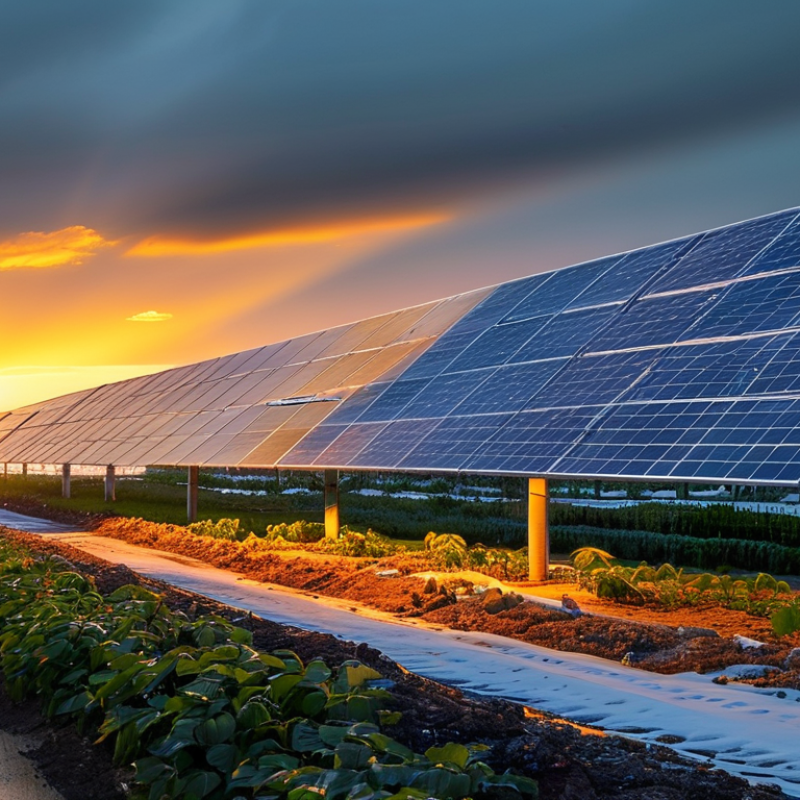
10 Solar Lighting Buying Tips for Global Buyers

Solar Resource First: Compare 1,000–2,500 kWh/m²/yr PV Yield (GHI)

For global solar lighting purchases, examine the solar resource before comparing fixtures, batteries, or prices. Global Horizontal Irradiance (GHI) commonly ranges from 1,000 to 2,500 kWh/m²/year. This figure helps screen locations, but it is not the same as guaranteed PV output. A 1,800 kWh/m²/year site may still underperform because of heat, dust, shading, or poor panel orientation.

Request the resource source, measurement period, and geographic resolution. Satellite estimates are useful for early planning, while ground measurements can expose local differences near hills, coastlines, or dense buildings. Check monthly values, not only the annual average. A region with strong yearly sunlight may have several cloudy winter weeks. That affects battery autonomy and nighttime brightness.

Convert GHI into an estimated daily energy yield using panel efficiency and realistic system losses. Include temperature, wiring, controller, battery, and charging losses. Ask suppliers to show their assumptions. Test the calculation against the darkest operating month. It may look conservative. That is usually safer. In dusty areas, inspect whether cleaning is practical and how quickly output falls. One overlooked detail remains common: advertised lighting hours may assume ideal charging conditions, not local weather. Compare measured lux, battery capacity, and recovery time after poor-sun days before approving a large order.

Solar Resource First: Compare Annual PV Yield Before Buying

Global horizontal irradiation (GHI) varies widely by location. Use the local long-term GHI value, typically measured in kWh/m²/year, to compare expected solar resource before selecting a solar lighting system. Values shown are representative approximate levels for major solar-resource zones; actual results depend on site conditions, shading, orientation, and system efficiency.

Reference basis: long-term satellite-derived solar-resource datasets such as the Global Solar Atlas and World Bank Global Solar Atlas.

LED Efficiency: Target 100–200 lm/W and Match Optics to Road Class (DOE)

For global buyers, LED efficiency should be judged at luminaire level, not only by the diode. A practical target is 100–200 lm/W for modern outdoor fixtures. Confirm whether the figure includes the driver, housing, and optical losses. Numbers can mislead. Ask for tested photometric data, not marketing estimates.

The U.S. Department of Energy provides useful guidance on solid-state lighting performance and outdoor applications. Use that guidance with a complete photometric file, such as an LM-63 file, when comparing suppliers. Then check delivered lumens, input watts, power factor, and operating temperature. A fixture producing high output in a laboratory may perform differently beside a dusty road at 45°C.

Optics must match the road class and mounting geometry. Narrow optics can project light along a high-speed roadway, while wider distributions may suit residential streets or pedestrian paths. Review pole spacing, mounting height, lane width, and required uniformity together. I have seen buyers select the highest lm/W figure, then discover dark patches between poles. Test the site. A small pilot installation can reveal glare, spill light, and weak coverage before a large order. Some calculations still look perfect on paper. Real roads are less cooperative.

Battery Sizing: Design for 3–5 Nights of Autonomy; Check IEC 62620 Data

10 Solar Lighting Buying Tips for Global Buyers

Battery sizing should begin with the load, not the battery label. Calculate nightly energy for the lamp, controller, and communication equipment. Then design for three to five nights of autonomy, especially where cloudy weather is common.

A simple formula helps: required capacity equals nightly watt-hours multiplied by autonomy nights, divided by allowable depth of discharge and system efficiency.

Use local solar data, not annual averages alone. The World Bank’s Global Solar Atlas provides monthly irradiation profiles for project screening, while IEA PVPS reports show that solar performance varies significantly by region and season. Test the weakest month.

A five-night target may still fail if winter irradiation is unusually low. Real sites are messier.

Ask suppliers for IEC 62620 test data, including rated capacity, cycle life, energy efficiency, and temperature conditions. Confirm whether capacity was measured at 25°C, because cold batteries can deliver less energy.

The IEA’s 2024 Batteries and Secure Energy Transitions report estimated average lithium-ion pack prices near USD 139 per kWh in 2023.

Lower cost, however, does not prove better usable capacity. Check end-of-life capacity, commonly specified at 80%, and include aging in the calculation.

A neat spreadsheet can still lie. Field experience matters. Dust, shading, wiring losses, and poor maintenance may quietly remove an extra night of reserve.

Durability and Safety: Specify IP65+ and IEC 60598 Compliance

For global solar lighting buyers, durability starts with a verifiable enclosure rating. IP65 means complete dust protection and resistance to water jets, under IEC 60529 testing. It does not guarantee immersion, impact resistance, or long-term ultraviolet stability. Choose IP66 or IP67 when flooding, coastal spray, or frequent cleaning is expected. Small detail, major consequence. GOGLA’s 2024 Off-Grid Solar Market Report recorded about 9.3 million off-grid solar products sold in the first half of 2024. At that scale, weak sealing can create expensive warranty and safety problems.

Request evidence, not promises. Specify compliance with the relevant IEC 60598 requirements for luminaires, including insulation, wiring, temperature rise, mechanical construction, and abnormal-operation tests. Ask for a current test report from a competent, independent laboratory. Check whether the report covers the exact model, battery configuration, LED module, and charging controller. A certificate for a similar product is not enough. I have seen procurement files where the housing passed testing, but the final cable gland changed afterward.

Review the installation environment carefully. Dusty roads, salt air, thermal cycling, and condensation may exceed ordinary laboratory assumptions. Require UV-resistant materials, sealed cable entries, corrosion-resistant fasteners, and documented operating temperatures. Also inspect samples after repeated charging and discharge cycles. Standards improve decisions, but they cannot replace field testing. That part is often underestimated.

Lifecycle Value: Compare 10-Year Cost; DOE Rates LEDs at 25× Longer Life

A solar light should be judged by its 10-year cost, not its purchase price. Include the fixture, mounting hardware, shipping, installation, battery replacements, cleaning, and failed-unit visits. A low-cost light can become expensive when a remote pathway needs repeated service. Write every cost in a simple spreadsheet.

LED longevity changes the calculation. The U.S. Department of Energy reports that LEDs can last up to 25 times longer than incandescent lamps. However, the whole fixture may not last that long. Batteries often need replacement sooner, especially in hot climates or areas with long cloudy periods. Ask for tested LED life, battery cycle data, and performance at low temperatures.

Look beyond brightness claims. Check usable light after ten years, not only on the first night. A sensor that dims the lamp can reduce energy demand and extend battery life. Panel angle, dust, shade, and winter sunlight also affect results. In practical site assessments, a small tree can reduce charging more than expected. That detail is easy to miss.

A useful comparison is annualized cost: divide the estimated 10-year expense by ten, then add expected maintenance. Leave a contingency for uncertain repairs. My own evaluation would not treat every forecast as fact; weather and installation quality can defeat a perfect spreadsheet. Ask suppliers for independent test reports, clear warranty terms, spare-part availability, and documented assumptions before approving the order.

10 Solar Lighting Buying Tips for Global Buyers - Lifecycle Value: Compare 10-Year Cost; DOE Rates LEDs at 25× Longer Life
Use this table as a procurement checklist. The 10-year cost example is a transparent planning calculation, not a supplier quotation. Replace the assumptions with local electricity tariffs, labor rates, climate data, shipping costs, and replacement prices.
No. Buying Dimension Relevant Benchmark or Data Point 10-Year Lifecycle Cost Consideration Recommended Buyer Action
1 Total cost of ownership Compare purchase price, freight, installation, energy, cleaning, battery replacement, spare parts, and end-of-life handling. Formula: Initial cost + installation + energy + maintenance + replacement parts − residual value.

For example, a 15 W lamp operating 12 hours per night for 10 years consumes approximately 657 kWh: 0.015 kW × 12 × 365 × 10.
Request a 10-year cost model using the same operating hours and service assumptions for every shortlisted product.
2 LED lifetime and efficiency The U.S. Department of Energy states that LED products can last up to 25 times longer than incandescent lighting and use at least 75% less energy. A representative 60 W incandescent equivalent used for 12 hours daily consumes about 2,628 kWh over 10 years. A 9 W LED equivalent consumes about 394 kWh, saving approximately 2,234 kWh. Compare delivered lumens, input watts, claimed lifetime, lumen-maintenance rating, and operating temperature—not watts alone.
3 Battery chemistry and replacement cycle Battery life depends on chemistry, depth of discharge, temperature, charging control, and daily cycling. Lithium-based batteries generally require different protection and replacement procedures than lead-acid batteries. Include at least one battery replacement scenario in a 10-year model unless the supplier provides verified cycle-life data under the intended temperature and depth-of-discharge conditions. Obtain rated cycle life, usable capacity, replacement price, connector type, safety documentation, and a clear battery-replacement procedure.
4 Solar resource and shading Daily solar availability varies by latitude, season, weather, panel orientation, tilt, and nearby obstacles. A site with winter shading may determine the required panel and battery size. Oversizing the panel or battery increases upfront cost; undersizing can cause outages, emergency service, and premature battery degradation. Use the project location’s monthly solar-resource data and assess the worst operating month rather than designing only for annual average sunshine.
5 Autonomy and backup performance Autonomy means the number of nights the light can operate without sufficient solar charging. The required value depends on local cloudy-weather patterns and the consequences of darkness. More autonomy usually requires additional battery capacity and sometimes a larger panel. A simple sizing relationship is: usable battery energy ≥ nightly load × required autonomy days. Specify minimum nightly operating hours and an autonomy target, such as 2–5 nights, based on climate and safety requirements.
6 Light output and distribution Lumens describe total light output; lux describes illumination at a surface. A higher lumen figure does not guarantee better roadway, pathway, or area coverage. A poor optical pattern can require more fixtures, higher mounting density, or higher output, increasing equipment, installation, and maintenance costs. Request photometric files or lighting calculations showing illuminance, uniformity, mounting height, spacing, and beam distribution.
7 Ingress and environmental protection Under IEC 60529, IP65 indicates dust-tight protection and protection against water jets; IP66 provides protection against more powerful water jets. Neither rating means the enclosure is suitable for continuous immersion. Inadequate sealing can cause corrosion, driver failure, battery damage, and unplanned replacement. The cheapest enclosure may have the highest lifecycle cost in coastal or high-rain environments. Match the IP rating and corrosion protection to rainfall, dust, salt spray, flooding risk, and cleaning methods at the installation site.
8 Temperature and climate suitability Battery capacity, charging efficiency, LED output, and electronic reliability are affected by temperature. The usable operating range must be confirmed for the complete assembled product. Extreme heat can accelerate battery aging, while low temperatures can reduce available battery capacity. Climate-related failures increase service visits and replacement frequency. Require documented operating and charging temperature ranges for the battery, controller, LED module, and enclosure—not just the LED chip.
9 Controls, dimming, and sensing Photocells, timers, motion sensors, and scheduled dimming can reduce operating hours or power demand, but sensor settings affect safety, user experience, and battery sizing. Reduced output during low-traffic periods may lower battery and panel requirements. Any claimed energy saving should be calculated from the actual dimming schedule and operating profile. Define default dimming levels, motion-sensor range, response time, override controls, data access, and behavior after a power or controller reset.
10 Warranty, serviceability, and spare parts A useful warranty should identify coverage periods and exclusions for the LED module, controller, battery, solar panel, structure, and labor. Replaceable components can reduce waste and downtime. Add shipping, customs, technician travel, labor, and downtime to the replacement-part cost. A modular battery or controller can be less expensive to service than replacing the complete luminaire. Confirm local service capability, spare-part availability for at least 10 years, diagnostic procedures, warranty claim logistics, and responsible battery recycling.
Reference: U.S. Department of Energy, Energy Saver, “LED Light Bulbs.” LED lifetime and energy-saving figures should be treated as general technology benchmarks; actual performance depends on product design, thermal management, operating conditions, and installation quality.
Go to Top