
China Top Solar Powered Lights Manufacturers for Buyers?
China has become a major sourcing base for outdoor and landscape lighting, including solar powered lights for gardens, streets, pathways, and commercial sites. Yet a long supplier list does not guarantee a suitable product. Buyers need to compare more than catalogue photos and factory claims.
This guide introduces China-based manufacturers and explains how to assess them using practical purchasing criteria. Check product range, battery type and capacity, panel output, light distribution, weather resistance, and expected runtime. Ask how performance changes after cloudy days or during winter. These details matter. A pathway lamp that looks bright in a showroom may provide limited coverage outdoors.
Reliable sourcing also depends on evidence. Request current test reports, material specifications, warranty terms, and clear answers about customization and minimum order quantities. Where possible, review production samples and confirm that stated ratings match the supplied model. Verify certificates with the issuing body and check whether they apply to your destination market. No single factory is best for every project. A municipal installation may need different controls and service support than a small retail order.
The manufacturers highlighted here are candidates, not automatic recommendations. Compare quotations using the same specifications, clarify replacement-part availability, and test products in real conditions before placing a large order. Supplier information can change, and product descriptions may leave important gaps. That deserves a second look. A careful shortlist helps buyers balance price, durability, technical support, and delivery expectations with fewer surprises.
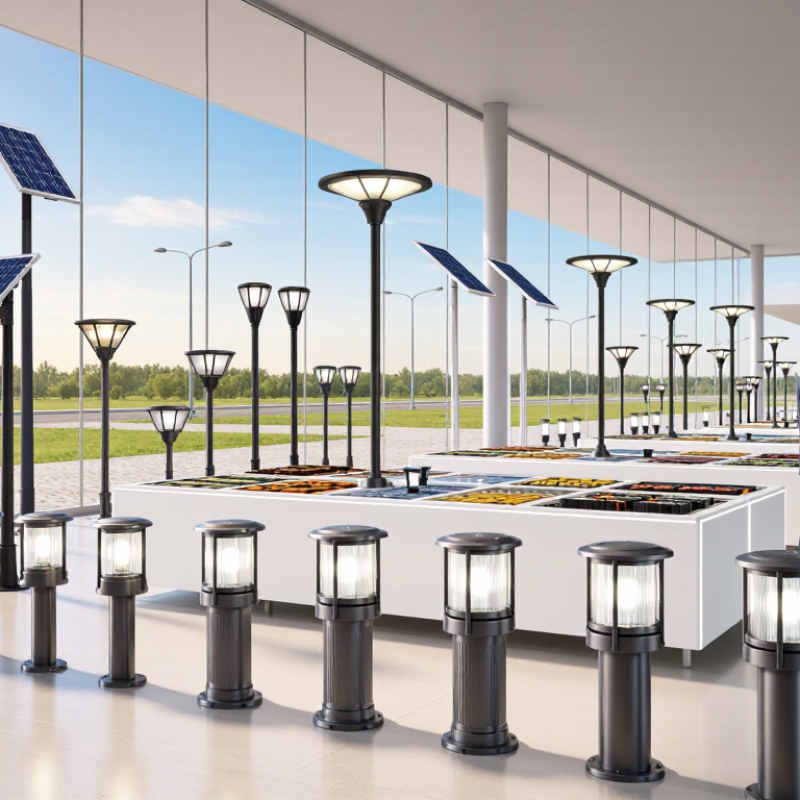
Understanding China’s Solar-Powered Lighting Industry
China’s solar-powered lighting industry draws strength from a much larger photovoltaic manufacturing base. The IEA’s 2022 Special Report on Solar PV Global Supply Chains found that China held over 80% of global manufacturing capacity across key solar PV stages. That matters. It supports broad access to panels and related electronics, but it does not guarantee consistent lamp quality. Buyers should assess the finished fixture, not just its solar label.
IRENA reported that China added 216.9 GW of solar PV capacity in 2023. This is a power-sector figure, not a count of solar streetlights or garden lamps. Not the whole story. For lighting procurement, check panel output, battery capacity, LED efficacy, controller settings, and enclosure protection together. A compact unit may shine brightly at dusk, then dim before dawn if its battery is undersized.
Ask suppliers for test reports and runtime data under stated weather and load conditions. Verify that claimed autonomy accounts for cloudy days, and compare how easily batteries and controllers can be replaced. The IEA and IRENA figures describe national capacity, not factory-level performance. That distinction is easy to miss. Treat the data as context, then verify samples and production consistency independently.
China Top Solar Powered Lights Manufacturers for Buyers? - Understanding China’s Solar-Powered Lighting Industry
| Product or Industry Dimension | Common Market Offering | What Buyers Should Verify | Why It Matters |
|---|---|---|---|
| Street and area lights | Standalone systems commonly combine a solar module, rechargeable battery, LED luminaire, controller, and pole or mounting hardware. Some designs place the panel and light together; others use a separate panel. | Request the panel and battery specifications, lighting distribution data, operating schedule, autonomy assumptions, and installation requirements for the intended location. | Performance depends on sunlight, shading, battery capacity, load, and local weather—not just the stated LED wattage. |
| Garden and pathway lights | Small solar modules and rechargeable batteries are often integrated into low-power decorative or pathway fixtures. Products may use automatic dusk-to-dawn controls. | Check the expected runtime, battery replacement options, outdoor material suitability, and whether the stated operating time assumes a full charge. | Small modules have limited energy capture, so seasonal sunlight and placement can affect brightness and runtime. |
| Wall and security lights | Common features include motion sensors, selectable lighting modes, and integrated solar charging. Sensor coverage and control behavior vary by product. | Ask for sensor detection range and angle, activation logic, standby behavior, and test results for the complete fixture. | Frequent activation and long illumination periods increase energy use and may reduce available runtime. |
| Portable and camping lights | Portable models may offer USB charging, multiple brightness settings, or a separate solar panel. Solar charging is generally dependent on panel size and available sunlight. | Confirm battery chemistry and capacity, charging inputs, charging time test conditions, and any transport documentation required for the destination market. | A USB charging option can provide an alternative charging method when solar exposure is insufficient. |
| Integrated vs. split design | Integrated designs combine major components in one assembly; split designs separate the solar panel from the luminaire and connect them by cable. | Compare installation layout, cable and connector protection, panel orientation options, maintenance access, and replacement of individual components. | A split panel can be positioned for better sun exposure, while an integrated unit may simplify installation. |
| Weather protection | Outdoor products are commonly specified with an IP rating under the IEC 60529 classification system. The rating applies to defined ingress-protection tests. | Request a report for the exact model and configuration; check protection of connectors, cable entries, battery compartments, and any separately mounted components. | A rating shown for one component does not automatically establish the protection level of the complete installed system. |
| Safety and market compliance | Relevant requirements depend on product design and destination. IEC 60598 is a luminaire safety standards series; regional marks and requirements vary by market. | Identify applicable rules with the importer or compliance specialist. Match test reports and declarations to the exact model, components, and destination market. | A generic certificate or a certificate for a different model may not demonstrate compliance for the purchased product. |
| Supplier and quality checks | Solar-light suppliers may offer product customization, packaging options, and production quality controls. Capabilities and processes differ between suppliers. | Request a sample, written component specifications, inspection criteria, warranty terms, spare-parts policy, and records linking production batches to inspection results. | Clear specifications and documented checks help reduce differences between approved samples and delivered production units. |
Note: Product configurations and performance vary by model and supplier. Compare products using the same test conditions and site assumptions; request model-specific documentation before purchasing.
Related Posts
-
10 Solar Lighting Buying Tips for Global Buyers
-
What Are the Top Types of Solar Lighting?
-
How to Choose the Best Solar LED Lights for Global Projects?
-
What Are the Best Solar Powered Lights from China?
-

Unleashing the Power of the Sun: How Solar Powered Lights Transform Outdoor Spaces
-
How to Choose the Best Solar Lighting System?