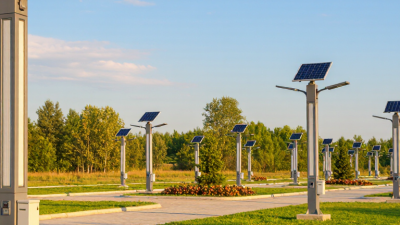
Choosing a solar lamp post supplier can shape more than a project’s appearance. It affects installation time, nighttime visibility, maintenance needs, and long-term value. For global buyers, comparing manufacturers is rarely simple. Product pages may show similar designs, yet battery capacity, panel efficiency, materials, and warranty terms can differ substantially.
A dependable solar lamp post should suit its location and purpose. A garden pathway needs a different light output from a commercial entrance or a broad driveway. Ask manufacturers for clear specifications, including operating time, battery type, color temperature, weather resistance, and replacement-part availability. Useful answers matter. Glossy product images do not.
Small details count.
This guide introduces manufacturers serving international buyers and outlines practical points for comparing their products. It considers product range, customization options, production capabilities, documentation, and support after purchase. These factors can help buyers build a shortlist, but they do not replace independent checks. Request current technical sheets, confirm sample quality, and clarify shipping and service arrangements before placing a large order.
Experience also teaches a less tidy lesson: the cheapest quote may not be the lowest-cost choice. A lamp that performs poorly through cloudy weeks, or uses hard-to-source components, can become frustrating. No manufacturer is right for every climate, budget, or installation. Use the comparisons as a starting point, then match each supplier’s evidence to your project’s real conditions.
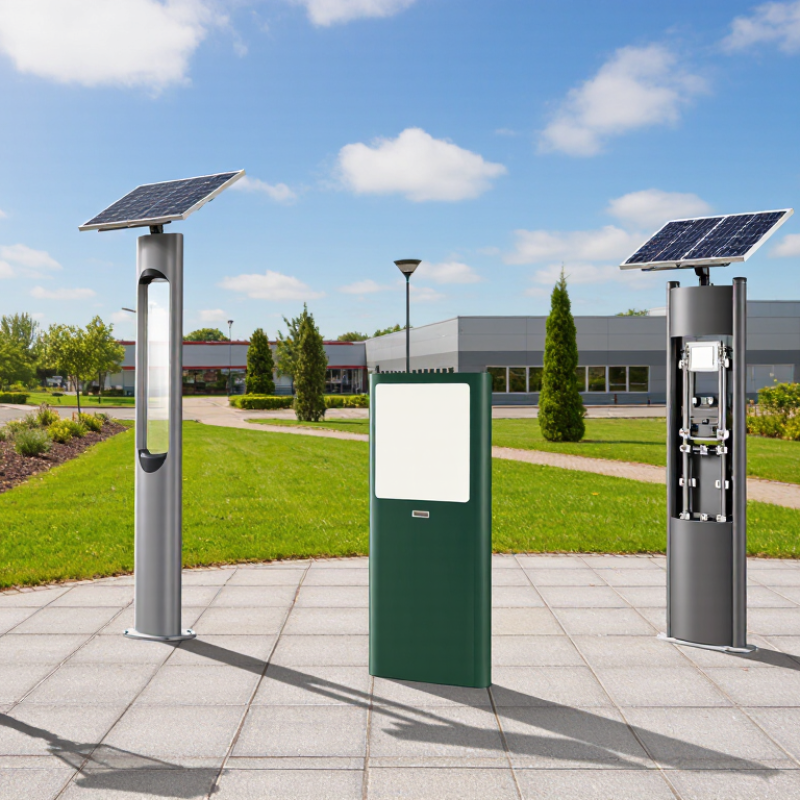
Solar lamp posts combine a photovoltaic panel, rechargeable battery, LED fixture, controller, and supporting pole. Manufacturers offer styles ranging from compact pathway lights to taller posts for parking areas and public spaces. Pole height, foundation design, and wind exposure affect product selection. Small details matter.
Production typically includes metal cutting, welding, surface treatment, electrical assembly, and functional testing. Aluminum is lightweight, while galvanized steel can suit installations needing greater rigidity. Coatings help resist moisture and corrosion, but performance depends on preparation and application quality. Buyers should review material specifications, ingress protection ratings, and test documentation rather than relying on appearance alone.
Solar systems vary in panel size, battery chemistry, lighting output, and control features. Dusk-to-dawn operation is common; motion sensing can reduce energy use when areas are quiet. Yet winter shade, cloudy weather, and poor placement can shorten operating time. A bright demonstration is not proof of reliable overnight lighting. For gardens, walkways, entrances, and remote sites, match the system to local sunlight and required hours. Manufacturers may provide project-specific configurations, though customization can add lead time. Specifications still need careful checking.
Selecting a solar lamp post manufacturer requires more than comparing catalogue prices. Ask for measured lighting data, not only claimed lumens. A reliable supplier should provide photometric files, panel ratings, battery chemistry, and controller details. Check whether test conditions match the intended climate. A lamp working in a dry warehouse may fail beside a humid coast. Small details matter.
Evaluate durability through evidence. Look for IP and IK ratings, corrosion testing, thermal management, and documented wind-load calculations. Request sample units and inspect cable glands, hinges, fasteners, and drainage paths. Battery cycle-life figures should state temperature, discharge depth, and expected capacity retention. “Long lasting” is not a specification. Independent test reports add credibility, although paperwork can still be incomplete.
Manufacturing experience appears in installation support. Strong suppliers provide clear foundation drawings, wiring diagrams, spare-part lists, and remote troubleshooting procedures. Review completed projects with similar sunlight, road width, and maintenance access. Confirm production capacity, quality-control checkpoints, warranty response times, and replacement policies. A low price can become expensive when one failed battery delays repairs. I would also question perfect claims. Real projects have shade, dust, storms, and occasional mistakes. Transparent manufacturers explain those limits and show how their design responds.
Top Solar Lamp Post Manufacturers for Global Buyers
Leading Manufacturer Profiles and Regional Market Strengths
Solar lamp post manufacturers differ widely in engineering depth, production scale, and regional experience. East Asian producers often offer broad customization, including aluminum poles, lithium battery compartments, and integrated photovoltaic modules. Their strength is flexible production. Buyers can request private designs, different lighting outputs, and container-ready packaging. However, factory samples may look stronger than long-term field performance. Independent testing remains important.
European manufacturers often focus on refined optical control, durable coatings, and strict quality documentation. Their products suit public parks, residential developments, and heritage-sensitive streetscapes. Many suppliers emphasize circular design, replaceable batteries, and repair access. These features can reduce maintenance waste. Pricing is usually higher, and delivery schedules may require careful planning. That trade-off deserves attention.
North American suppliers commonly design for cold winters, wide roads, and municipal procurement requirements. Their profiles often show strong project management and detailed installation guidance. South Asian manufacturers may provide cost-effective solutions for campuses, roads, and rural facilities. African regional assemblers can offer valuable knowledge of dust, heat, and inconsistent grid access. Local experience matters. A technically impressive product can still fail when its battery capacity ignores cloudy seasons, shading, or poor drainage. Buyers should compare real project records, illumination measurements, warranty terms, spare-part access, and after-sales response times. Laboratory reports help, but they never replace field observations. A few manufacturers still publish incomplete battery-cycle data, which should invite careful questions rather than quick approval.
| Region | Anonymized Manufacturer Profile | Common Product Strengths | Regional Market Strengths | Buyer Checks |
|---|---|---|---|---|
| China | High-volume OEM and ODM manufacturers serving distributors, contractors, and project buyers. | Broad product ranges, including decorative post-top lights, integrated solar luminaires, and configurable systems with separate panels and batteries. | A large lighting and electronics supply base supports product variety and multiple price points. Export-oriented suppliers commonly offer customization, subject to order quantity and project requirements. | Confirm battery chemistry and capacity, panel wattage, runtime claims, IP rating, component warranties, sample performance, and the exact items covered by any test report. |
| Europe | Design-led manufacturers and specialist suppliers serving municipal, landscape, hospitality, and architectural projects. | Emphasis on appearance, system integration, outdoor durability, and product documentation for specification-led installations. | Established public-space and landscape-lighting markets support demand for coordinated designs and project-specific technical documentation. | Check applicable national and EU requirements, including relevant luminaire safety and electromagnetic compatibility rules. CE marking is a conformity marking, not a product performance rating. |
| North America | Project-focused suppliers and manufacturers serving commercial, municipal, campus, and landscape applications. | Product options commonly address local installation preferences, outdoor exposure, controls, and project documentation. | Demand includes pathway, park, campus, and perimeter lighting projects, with procurement requirements varying by jurisdiction and end user. | Verify whether the project requires listings or certifications such as UL or CSA, and confirm that the documentation applies to the complete luminaire or system being offered. |
| India | Manufacturers and integrators supplying domestic infrastructure, commercial, landscape, and off-grid projects. | Product offerings can include standalone solar post lights and systems configured for local site conditions and project budgets. | Strong relevance for solar-powered lighting in locations where grid access, installation logistics, or energy costs influence project design. | Assess performance using local solar-resource data, seasonal weather, shading, and required night-time autonomy; request a clearly defined runtime test basis. |
| Southeast Asia | Regional assemblers, lighting suppliers, and project integrators serving urban, resort, commercial, and infrastructure markets. | Products may be configured for humid, rainy, and coastal environments, with decorative and functional post-light options. | Outdoor lighting demand is supported by urban development, tourism, and infrastructure projects across the region, with specifications differing between countries. | Check corrosion protection, ingress protection, drainage and condensation controls, local electrical requirements, and the availability of service parts. |
Regional profiles describe common market patterns, not every manufacturer in a region. Compare suppliers using project-specific test reports, verified specifications, warranty terms, and local compliance requirements.
Reliable solar lamp post manufacturers treat certification as a working discipline, not decorative paperwork. Buyers should request test reports for luminaires, batteries, photovoltaic modules, and charge controllers. IEC 60598 testing can support lighting safety claims, while ISO 9001 may indicate controlled production processes. Requirements vary by destination. A certificate alone proves little.
During supplier evaluations, inspect battery capacity, cycle life, waterproof ratings, and thermal protection. Look for documented tests under heat, rain, dust, and repeated charging. An IP65 rating is useful, but installation quality still affects real performance. Salt-spray testing matters near coastlines. So does accurate lumen measurement.
Manufacturers with dependable products usually provide serial-number tracking, wiring diagrams, replacement procedures, and clear warranty terms. Their engineers should explain how lighting output changes during cloudy periods. They should also state whether advertised autonomy reflects laboratory conditions. I have found that some datasheets use ideal figures, creating unrealistic expectations. That gap matters.
Ask for sample units before placing a large order. Check pole thickness, coating consistency, fasteners, panel alignment, and battery access. Independent inspection can reveal loose connectors or weak packaging. Small flaws become expensive after installation. Product reliability depends on honest specifications, repeatable testing, and responsive technical support, not only a polished factory visit.
When comparing solar lamp post manufacturers, ask for more than a catalogue price. Request the panel wattage, battery capacity, expected operating hours, and test conditions behind any performance claims. A clear quotation should list the pole height, material, finish, controller, and included accessories. Small omissions matter. A mounting bracket or remote control can change the final cost.
Customization works best when buyers share site details early. Provide photos, pole spacing, wind exposure, and the desired light pattern. Ask for drawings or a sample finish before approving a large order. Check whether the battery and panel can be replaced separately; this can simplify maintenance later. I have seen specifications look excellent on paper, yet leave practical questions unanswered. That deserves a closer look.
Shipping plans should cover packaging, lead time, spare parts, and who handles damage claims. Request packing photos and clear carton dimensions, especially when freight is arranged by volume. Before payment, agree on inspection steps and documents for the shipment. After delivery, confirm the warranty period, response time, and availability of replacement batteries or controllers. Keep installation records and photos. They help support teams diagnose faults without guessing. Ask how performance changes in cloudy seasons, too; answers vary, and assumptions can be costly.
A typical standalone solar lamp post integrates five major elements. Actual configurations vary by lighting requirements, site conditions, and product design.
When comparing suppliers, confirm component specifications, customization options, export packaging, delivery terms, warranty coverage, and after-sales support.