
Top 10 LED Solar Street Light Manufacturers in 2026
A led solar street light can look impressive in a catalog and still disappoint after a cloudy week. The difference often lies in details buyers cannot judge from a product photo: battery capacity, panel output, optical distribution, and control settings. For the Top 10 LED Solar Street Light Manufacturers in 2026, these practical factors matter more than polished marketing claims.
Energy-efficiency expert Amory Lovins is often quoted as saying, “The cheapest energy is the energy you don’t use.” That idea applies here: efficient LEDs and well-designed optics can reduce system demands. But real performance also depends on site conditions. A pole beside a broad, exposed road faces different shading and weather than one beneath trees or near coastal spray. Check test reports, warranty terms, replacement-part access, and documented project references. Look for clear information on operating hours and backup autonomy, not just a high lumen figure. Small print matters.
No shortlist is flawless. Manufacturer rankings can change with product revisions, local service, and project requirements. A specification sheet may also leave questions unanswered, such as how brightness behaves late at night. The companies featured in this guide are starting points for comparison, not automatic recommendations. Verify claims with current documents and, where possible, installations in similar climates. A careful choice takes more than a name. It takes evidence.
How LED Solar Street Lights Work and What Defines a Manufacturer
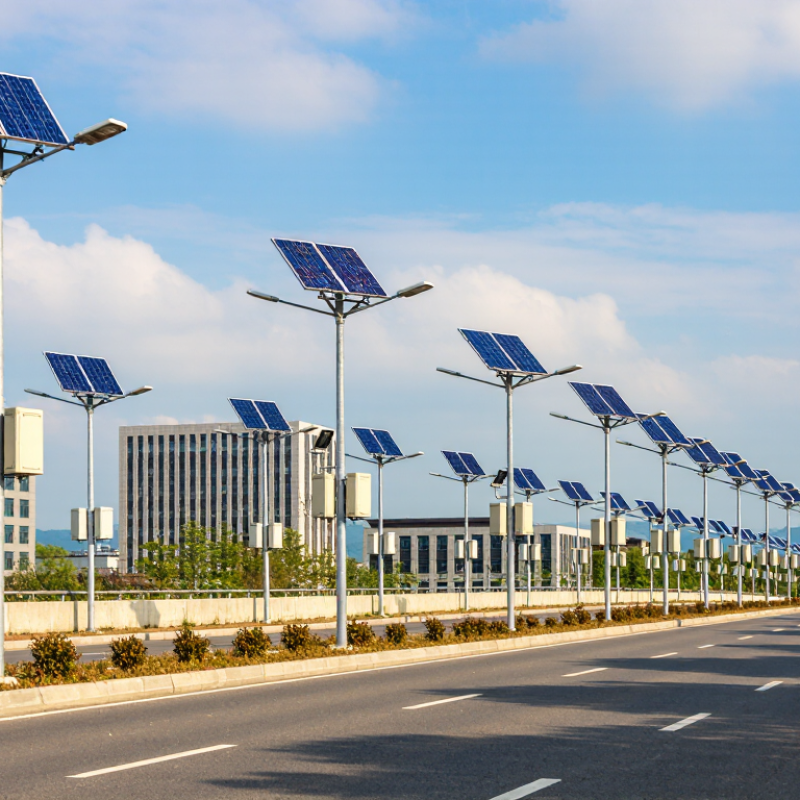
An LED solar street light turns daylight into stored electricity. A photovoltaic panel produces direct current, and a charge controller routes it to a battery. After dusk, a light sensor signals the LED driver to power the lamp. The driver regulates current, helping the LEDs deliver steady light without draining the battery too quickly. Sunlight becomes stored power. Yet performance depends on panel size, battery capacity, temperature, and shade. A tree that seems harmless in spring may cover the panel by late summer.
A capable manufacturer does more than assemble familiar parts. It matches the panel, battery, controller, and LED optics to the site’s lighting needs and expected weather. It should be able to explain test methods, operating temperatures, battery-cycle assumptions, and how the fixture handles heat and moisture. Ask for measurable details, not just a bright lumen figure. A datasheet can look tidy while real weather is not. That gap deserves attention. Field records and clear warranty terms can help buyers judge reliability, though neither guarantees trouble-free operation. Look for practical guidance on pole height, spacing, and maintenance, too. The product is only one part of a working installation.
Top 10 LED Solar Street Light Manufacturers in 2026 - How LED Solar Street Lights Work and What Defines a Manufacturer
| No. | Manufacturer Capability | Practical Reference or Benchmark | Why It Matters |
|---|---|---|---|
| 1 | Solar-to-light system design | A typical system combines a photovoltaic module, rechargeable battery, LED luminaire, charge controller, and mounting hardware. | Manufacturers need to size these components together for the location, lighting schedule, and expected solar resource. |
| 2 | Photovoltaic module selection | Crystalline-silicon modules are widely used. Module output depends on rated wattage, sunlight, orientation, temperature, and shading. | The module converts sunlight into electrical energy that can be used immediately or stored in the battery. |
| 3 | Battery technology and sizing | Many current designs use lithium iron phosphate (LiFePO4) batteries; a LiFePO4 cell has a nominal voltage of about 3.2 V. | Battery capacity and operating limits affect overnight runtime, service life, and performance during consecutive low-sun days. |
| 4 | Charge-controller design | Controllers manage charging, battery protection, and the transition between charging and lighting. MPPT controllers track the PV module’s maximum-power operating point. | Appropriate control helps use available solar power while preventing battery operation outside its specified limits. |
| 5 | LED efficacy and optical design | LED luminaire efficacy is expressed in lumens per watt (lm/W); the delivered street-light distribution also depends on the optics and operating current. | Optics direct light onto the road or pathway. Lumens alone do not establish roadway illuminance or uniformity. |
| 6 | Lighting controls and autonomy | Common controls include dusk-to-dawn switching, timed dimming, and motion-responsive output. Autonomy should be stated as designed operating time without useful recharging. | Controls can reduce energy demand during low-traffic hours, while a clearly defined autonomy target makes system sizing easier to assess. |
| 7 | Ingress protection | IP66, as defined by IEC 60529, indicates dust-tight protection and protection against powerful water jets under the specified test conditions. | A stated IP rating helps buyers compare enclosure protection, but it does not by itself describe corrosion resistance or impact strength. |
| 8 | Mechanical impact protection | Under the IK code in IEC 62262, IK08 corresponds to a 5-joule impact test and IK10 to a 20-joule impact test. | Impact ratings provide a standardized reference for the enclosure’s resistance to mechanical impacts. |
| 9 | Photometric and electrical testing | Relevant references include IEC 60598-1 for general luminaire safety, IEC 60598-2-3 for road and street lighting luminaires, and IEC 62722-2-1 for LED luminaire performance. | Test reports tied to the actual product configuration provide more useful evidence than a general claim of compliance. |
| 10 | Manufacturing quality and traceability | Useful evidence includes documented inspection procedures, component traceability, production records, and applicable quality-management certification such as ISO 9001. | Consistent processes support repeatable production and help identify which components and test results apply to a particular product batch. |
This table compares manufacturer capabilities and engineering references, not named companies or a ranked list of brands. Product specifications and required lighting levels vary by project; verify claims against current product documentation and applicable local standards.
Related Posts
-
How to Choose the Best Solar Street Lamp in 2026?
-
Top 10 Types of Solar Street Lights for Global Buyers
-
Why Choose All in One Solar Street Lights?
-
Top Tips for Choosing LED Solar Street Lights for Your Needs?
-
Transform Your Neighborhood: The Benefits of Installing Solar Street Lights with Poles
-
How to Choose Solar Powered Street Lights for Any Project?