How to Choose the Best Solar Street Lamp in 2026?
A good solar street lamp is not chosen by wattage alone. It must provide dependable light through changing weather, long nights, and years of outdoor exposure. As a guiding principle, photovoltaic researcher Dr. Martin Green’s work reminds buyers to look beyond panel ratings and consider real energy performance. This is a paraphrase, not a direct quotation.
Start with the site. A pole beside an open road receives different sunlight from one shaded by trees or buildings. Check the location’s sun exposure, required lighting hours, and expected cloudy periods. Then compare the panel, battery chemistry, fixture output, and control settings as one system. A large panel cannot compensate for a poorly matched battery.
Look closely at practical details. A sealed battery compartment, corrosion-resistant hardware, and accessible service parts matter when rain, dust, or maintenance crews arrive. Ask for test data, warranty terms, and clear performance assumptions. Numbers need context.
The best choice may not be the brightest model. It may be the one that keeps a pedestrian crossing evenly lit before dawn, without frequent repairs. Still, specifications can look reassuring while field conditions tell another story. That deserves a second look. This guide explains how to assess performance, durability, safety features, and lifecycle costs before selecting a solar street lamp in 2026.
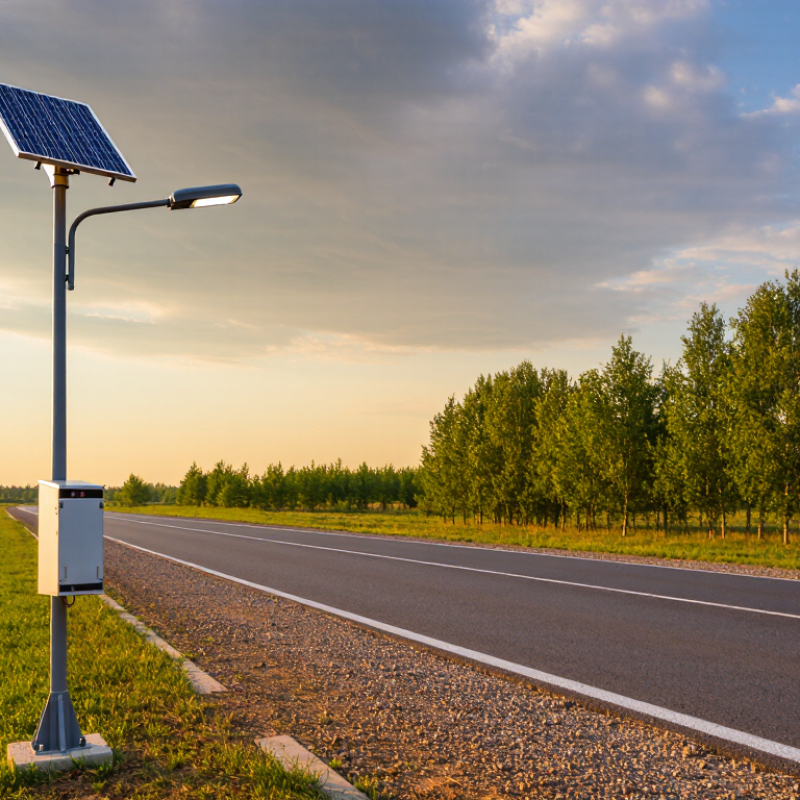
Identify the Lighting Needs and Conditions of the Installation Site
Before selecting a solar street lamp, walk the site after dark and identify what must be visible: road edges, crossings, entrances, or faces. IES RP-8-22 ties roadway lighting criteria to road and pedestrian-conflict classifications, not simply lamp wattage. Measure pole spacing and mounting height, then check for dark gaps between pools of light. Easy to miss. A bright fixture can still leave a crossing poorly lit.
Next, assess sunlight where the panel will actually sit. The World Bank and ESMAP’s Global Solar Atlas maps long-term solar irradiation; many populated regions receive roughly 3–6 kWh/m² per day on an annual-average basis, but local conditions vary. Check winter exposure, nearby buildings, tree shade, and likely snow or dust buildup. NREL’s National Solar Radiation Database provides hourly solar and weather data that can help reveal seasonal dips. Annual averages can hide the hard months. Note prevailing wind, heavy rain, and coastal salt exposure, too. These affect mounting and maintenance. I would also revisit the site after nearby trees leaf out; a clear survey in winter can be misleading.
Assess Sunlight, Battery Capacity, and Required Nighttime Runtime
Choosing a solar street lamp starts with the sunlight at the exact pole location, not a regional average. Check for shade from buildings, trees, and signs during the hours when the panel receives direct sun. Note seasonal changes too; a clear summer day can hide a difficult winter. Clouds matter. If possible, observe the site across several days and seasons, or use reliable local solar data.
Next, match battery capacity to the required nighttime runtime. Estimate the lamp’s energy use by multiplying its wattage by the hours it must operate, then allow for charging and conversion losses. A lamp running eight hours needs a different reserve from one expected to stay on all night. Ask whether the stated battery capacity is nominal or usable, and check how many low-sun nights the system can handle. Measure it twice. A tidy calculation can still miss colder weather or unexpected shading.
Set the runtime requirement in practical terms: full brightness until midnight, lower output later, or steady illumination through dawn. Dimming schedules can extend operation, but confirm that the reduced light still suits the road or walkway. Review the panel’s tilt, battery replacement access, and maintenance needs before choosing a unit. Keep a simple log after installation: note cloudy days, actual on-time, and any dimming. The first estimate may be wrong, and that is useful information.
Compare Lamp Output, Solar Panels, Batteries, and Lighting Controls
A street lamp should be chosen for the road it must light, not for its advertised lumen figure alone. Start with a night walk or site plan: note road width, mounting height, pole spacing, and dark corners. A wide beam may suit an open lane, while a narrower distribution can reduce glare near homes. That distinction matters. Small details matter.
Compare panel size and battery capacity as a system. A shaded panel or poor orientation can limit charging, even when the panel’s rated output looks impressive. Check the expected daily energy use against local sunlight, especially during shorter winter days. Battery capacity should cover the lamp’s operating schedule and realistic periods of cloudy weather. Cold temperatures can also affect battery performance, so review the manufacturer’s temperature and autonomy data. There is no perfect spreadsheet; actual shade and weather are easy to underestimate.
Lighting controls shape both visibility and energy use. Dusk-to-dawn operation is simple, but dimming schedules can conserve stored power during quiet hours. Motion sensors may raise output when people approach, yet poor placement can leave a path dim until someone is close. Ask how quickly the lamp responds and whether its sensor covers the full walkway. Check that settings are adjustable after installation. A cautious design may feel less impressive on paper, but it can avoid dark patches on site.
Check Durability, Safety Features, and Applicable Standards
How to Choose the Best Solar Street Lamp in 2026?
A lamp’s service life depends on more than its advertised lifespan. Check the housing, seals, fasteners, and pole connection for corrosion resistance and weather protection. IEC 60529 IP ratings describe protection against dust and water, while IEC 62262 IK ratings describe impact resistance. Match these ratings to the site’s actual exposure. A windy coastal road needs different protection from a sheltered walkway. Details matter.
Look for battery management that protects against overcharging, deep discharge, and excessive temperature. Ask how the unit behaves during prolonged cloudy weather, and whether maintenance staff can safely isolate the battery. A secure, weather-resistant enclosure also helps deter tampering. A higher rating is not automatically better if the design makes inspection or repairs difficult. That trade-off is easy to miss.
Request test reports and confirm they apply to the exact model and configuration being considered. Depending on location, relevant requirements may include electrical safety, electromagnetic compatibility, battery transport, and roadway lighting rules. Standards and editions vary, so verify current local requirements with a qualified installer or authority. Check the pole foundation and wind-load assumptions too; these are often overlooked. A small mismatch can matter.
Evaluate Total Cost, Installation Requirements, and Long-Term Maintenance
For a solar street lamp, compare the installed cost, not just the fixture price. Include the panel, battery, pole, foundation, wiring, delivery, and labor. A concrete pad or difficult soil can change the budget quickly. Ask for the expected operating hours and autonomy during cloudy weather, then check whether those figures suit your location. Small details matter.
IRENA’s Renewable Power Generation Costs in 2023 reports a global weighted average cost of USD 0.044 per kilowatt-hour for newly commissioned utility-scale solar PV. That is useful market context, not a price forecast for a street lamp. The U.S. Department of Energy has reported that LED street lighting can use at least 50% less energy than conventional lighting; lower demand may allow a smaller solar system. Still, verify the actual output and battery capacity in the supplier’s technical documents.
Installation needs deserve a site visit. Check for shade from trees, winter sun exposure, pole access, and safe ground conditions. Then price routine cleaning, inspections, and battery replacement over the lamp’s expected service life. Ask how replacement batteries are sourced and what labor costs. Not glamorous. One weak point is assuming the battery will last as long as the panel; operating temperature and charge cycles can shorten its life. Compare written warranties and maintenance schedules, and leave room in the budget for a replacement that arrives earlier than planned.
How to Choose the Best Solar Street Lamp in 2026
Compare estimated 10-year cost per lamp, including equipment, installation, and maintenance.
Planning example only, not a supplier quote: costs are illustrative estimates in USD for one lamp and can vary with light output, site conditions, labor, battery capacity, and local prices. Before choosing, check the required lighting level, mounting and foundation needs, sun exposure, battery replacement terms, and access for maintenance. A lower upfront price may not mean a lower lifetime cost.