A solar LED light turns sunlight into dependable illumination through a compact, self-contained system. During the day, its photovoltaic panel converts sunlight into electrical energy. A charge controller manages that energy and stores it in a rechargeable battery. After dusk, a sensor or controller switches on the LED, while an electronic driver regulates the current. The result can be a garden path, gate, or shed lit without a cable running back to the house. It is simple. Not magic.
Solar-energy author Michael Boxwell offers a useful way to think about the components. A concise paraphrase of his practical approach is: “Treat the panel, battery, controller, and lamp as one system, not separate parts.” That relationship matters. A bright LED cannot compensate for a poorly placed panel or a tired battery. Shade, winter daylight, panel angle, and battery capacity all affect how long a light stays on. Real installations are messier than a diagram. Even a well-designed unit may dim or switch off early after several cloudy days.
This guide explains what a solar LED light contains, how energy moves through it, and what influences its performance. It also considers common product details, such as motion sensors, brightness ratings, and battery replacement. Specifications can be confusing, and advertised runtime may depend on test conditions. Checking the small print—and observing the light through changing seasons—gives a more realistic picture of what it can do.
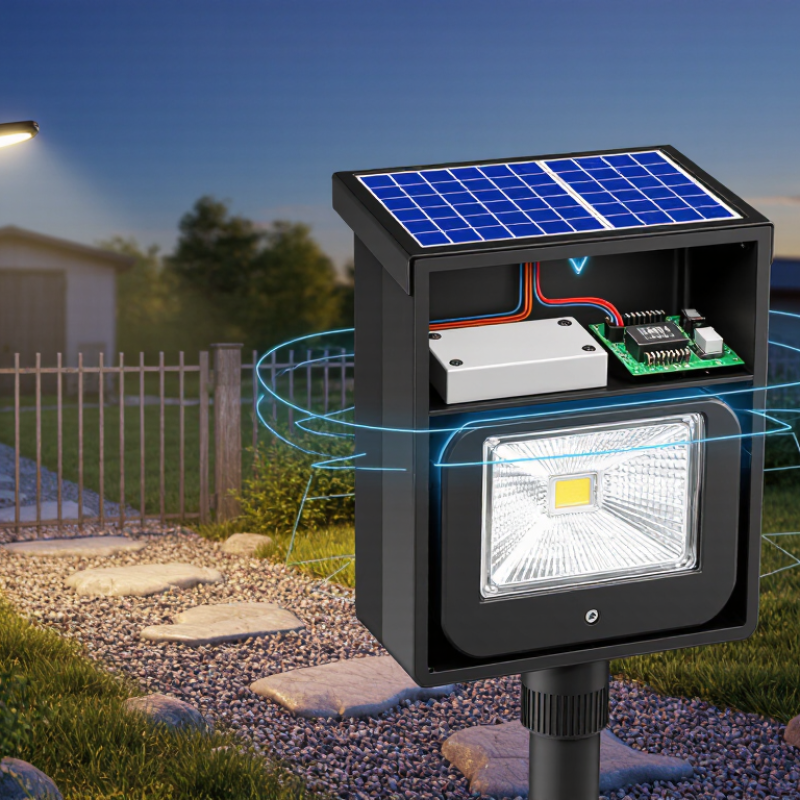
A solar LED light combines a photovoltaic panel, a rechargeable battery, control electronics, and one or more light-emitting diodes. The panel converts sunlight into electricity, while the battery stores energy for nighttime use. A charge controller regulates the flow between them. That small circuit matters. It helps prevent overcharging and manages power delivery. At dusk, a light sensor can switch on the LEDs; some models also use motion sensors to adjust brightness.
LEDs suit this setup because they produce substantial light with relatively little electricity. The U.S. Department of Energy reports that LED bulbs use up to 90% less energy than incandescent bulbs and can last up to 25 times longer. Separately, the IEA Photovoltaic Power Systems Programme’s Trends 2024 report puts global cumulative solar PV capacity above 1.6 terawatts at the end of 2023. That figure reflects the wider technology, not solar lamps alone. In practice, output still depends on panel exposure, battery capacity, and cloudy-day charging. Battery sizing is easy to overlook. A shaded panel or an undersized battery can leave a path dim before dawn.
A solar LED light uses a photovoltaic panel to turn sunlight into electrical energy. During daylight, the panel charges a rechargeable battery, while a controller regulates charging and protects the battery from excessive discharge. At dusk, a light sensor or timer can switch on the LEDs. The stored energy then powers the light through the night, though operating time depends on battery capacity and the energy collected that day.
Photovoltaic panel ratings are commonly measured under standard test conditions, including an irradiance of 1,000 W/m², a cell temperature of 25°C, and a specified reference sunlight spectrum. These conditions let engineers compare panel performance on a consistent basis. They do not describe every outdoor day.
It is tempting to treat 1,000 W/m² as a promise, but it is not. Cloud, shade from a branch, panel angle, dust, and heat can all change actual output. Even a thin film of grime may matter.
In practice, check whether the panel receives clear midday sun and whether the battery has enough capacity for longer nights.
One detail is easy to overlook: a bright LED cannot compensate for a battery that received too little charge.
A solar LED light uses a panel to convert daylight into electricity, which is stored in a rechargeable battery. The charge controller sits between the panel and battery. It monitors charging voltage and current, then adjusts the flow to suit the battery. When the battery approaches its safe charging limit, the controller can reduce or stop incoming current. That matters. Overcharging can shorten battery life or cause damage. Some controllers also disconnect the LED when stored energy gets too low, helping prevent excessive discharge. The exact protection features vary by design, so the product specifications are worth checking.
In practice, a controller cannot create energy that the panel did not collect. A shaded panel, short winter days, or a dusty surface can leave the battery partly charged. The light may then dim or switch off earlier than expected. Battery chemistry and temperature also affect charging behavior, and a controller should be compatible with both. A small indicator light can show charging activity, but it may not reveal the battery’s true condition. That detail is easy to miss. I would check the wiring and panel surface before assuming the controller has failed; still, diagnosing a fault from appearance alone can be misleading.
A solar LED light uses a small panel to convert daylight into electricity. During the day, that energy charges a rechargeable battery inside the fixture. A charge controller helps regulate the flow and protects the battery from unsuitable charging levels. At dusk, a sensor or timer can switch on the LED. The battery then supplies power, since the panel is no longer producing useful energy.
The same stored energy can keep the light working when the sky is heavily overcast or the panel receives weak daylight. It does not create extra power, though. If several cloudy days reduce charging, the battery may run down sooner, and the light may grow dim or switch off early. That matters. Runtime depends on battery capacity, LED brightness, panel size, and how much daylight the panel receives.
Placement makes a practical difference. A panel shaded by a roof edge or covered with dust collects less energy, even on a clear day. Keep it exposed to open sky and wipe the surface gently when needed. Cold weather and an aging battery can also reduce performance. Not perfectly. A light that runs for fewer hours is not always faulty; check its exposure and recent weather before drawing that conclusion.
A solar LED light combines an efficient light-emitting diode with a small solar panel, rechargeable battery, and control circuit. The panel collects daylight and converts it into electricity. After dusk, the circuit powers the LED from stored energy. No wall outlet is needed at the light.
The energy comparison is important. The U.S. Department of Energy reports that LEDs use at least 75% less energy than incandescent lighting. LEDs also produce less heat, so more of their electricity becomes visible light.
That can let a modest battery support useful illumination for paths or doorways. A real-world detail matters: a shaded panel may collect too little energy on short winter days. The light may then dim or switch off earlier than expected. Battery age, panel angle, and cloudy weather also affect performance. It is easy to focus on the LED’s efficiency and overlook the whole system. Efficiency helps, but it cannot replace adequate sunlight or a properly sized battery.