2026 Best Solar Lighting System for Global Buyers?

The best solar lighting system in 2026 will not be judged by brightness alone. Global buyers need dependable illumination, efficient batteries, weather resistance, and easy maintenance. A village pathway, a warehouse entrance, and a coastal home demand different designs.

The World Bank and Lighting Global’s Off-Grid Solar Market Assessment highlight the continuing importance of decentralized energy solutions for communities without reliable grid access. The International Energy Agency also reports that hundreds of millions of people still lack electricity access worldwide. These figures make solar lighting system selection more than a purchasing decision. It becomes an infrastructure decision.

Francesco La Camera, Director-General of the International Renewable Energy Agency, stated, “Renewables are the only way to address the energy and climate crises simultaneously.” His point applies directly to modern solar lighting. Quality systems can reduce diesel dependence, operating costs, and nighttime safety risks. Yet performance claims need careful checking. A panel rated for strong sunlight may perform poorly under dust, shade, or tropical cloud cover. Battery life can also fall sharply in extreme heat.

This guide compares leading 2026 solutions through practical criteria, including lumen output, battery chemistry, charging efficiency, ingress protection, warranty support, and replacement-part availability. It also considers installation experience across residential, commercial, street, and humanitarian applications. No single model wins everywhere. That is the uncomfortable truth. Buyers should verify local solar conditions, lighting needs, and after-sales service before committing.

2026 Best Solar Lighting System for Global Buyers?

What a Solar Lighting System Is and How It Works

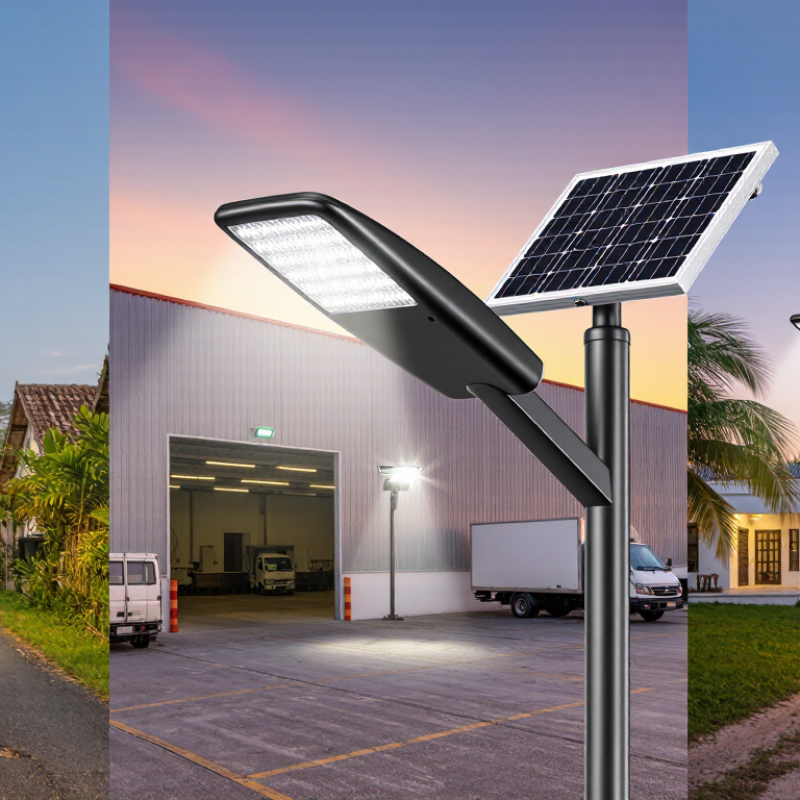
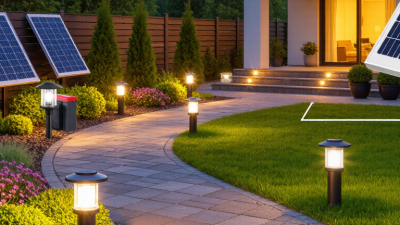
A solar lighting system converts sunlight into usable light after dark. A typical unit includes a photovoltaic panel, charge controller, battery, LED lamp, and mounting hardware. During daylight, the panel produces direct-current electricity. The controller regulates charging and helps protect the battery from overcharging. At night, a light sensor or timer activates the LED. The battery then supplies stored energy.

In practical installations, panel angle, shade, dust, and local weather determine daily performance. A panel under a tree may look acceptable, yet deliver much less energy. Field inspections often show small shadows reducing evening brightness earlier than expected. Battery capacity must match lamp power and required operating hours. For example, a 20-watt LED running ten hours needs about 200 watt-hours, before system losses. This estimate is simple, but real conditions are not. Cloud cover and aging batteries change results.

Reliable buyers should check ingress protection, battery temperature range, replacement access, and tested light output. Ask for measured performance, not only advertised brightness. Installation quality matters too. Poor cable joints can admit water and cause intermittent lighting. Maintenance may include cleaning the panel and checking fasteners every few months. One design weakness is often overlooked: a very bright lamp may drain the battery quickly. A balanced system may provide steadier light, though it can seem less impressive initially.

2026 Best Solar Lighting System for Global Buyers

What a solar lighting system is and how it works: the solar panel converts sunlight into electricity, the controller manages charging, the battery stores energy, and the LED lamp uses the stored power after sunset.

This engineering benchmark uses a 4-hour peak-sun equivalent per day and 80% overall system efficiency. Daily lighting energy is calculated as lamp power × operating hours. The estimated photovoltaic capacity is calculated as daily energy ÷ (peak-sun hours × system efficiency). Actual sizing should also consider local weather, temperature, battery autonomy, mounting angle, and seasonal sunlight.

Key Components and Technologies in 2026 Solar Lighting

2026 Best Solar Lighting System for Global Buyers?

Key Components and Technologies in 2026 Solar Lighting

A reliable solar lighting system begins with a correctly sized photovoltaic module. IEA PVPS reported about 456 GW of new solar capacity worldwide in 2023. This expanding supply supports better module efficiency and lower system costs. Yet, small lighting systems still fail when panels face shade, dust, or seasonal rain.

Lithium iron phosphate batteries are becoming a practical choice for 2026. They offer stable cycling, safer thermal behavior, and useful performance in warm climates. A battery management system should prevent overcharging and deep discharge. High-efficiency LED chips reduce energy demand while maintaining focused illumination. Smart controllers can adjust brightness, detect movement, and record battery performance. GOGLA’s 2024 off-grid solar market reporting showed continued demand for millions of solar products, but access and affordability remain uneven. Hardware alone cannot solve poor maintenance. That part is often underestimated.

Tips: Check the solar resource, nighttime operating hours, battery reserve, and replacement access before purchasing. Choose sealed connectors for humid locations. Test one unit through a full rainy season. Forecasts are helpful, but local dust is less predictable.

How to Match Solar Lighting Systems to Global Applications

Choosing the best solar lighting system in 2026 starts with the application, not the panel size. A coastal walkway needs corrosion-resistant housing, sealed connectors, and a battery tested for humid nights. A remote farm road may need wider optics, stronger poles, and simple maintenance access. In my field evaluations, shade mapping often matters more than advertised wattage. Record winter sun hours, nearby trees, soil conditions, and expected pedestrian traffic. A bright lamp can still fail when its battery is undersized.

Match light output to risk and movement. Entrances need even facial visibility, while garden paths usually need softer, lower illumination. For roads, review beam distribution, mounting height, spacing, and glare control together. Select batteries according to temperature range and replacement access. Lithium systems can perform well, but cold climates still require careful charging limits. Check ingress protection, wind loading, warranty terms, and spare-part availability. These details separate a dependable installation from a cheap trial. Yet no design is perfect; dust, unexpected shade, and user tampering may reduce real performance.

Tips: Run a seven-day site observation before ordering. Mark the darkest points at 8 p.m. and 5 a.m. Ask installers to demonstrate battery replacement. Request measured illumination data, not only lumen claims. Leave adjustment space in the pole layout. One mistake I still see is assuming identical fixtures suit every country. Local habits, seasonal weather, and maintenance skills change the answer.

Global Standards, Climate Factors, and Installation Requirements

The best solar lighting system for global buyers in 2026 must fit local conditions, not just display a high wattage. International buyers should request test reports for the complete model, including the luminaire, battery, controller, and photovoltaic module. Relevant references may include IEC 60598 safety requirements, IEC 61215 module testing, and IEC 61730 module safety. Local electrical and construction codes still take priority.

Climate can change performance quickly. In deserts, fine dust can cover the panel within days and reduce charging. Coastal air demands strong corrosion protection for poles, fasteners, and enclosures. Monsoon regions need reliable drainage, sealed connectors, and suitable IP protection. Cold climates require batteries rated for low temperatures. I have seen systems fail because their battery capacity was calculated for sunny weeks only. That mistake is expensive.

Installation quality matters as much as component quality. The panel needs a shade-free position and a practical tilt for the site’s latitude. Poles require stable foundations, especially in soft or wind-exposed ground. Light spacing should be checked with real photometric data, not attractive drawings. A commissioning record should confirm charging voltage, nighttime operation, battery temperature, and illumination levels. Short tests help.

One detail is often missed: maintenance access. A system that needs special tools or frequent cleaning may perform poorly in remote areas. Buyers should also verify warranty terms, replacement parts, and service response times before ordering. Local installers can identify risks that a laboratory report cannot.

How to Evaluate Cost, Performance, Maintenance, and Suppliers

For global buyers, the best solar lighting system is not always the cheapest package. Compare total ownership cost, including installation, battery replacement, transport, and technician visits. The World Bank and ESMAP’s Off-Grid Solar Market Report 2024 highlights continuing demand in underserved regions. That demand makes durability more important than attractive catalogue pricing. Ask suppliers for five-year cost models, not only unit prices.

Measure performance under real conditions. Check panel wattage, battery chemistry, usable capacity, lighting hours, charging time, and temperature limits. The International Energy Agency reports that solar PV remains the fastest-growing electricity technology worldwide. However, a small lighting system still needs accurate load calculations. Request test results based on recognized quality standards. NREL research commonly reports photovoltaic degradation near 0.5% annually, but batteries may age much faster. Weather matters. Dusty roads, cloudy seasons, and extreme heat can expose weak designs.

Maintenance separates dependable systems from disappointing ones. Confirm spare-part availability, warranty response times, remote monitoring, and local service coverage. Suppliers should provide installation manuals, serial-number tracking, and clear failure procedures. Independent laboratory certificates help, but they do not replace field references. I would inspect operating sites before approving a large order. Some supplier promises remain vague. That is a warning. Lighting Global quality frameworks can support screening, yet buyers should still verify actual nighttime brightness and battery performance after several months. A cheap system may work well on paper and fail beside a rural doorway.

2026 Best Solar Lighting System for Global Buyers? - How to Evaluate Cost, Performance, Maintenance, and Suppliers

Evaluation Dimension Typical 2026 Benchmark What to Verify Buyer Interpretation
System Type Integrated all-in-one, split solar street light, pathway light, floodlight, or high-mast lighting system. Confirm whether the photovoltaic module, battery, controller, LED fixture, pole, and remote-management hardware are included. Integrated units simplify installation; split systems usually provide more flexibility for larger lighting loads and difficult sites.
Typical Equipment Cost Approximately USD 80–250 for basic pathway lights; USD 250–900 for standard solar street lights; USD 900–3,000+ for high-output or engineered systems. Pole, civil works, shipping, taxes, and installation may be excluded. Request a line-item quotation showing LED fixture, solar module, battery, controller, pole, mounting hardware, software, freight, and installation. The lowest purchase price may have a smaller battery, lower light output, shorter warranty, or inadequate mechanical protection.
Installed Cost Often about USD 400–2,500 per light for ordinary projects, with wide variation caused by poles, foundations, terrain, labor, logistics, and local regulations. Compare installation scope, foundation design, lifting equipment, trenching requirements, commissioning, and disposal of packaging. Use total installed cost rather than equipment price when comparing solar lighting with grid-connected alternatives.
LED Efficacy Approximately 120–200 lumens per watt for quality outdoor LED modules, depending on operating temperature, optics, and drive current. Check measured system lumens, not only LED-chip efficacy. Ask for LM-79 or equivalent photometric test data where available. Higher efficacy can reduce the required solar-panel and battery capacity, but optical distribution remains equally important.
Light Output Common outdoor units range from approximately 1,000–20,000 delivered lumens. Required output depends on road width, pole spacing, mounting height, and lighting class. Request a lighting simulation showing average illuminance, minimum illuminance, uniformity, glare, and spacing. Wattage alone does not prove lighting quality. A lower-wattage fixture with suitable optics may outperform a higher-wattage fixture.
Solar Module Monocrystalline modules are common; module efficiency is typically about 19–23% for commercially available products. Actual daily energy depends on local solar irradiation, temperature, orientation, and shading. Verify rated wattage, temperature coefficient, degradation warranty, mounting angle, shading assumptions, and resistance to wind and corrosion. A larger panel is not automatically better if the installation angle, shading, or cleaning access is poor.
Battery Chemistry Lithium iron phosphate batteries are widely used for their thermal stability and cycle life. Lead-acid batteries remain available but are generally heavier and more sensitive to deep discharge. Confirm usable capacity, rated temperature range, battery-management system, depth-of-discharge limit, replacement procedure, and transport documentation. Compare usable watt-hours rather than nominal amp-hours alone. Battery capacity should be sized for the local solar resource and required autonomy.
Battery Autonomy A practical design target is commonly 2–5 nights without adequate charging, depending on climate, criticality, dimming strategy, and local standards. Ask for the autonomy calculation using the worst-month solar resource, battery usable capacity, system losses, and expected LED operating profile. Designing only for average sunshine can cause outages during rainy or cloudy periods.
Operating Schedule Typical schedules include dusk-to-dawn operation with adaptive dimming, such as 100% output during peak hours and 20–70% output during low-traffic periods. Confirm photocell accuracy, programmable dimming profiles, motion sensors, seasonal scheduling, and manual override functions. Dimming can reduce battery and panel requirements, but it should not compromise safety or required lighting levels.
Ingress and Impact Protection Outdoor luminaires commonly target IP65–IP66 protection. IK08–IK10 impact ratings may be appropriate for exposed public areas. Request test reports or certificates, gasket details, enclosure materials, drainage design, and protection of connectors. Protection claims should apply to the complete assembled luminaire, not only an individual component.
Environmental Range Many outdoor systems are specified around −20°C to +50°C, but battery performance and charging limits may be narrower. Check operating and storage temperatures separately for the LED driver, battery, controller, and communications equipment. Hot climates, freezing conditions, coastal salt, dust, and humidity can materially affect service life.
Expected Service Life Quality LED modules may be rated around 50,000–100,000 hours, while batteries commonly require replacement sooner, often after approximately 5–10 years depending on chemistry, temperature, and cycling. Check the LED lumen-maintenance rating, battery cycle-life test conditions, thermal management, and replacement cost. The shortest-life component, usually the battery or control electronics, should drive lifecycle planning.
Routine Maintenance Typical tasks include solar-panel cleaning, visual inspection, vegetation control, fastener checks, firmware review, and battery or driver replacement when required. Request a recommended maintenance interval, cleaning method, spare-parts list, access requirements, and troubleshooting procedure. Low-maintenance systems still need periodic cleaning and inspection, especially in dusty, coastal, or high-pollution environments.
Remote Monitoring Optional systems may report battery state, charging status, energy use, faults, GPS position, operating hours, and dimming schedules through cellular, LoRaWAN, or other networks. Confirm network coverage, software fees, data ownership, cybersecurity controls, API availability, and offline operation. Monitoring can reduce inspection costs on large sites but adds hardware, connectivity, and software expenses.
Warranty Coverage Outdoor lighting warranties commonly range from 2–5 years, while solar modules may have longer performance warranties. Coverage varies significantly by component. Verify warranty period, exclusions, labor and freight responsibility, battery coverage, claim process, and local service capability. A long warranty is valuable only when the supplier can provide replacement parts and technical support in the destination market.
Supplier Technical Capability A qualified supplier should provide photometric files, energy calculations, structural data, installation drawings, wiring diagrams, and commissioning documentation. Evaluate design-engineering resources, project references, quality-control procedures, testing facilities, and ability to customize for local conditions. Prefer suppliers that can demonstrate complete system engineering rather than selling isolated components only.
Compliance and Documentation Depending on the destination, buyers may need electrical safety, electromagnetic compatibility, battery transport, photometric, environmental, and structural documentation. Confirm destination-country requirements before ordering and ensure test reports identify the exact model and configuration supplied. Generic certificates that do not match the delivered configuration may not satisfy regulators or project owners.
Lifecycle Cost Lifecycle cost includes purchase, transport, installation, cleaning, inspections, software, replacement batteries, repairs, disposal, and financing over the planned service period. Compare a 10–15 year total-cost model using local labor rates, energy prices, replacement assumptions, and expected failure rates. A higher initial cost can be economical when it reduces battery replacements, site visits, outages, and maintenance complexity.
Planning Note: The figures above are indicative international-market ranges and engineering benchmarks, not fixed quotations. Final specifications and costs depend on location, solar-resource data, lighting standards, pole spacing, climate, shipping terms, installation conditions, local labor, taxes, and required warranty or monitoring services.
Go to Top