How to Choose the Best Solar Post Lights in 2026?

Choosing the best solar post lights in 2026 means looking beyond a polished product photo. These fixtures must fit your posts, handle local weather, and provide useful light after sunset. A bright first hour is not enough. Battery capacity, panel size, shade, and seasonal daylight all affect performance.

The wider market is growing quickly. The International Energy Agency’s Renewables 2024 report says global renewable capacity additions reached about 510 gigawatts in 2023, with solar PV accounting for roughly three-quarters. That figure describes the energy sector, not the performance of individual outdoor lights. Still, it shows why solar products deserve careful, evidence-based evaluation—not automatic trust.

This guide explains how to compare solar post lights by measurable features: lumens, claimed runtime, battery type, charging conditions, materials, and warranty terms. Check whether the maker states how long the light runs after a full charge, and under what conditions. A small panel beneath a leafy tree may behave very differently from one in open afternoon sun. And labels can be vague. “All-weather” does not tell you how a housing or battery performs through repeated rain, frost, and heat. Product specifications help, but independent testing and clear warranty details matter too. The right choice depends on your climate, post dimensions, and preferred brightness. A little uncertainty remains; real-world results vary.
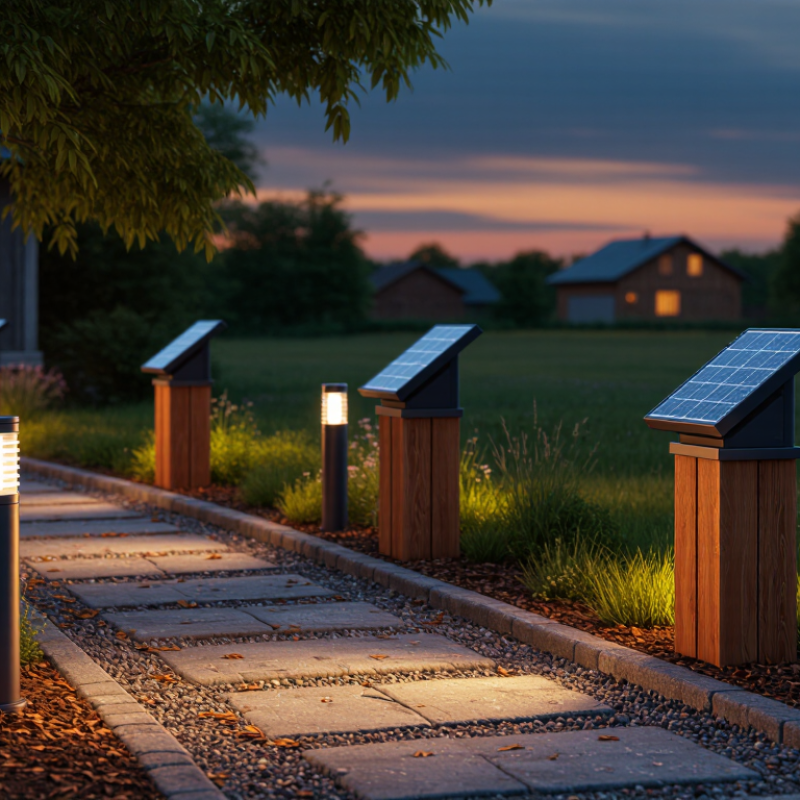
How to Choose the Best Solar Post Lights in 2026?

Assess Your Outdoor Space and Lighting Needs

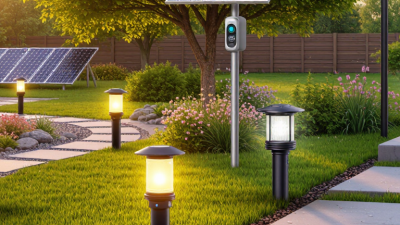
Before choosing solar post lights, map the places people actually use after dark: gate entrances, path turns, steps, and seating areas. Measure post spacing and note nearby walls, trees, and roof eaves. These can block sunlight or cast awkward shadows. NREL’s National Solar Radiation Database maps U.S. solar resources, with annual-average global horizontal irradiance varying roughly from 3 to over 6 kWh/m²/day by location. That difference matters: a post in a sunny yard may recharge reliably, while one beneath a maple canopy may struggle. Check seasonal shade, not just midday summer sun.

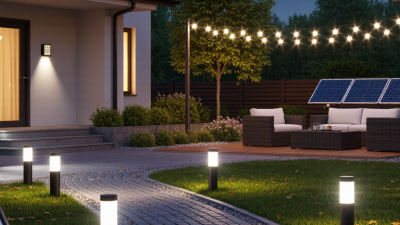
Then match brightness and beam direction to each task. A path needs gentle, continuous guidance; a stair landing needs clearer visibility at foot level. The Illuminating Engineering Society’s RP-33 guidance for exterior environments emphasizes visual needs, light distribution, and glare control. Avoid choosing by lumen claims alone. A bright fixture aimed into someone’s eyes can make a walkway harder to read. I’d sketch the layout at dusk and mark dark gaps before buying. It’s not exact science. Still, it exposes a common mistake: spacing lights evenly even when trees, bends, or steps call for closer coverage.
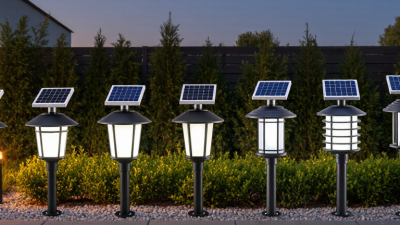
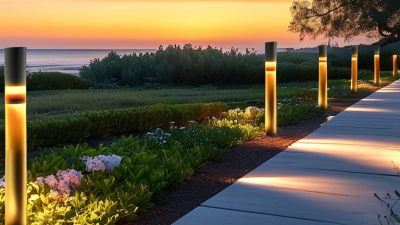
Compare Solar Panel Types, Battery Capacity, and Brightness

How to Choose the Best Solar Post Lights in 2026?

Compare the panel, battery, and light output as a system. Monocrystalline panels usually offer higher efficiency in a compact area. Polycrystalline panels can cost less, while amorphous panels may suit diffuse-light conditions but often need more surface area. Shade still matters. A panel tucked beneath a porch roof may struggle, even if its specifications look impressive.

Compare battery energy in watt-hours, not just milliamp-hours: multiply mAh by voltage and divide by 1,000. Then check the stated runtime at the brightness you plan to use. Lumens measure visible light output; a higher number can mean brighter illumination, but shorter operation. The U.S. Department of Energy reports that LED lighting uses at least 75% less energy than incandescent lighting. That comparison explains LEDs’ efficiency, but it does not guarantee any particular solar light’s runtime.

Tips: Check whether the panel gets several hours of direct sun, and look for separate lumen and runtime figures. Ask whether runtime is tested at full brightness. Small detail. Specifications can be optimistic, and winter clouds may change the result. If possible, compare the light outdoors for several evenings before settling on one.

Choose Post Light Materials, Styles, and Weather Protection

For solar post lights, the housing material affects both appearance and upkeep. Powder-coated aluminum is light and resists rust, but scratches can expose the metal beneath. Stainless steel feels sturdy; in salty coastal air, choose a corrosion-resistant grade and rinse it occasionally. Resin is often affordable and will not rust, though thin parts may fade or crack after years of strong sun. Small detail. Check that the solar panel and battery are replaceable before buying.

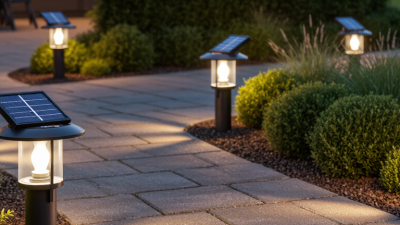
Match the style to the post and surrounding space. A cap light gives a clean, low-profile look and spreads light across the post top. A lantern-style fixture adds character, but its taller shape may catch more wind. Measure the post opening and mounting area; a beautiful fixture that wobbles or overhangs can become annoying. Warm white light usually feels softer near a patio, while cooler light can make paths easier to see.

Weather protection matters as much as looks. Check the stated IP rating and confirm the fixture is suitable for exposed outdoor use; “water-resistant” alone is vague. Look for sealed seams, a covered battery compartment, and drainage that will not trap rainwater. In snowy or shaded yards, panels may collect debris or receive too little sun, reducing runtime. Not always simple. Clean the panel gently, and remember that winter performance can vary even with careful placement.

Evaluate Installation Requirements and Expected Performance

When choosing solar post lights in 2026, check the post dimensions, mounting method, and access to direct sunlight before comparing brightness claims. A cap that fits a four-inch post may wobble on a slightly wider one. Nearby trees, rooflines, and fences can also shade the panel. In winter, shorter days and low sun may reduce charging, so advertised runtimes should be treated as test conditions, not promises. The U.S. Department of Energy reports that LEDs use at least 75% less energy than incandescent lighting. That efficiency helps, but it cannot compensate for a small panel or a depleted battery.

Tips: Measure the post top, note its daily sun exposure, and check whether the battery is replaceable. Look for clear runtime and charging details, plus a weather-resistance rating suited to your site. If possible, test one light through several cloudy days before outfitting every post. A single bright evening proves little.

Installation needs are easy to overlook. Confirm that screws, adapters, or a flat mounting plate match the post material and shape. For a wooden post, avoid overtightening; for a metal cap, check that water cannot pool around the fixture. Also inspect how the battery compartment opens. A design that requires removing the entire light for a battery change may become frustrating. I would compare expected performance in shade and cold, not just peak brightness. Those conditions are often the real test.

Review Maintenance Needs, Warranty, and Long-Term Cost

How to Choose the Best Solar Post Lights in 2026?

Review Maintenance Needs, Warranty, and Long-Term Cost

A solar post light is only low-maintenance if its parts are easy to inspect and replace. Check whether the battery compartment opens without special tools, and whether the panel can be wiped clean. Dust, pollen, and bird droppings can visibly dull a panel after a dry week. That matters. Ask how often the battery needs replacement and whether a compatible replacement is available; a sealed fixture may become disposable when its battery weakens.

The U.S. Department of Energy notes that LED lifetime ratings can reach 50,000 hours. That rating describes the LED, not the battery or complete fixture. NREL’s 2013 review, “Photovoltaic Degradation Rates—An Analytical Review,” found a median degradation rate of about 0.5% per year across studied PV modules. Small outdoor-light panels differ, so this figure is context, not a lifespan promise. Sun exposure and shade can change real-world performance.

Read the warranty’s exclusions, not just its term. Check whether it covers the battery, panel, housing, and water ingress separately. A five-year warranty may offer little value if the battery is excluded after one year. Compare expected replacement costs over several seasons, including batteries and any tools or labor. A cheaper light can cost more if its battery is inaccessible. I would also question optimistic runtime claims: winter shade and short days can shorten nightly illumination, sometimes substantially.

Go to Top