Why Choose a Turn Mill CNC Machine for Global Buyers?

For global manufacturers, choosing a Turn-Mill Cnc Machine is rarely a simple price decision. It affects machining accuracy, production speed, labor requirements, and long-term service costs. A single machine can combine turning, milling, drilling, and some threading operations in one controlled setup. That matters when a component has several precise surfaces.

Consider a valve body, aerospace fitting, or medical instrument housing. Repositioning such parts between machines can create alignment errors. A turn-mill center reduces those movements and keeps the workpiece secured in one chuck. Less handling often means more consistent results.

But efficiency is not automatic. It depends on spindle configuration, live tooling power, axis travel, bar capacity, and control-system capability. These details should match the buyer’s actual materials and part drawings. A machine may look impressive in a showroom yet perform poorly with difficult alloys. That is an easy mistake to make.

Experienced buyers also examine supplier credibility. They request test-cut videos, inspection reports, machine accuracy data, and clear warranty terms. Reliable manufacturers explain installation, operator training, spare-parts availability, and remote support before payment. This evidence is more useful than broad marketing claims.

Global purchasing adds another layer. Voltage, safety documentation, import procedures, packaging quality, and local technical support can influence the final cost. Delivery delays may stop an entire production line. Careful planning helps, although no supplier can remove every risk.

A Turn-Mill Cnc Machine is not the right answer for every workshop. Some operations need separate specialized machines instead. The strongest decision comes from comparing cycle-time savings, maintenance demands, programming difficulty, and future production needs. That comparison creates a practical foundation for buyers seeking dependable value across international markets.
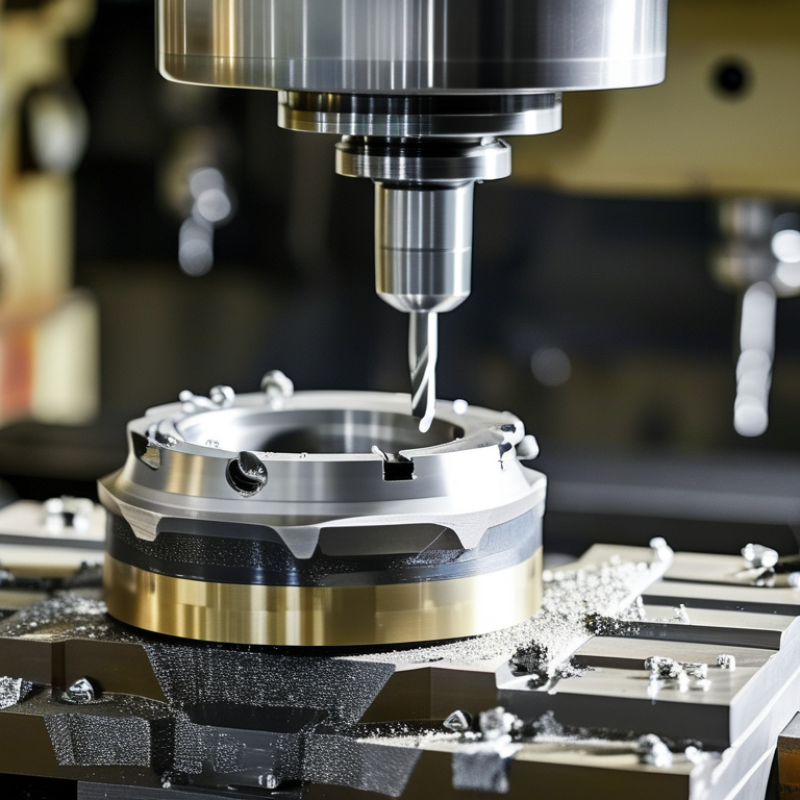
Why Choose a Turn Mill CNC Machine for Global Buyers?

What Is a Turn Mill CNC Machine?

Why Choose a Turn Mill CNC Machine for Global Buyers?

What Is a Turn Mill CNC Machine?

A turn mill CNC machine combines turning and milling in one computer-controlled platform. A chuck rotates the workpiece, while driven tools cut slots, flats, holes, and threads. Many models add a Y-axis, live tooling, or a second spindle. This lets one machine complete several operations without moving the part between fixtures. In practical terms, it can machine a steel shaft, drill cross-holes, and mill keyways in one cycle. That reduces alignment errors and handling time, although programming becomes more demanding.

The term is not perfectly standardized across suppliers. Some mean a basic mill-turn lathe, while others mean a full multitasking center. Buyers should verify spindle speed, bar capacity, axis travel, tool count, thermal control, and software compatibility. A realistic factory trial matters more than a polished brochure. Grand View Research valued the global CNC machine market at about USD 83.7 billion in 2023. Its analysis projects continued growth through 2030. This figure covers many CNC categories, not turn-mill machines alone. AMT’s 2023 U.S. Manufacturing Technology Orders report also recorded roughly USD 5 billion in equipment orders.

For global buyers, the value appears on complex, repeatable parts. Fewer setups can shorten lead times and reduce fixture inventory. One clamping position may also simplify inspection records. But a turn mill is not automatically the best choice. Low-volume, simple parts may cost less on separate equipment. The wrong machine can become an expensive monument. Ask for sample-part cycle data, dimensional results, service response times, and training coverage before purchase.

How Turn Mill CNC Machines Combine Turning and Milling

Why Choose a Turn Mill CNC Machine for Global Buyers?

Turn mill CNC machines combine turning and milling in one controlled workspace. A spindle rotates the workpiece, while live tools cut flats, slots, holes, and complex profiles. This removes repeated chucking between separate machines. It also protects datum accuracy during multi-sided machining.

Grand View Research estimated the global CNC machine market at about US$81.9 billion in 2022. That scale reflects demand for flexible, automated production. The IFR World Robotics 2024 report recorded 4.28 million industrial robots operating worldwide in 2023. Turn mill systems fit this direction because one platform can support robotic loading, probing, and continuous machining.

A practical example is a stainless-steel valve body. The machine can face the stock, turn the diameter, drill cross-holes, and mill a keyway. One setup. Fewer alignment errors. Shorter movement between operations also reduces handling time. However, integration is not automatically better. Tool interference, chip evacuation, and programming complexity can create new delays. I would not select a turn mill machine without checking spindle torque, tool capacity, axis travel, and post-processor reliability. The machine may save floor space, yet it can demand stronger operator training. That trade-off deserves honest review.

Which Manufacturing Benefits Do Turn Mill CNC Machines Offer?

Why Choose a Turn Mill CNC Machine for Global Buyers?

Turn mill CNC machines combine turning, milling, drilling, and threading in one controlled setup. This integration reduces workholding changes and limits repeated alignment errors. A complex shaft may move from raw bar to finished part with fewer interruptions. That matters when tolerances reach micrometer levels.

Deloitte’s 2024 Smart Manufacturing and Operations Survey found that 86% of manufacturing executives view smart manufacturing as important for future competitiveness. Turn mill equipment supports this direction through tool monitoring, production data, and repeatable digital programs. Manufacturers can reduce manual transfers, shorten setup time, and improve labor efficiency. These gains are especially useful for aerospace, medical, energy, and precision automation components.

The World Economic Forum’s Global Lighthouse Network reports that leading factories have achieved major productivity and lead-time improvements through connected production systems. A turn mill machine can contribute to similar results, but the benefit is not automatic. Programming quality, tool selection, material behavior, and operator experience still decide performance. The trade-off is real. A high-end machine may require greater investment and stronger process planning. Smaller workshops can also face a difficult learning curve. Still, fewer fixtures, less floor movement, and tighter process control create a persuasive case for global buyers seeking stable production. One overlooked detail is chip evacuation. Poor chip control can quietly damage cycle time and surface quality.

Turn mill CNC machines combine turning and milling operations in one setup. This normalized planning index uses a conventional separate turning-and-milling workflow as the baseline of 100; higher values represent greater potential benefit for the listed manufacturing factor. Actual results depend on part geometry, programming, tooling, material, and production volume.

What Should Global Buyers Evaluate Before Purchasing?

Why Choose a Turn Mill CNC Machine for Global Buyers?

What Should Global Buyers Evaluate Before Purchasing?

A turn mill CNC machine combines turning, milling, drilling, and threading in one setup. That can reduce workholding changes and alignment errors. However, “multi-function” does not automatically mean better productivity. Grand View Research valued the global CNC machine market at approximately USD 83.6 billion in 2023. Its forecast also indicates continued growth through 2030. Buyers should examine useful output, not market excitement.

Start with real components. Check maximum turning diameter, bar capacity, spindle torque, milling speed, and Y-axis travel. A heavy steel shaft needs different torque from a small aluminum fitting. Ask for cycle-time trials using your material and drawing. Review surface-finish results, tool-life records, and chip evacuation. A machine that looks fast may lose hours beside a full chip bin. Small details matter.

Control compatibility and service deserve equal attention. The International Federation of Robotics reported more than 500,000 industrial robot installations globally in 2023, showing rising demand for connected production. Yet connectivity can create integration costs. Confirm data protocols, cybersecurity practices, training, spare-part availability, and response times in your region. Verify electrical, guarding, and documentation requirements under local regulations. A common mistake is comparing only machine prices. Total cost also includes tooling, installation, software, inspection equipment, and operator learning. The perfect specification rarely exists. A careful buyer should record compromises before signing.

Why Choose a Turn Mill CNC Machine for Global Buyers? - What Should Global Buyers Evaluate Before Purchasing?

A turn mill CNC machine combines turning and milling operations in one platform, helping reduce workholding changes, transfer time, and alignment errors. The figures below are practical evaluation benchmarks for international buyers; actual specifications must be confirmed through supplier quotations, acceptance tests, and sample-part trials.

Evaluation Dimension Indicative Benchmark or Data Why It Matters to Global Buyers What to Verify Before Purchasing
Process Capability Turning, face milling, drilling, tapping, boring, grooving, and live-tool milling in one setup Combining operations can reduce intermediate handling and improve positional consistency between features. Request a cycle-time study and confirm that the machine can complete the buyer's actual part family without secondary equipment.
Number of Controlled Axes Common configurations: 5 to 9 controlled axes; simultaneous interpolation depends on the machine configuration More coordinated axes can support complex components and reduce the need for additional fixtures or setups. Confirm which axes are simultaneous, which are positioning-only, and whether the CNC control supports the required tool paths.
Maximum Turning Diameter Often approximately 200 to 600 mm for compact and mid-size turn mill platforms The usable diameter determines whether current and planned components can be machined safely within the working envelope. Compare the maximum swing with the real cutting diameter, chuck size, toolholder clearance, and tailstock or sub-spindle limitations.
Maximum Turning Length Common working lengths range from approximately 300 to 1,000 mm, depending on machine size A sufficient Z-axis travel helps prevent additional setups for long shafts and multi-feature components. Check usable turning length after allowing for chuck, tooling, sub-spindle, steady rest, and safety clearance.
Bar Capacity and Chuck Size Typical bar capacities are approximately 20 to 80 mm; larger machines may support more Bar capacity affects material utilization, automation options, and the range of parts that can be produced from bar stock. Verify through-spindle diameter, chuck or collet compatibility, remnant length, bar feeder interface, and maximum workpiece weight.
Spindle and Live-Tool Performance Main spindle power commonly falls around 11 to 30 kW; live-tool speeds may range from 3,000 to 12,000 rpm Power and speed influence material removal rates, milling capability, surface finish, and tool life. Match continuous and peak torque curves to the buyer's materials, tool diameters, cutting depths, and required production rate.
Accuracy and Repeatability Indicative positioning accuracy may be approximately ±0.005 to ±0.010 mm, depending on axis travel and test conditions Reliable repeatability is essential for tight-tolerance components and for maintaining consistent quality across international production sites. Request measurement results based on ISO 230-2 or an equivalent standard, and conduct a witnessed machining and inspection test.
Cycle-Time Reduction Potential A realistic target is a 15% to 40% reduction in handling and setup-related time when multiple operations are consolidated Reduced handling can improve throughput while lowering alignment errors and work-in-process inventory. Use the buyer's real process route to compare total production time, including loading, probing, tool changes, inspection, and rework.
Automation Readiness Options may include bar feeders, robotic loading, parts catchers, probing, tool monitoring, and chip conveyors Automation can reduce labor dependency and support consistent production across regions with different labor costs. Confirm communication protocols, interface drawings, safety circuits, payload, changeover time, and compatibility with existing factory systems.
Tool Capacity and Management Typical tool magazines contain approximately 12 to 80 tools, depending on machine configuration Adequate tool capacity supports complex parts and longer unattended production runs. Check the number of driven tools, toolholder standards, tool length limits, presetting options, sister-tool management, and spare-tool storage.
Electrical and Utility Requirements Many industrial machines require three-phase power; installed power commonly ranges from approximately 20 to 60 kVA Electrical compatibility affects installation cost, commissioning time, and suitability for the buyer's destination facility. Confirm voltage, frequency, phase configuration, transformer requirements, compressed-air pressure, coolant capacity, and heat load.
Machine Footprint and Shipping Machine mass may range from approximately 5 to 20 tonnes; footprint and height vary substantially by configuration Transportation, rigging, customs clearance, floor loading, and factory access can materially affect the delivered cost. Request packed dimensions, gross weight, center of gravity, lifting points, floor-loading data, and installation-access requirements.
Software, Connectivity, and Data Security Relevant features may include Ethernet, USB, remote diagnostics, DNC transfer, tool-life data, and production monitoring Connectivity supports traceability, preventive maintenance, process reporting, and integration with digital manufacturing systems. Clarify supported file formats, network security, user permissions, offline programming, backup procedures, and remote-support policies.
Installation and Training Plan for site preparation, mechanical installation, geometric verification, operator training, and process qualification Proper commissioning helps achieve the quoted accuracy and reduces ramp-up delays after overseas delivery. Define installation scope, training hours, acceptance criteria, language support, travel responsibility, and documentation requirements.
After-Sales Support Evaluate response coverage, spare-parts availability, diagnostic capability, and local or regional service access Downtime costs can exceed the original purchase-price difference, especially when replacement parts must cross borders. Ask for service-response targets, critical spare-parts lists, warranty exclusions, escalation procedures, and preventive-maintenance schedules.
Total Cost of Ownership Assess purchase price plus freight, duties, installation, tooling, software, energy, maintenance, labor, and downtime The lowest initial price may not provide the lowest cost per finished component over the machine's service life. Calculate cost per acceptable part using cycle time, annual volume, utilization, consumables, service costs, and expected machine availability.
Acceptance Testing Use geometric inspection, spindle checks, axis tests, surface-finish trials, and a buyer-approved sample component A documented acceptance process protects the buyer when the machine is purchased remotely or delivered internationally. Include measurable pass/fail criteria, inspection equipment, sampling method, correction period, and remedies for nonconformance in the contract.

Note: All numerical ranges are general industry benchmarks rather than guarantees. Final performance depends on machine design, workpiece material, tooling, programming, environmental conditions, and test methods.

How to Choose the Right Turn Mill CNC Machine for Your Needs

Why Choose a Turn Mill CNC Machine for Global Buyers?

Choosing the right turn mill CNC machine starts with the part, not the machine’s advertised size. Define the maximum diameter, length, material, and required tolerances. A steel shaft needs different rigidity than a small aluminum fitting. Check spindle power, bar capacity, chuck size, and live-tool speed against real production drawings. Bigger is not always better.

Review the machine’s working envelope carefully. A Y-axis, sub-spindle, or lower turret can reduce secondary operations and handling time. However, extra functions may increase setup complexity and maintenance costs. Ask for a sample cycle using your own material and tools. Measure surface finish, dimensional repeatability, chip control, and cycle time. A short demonstration can reveal problems that brochures hide.

Control usability also matters for global buyers. Operators should understand tool offsets, probing routines, alarm messages, and program recovery. Reliable remote support, spare-parts access, training, and clear documentation deserve equal attention. Confirm electrical standards, safety compliance, installation requirements, and local service coverage before ordering. I would also calculate total ownership cost, including coolant, tooling, energy, and downtime. My earlier assumption was that automation always improved efficiency; in smaller batches, it sometimes created more setup work. Choose the configuration that matches your workflow, not an impressive specification list.

Go to Top