What Are the Top Solar LED Light Types in 2026?

Choosing a solar LED light in 2026 is less about buying the brightest fixture and more about matching its design to the site. A narrow path needs even, low-glare light; a driveway may need motion sensing; a garden often needs softer accent lighting. Roof-mounted panels, battery capacity, weather exposure, and winter daylight can change how well each type performs.

The wider solar market offers useful context, but it cannot prove that every solar LED product is dependable. The International Energy Agency’s Renewables 2024 report says global renewable capacity additions reached nearly 510 gigawatts in 2023, with solar photovoltaic power providing about three-quarters of the increase. IEA Executive Director Fatih Birol called solar “the new king of electricity markets around the world” in the agency’s World Energy Outlook 2020. That comment describes solar power broadly, not solar lighting specifically. The distinction matters.

This guide compares the leading types: pathway lights, wall-mounted fixtures, security floodlights, streetlights, and decorative garden models. It will examine brightness, sensor behavior, battery and panel design, installation, and likely upkeep. A small panel shaded by a porch roof may disappoint, even when the product looks impressive in a product photo. Not every fixture suits every site. Treat advertised runtime as a claim to verify against panel exposure and local conditions. Details matter.
What Are the Top Solar LED Light Types in 2026?

How Solar LED Lights Work and How Their Types Are Classified

Solar LED lights convert daylight into stored electrical energy. A photovoltaic panel produces direct current, while a charge controller manages battery charging and helps prevent excessive discharge. After dusk, a light sensor signals the circuit to power the LEDs. Simple. In practice, shade, winter daylight, battery age, and panel angle can change how long a light runs.

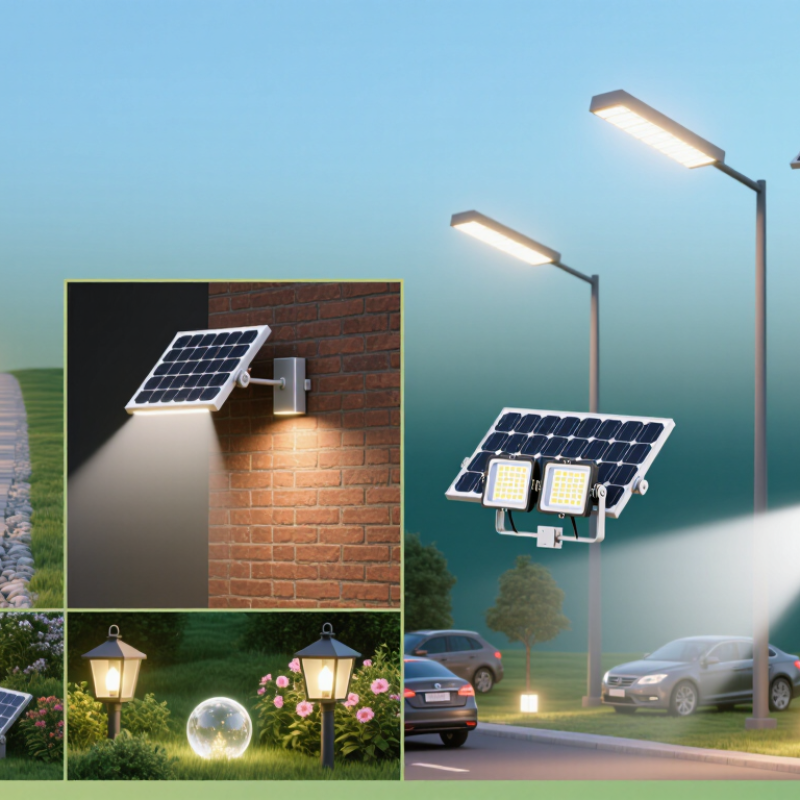
In 2026, solar LED types are best classified by where and how they distribute light, rather than by one universal ranking. Path lights mark garden edges with low, downward beams. Wall lights illuminate doors and steps; some use motion sensors to conserve stored energy. Floodlights cast wider beams across driveways or yards, while street and area lights mount higher for broader coverage. Decorative string lights create atmosphere, but usually provide less task lighting.

The hardware differs too. Integrated units place the panel, battery, and lamp in one housing. Split systems connect a separate panel to the fixture, which can help when the sunniest spot is away from the mounting point. Check battery capacity, replaceability, weather rating, and stated light output. Lumens describe brightness, but beam angle and mounting height also matter. A small path lamp cannot reliably replace a security floodlight, even if its packaging sounds impressive. Solar output varies.

Which Solar LED Light Types Stand Out in 2026?

Which Solar LED Light Types Stand Out in 2026?

Motion-sensor security lights stand out for driveways and side entrances, where bright output is needed only briefly. Solar street and area lights suit long paths, parking spaces, and rural access roads. Pathway lights offer softer guidance, while portable solar work lights help in sheds or during outdoor repairs. Choose by task, not by the biggest lumen number.

IRENA’s Renewable Capacity Statistics 2025 reports 1,865 GW of global solar capacity at the end of 2024. That growth supports wider solar adoption, but it does not prove every solar light performs well. Check the panel’s exposure, battery capacity, stated runtime, and whether the battery can be replaced. A shaded panel or several cloudy days can leave a bright fixture useless when needed. Manufacturers’ runtime claims also vary, so compare test conditions where available.

Tips: Aim the panel toward unobstructed daylight, and test the light after dusk. For security, motion sensing can conserve stored energy. For pathways, prioritize even, glare-controlled light. Small but important.

What Are the Top Solar LED Light Types in 2026? — Which Solar LED Light Types Stand Out in 2026?

Solar LED Light Type Typical Design Best Suited For Standout Features Key Buying Consideration
Pathway and Stake Lights Small fixtures with an integrated solar panel, rechargeable battery, and ground stake. Garden borders, paths, and driveways where low-level guidance lighting is useful. Simple to install and reposition; many switch on automatically at dusk. Choose a location with adequate direct sunlight, and check the spacing and light distribution rather than relying only on fixture count.
Solar Floodlights Wide-beam LED fixtures, often supplied with a separate solar panel for flexible placement. Yards, garages, sheds, and other areas needing broad-area illumination. Can illuminate a larger area than small decorative lights; some models include adjustable heads or operating modes. Check beam coverage, panel-cable length, and whether the panel can receive sun while the light is mounted in shade.
Motion-Sensor Security Lights Outdoor lights that use a motion sensor to activate or brighten the LEDs when movement is detected. Entrances, side passages, garages, and other areas where light is needed on demand. Motion-activated operation can reduce the time spent at full brightness compared with continuous lighting. Review sensor range, detection angle, adjustable settings, and placement to limit false triggers.
Solar Wall Lights Wall-mounted fixtures with an integrated or remotely positioned solar panel; designs range from decorative to functional. Porches, exterior walls, gates, and steps. Mount neatly on a vertical surface and can provide either accent lighting or localized visibility. Confirm that the panel will receive sufficient daylight after installation and that the fixture is rated for its outdoor exposure.
Solar String Lights A series of small LEDs connected along a cable, usually powered by a separate solar panel and rechargeable battery. Patios, balconies, pergolas, and decorative outdoor settings. Flexible arrangement and broad decorative coverage; some versions offer selectable lighting modes. Check cable length, bulb spacing, panel placement, and whether the product is intended for year-round outdoor use.
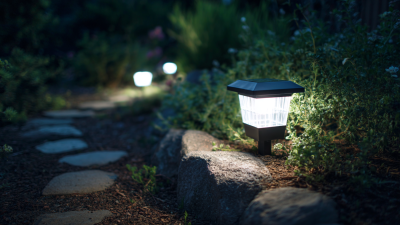
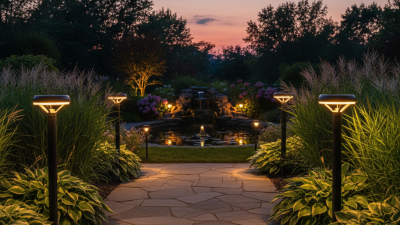
Post Cap and Bollard Lights Fixtures designed to sit on top of posts or stand at a low height beside paths and landscape features. Deck railings, fence posts, garden edges, and walkway markers. Combines a fixed installation with subtle accent or wayfinding light. Match the fixture base to the post or mounting surface, and check the light direction to avoid unwanted glare.
Portable Solar Lanterns Compact, movable lights with an integrated solar-charging panel; some models also support USB charging. Camping, outdoor dining, emergency kits, and temporary lighting. Portable and useful where permanent wiring is impractical; handles or collapsible designs improve storage and carrying. Check battery capacity, charging options, weather protection, and whether the light can be used while charging.

Selection note: Actual brightness and runtime vary with panel size, battery capacity, sunlight exposure, temperature, and operating mode. For reliable performance, compare product specifications and install the solar panel where it receives unobstructed daylight.

How Pathway, Flood, Street, and Security Lights Differ

What Are the Top Solar LED Light Types in 2026?
How Pathway, Flood, Street, and Security Lights Differ

Solar pathway lights are designed to mark edges, steps, and garden routes. Their soft, downward glow helps people see the ground without lighting an entire yard. Floodlights cover wider areas, such as a driveway or backyard wall. They usually need a stronger panel and battery to run brighter LEDs. Placement matters. A shrub’s shadow can leave part of the beam dark.

Solar street lights serve longer routes and open spaces. Their raised fixtures spread light across roads or paths, often using larger panels and batteries than small garden lights. Security lights focus on sudden activity near doors, garages, or side gates. Many use motion sensors, so they stay dim or off until triggered. That can save stored energy, though sensor range and false triggers may need adjustment.

Tips: Match the light to the area, then check its panel exposure and stated runtime. A north-facing wall or winter shade can reduce charging. Test the beam after dark. It may not cover the way you expected. A little trial and error is normal.

What Are the Top Solar LED Light Types in 2026?

Typical light-output ranges vary by product and application. Pathway lights prioritize gentle illumination, while flood, street, and security lights generally serve larger or brighter areas.

Indicative ranges in lumens, not standardized limits or market averages. Product specifications vary, and flood and security light ranges can overlap.

What Features Affect Solar LED Light Performance?

What Are the Top Solar LED Light Types in 2026?

Solar LED lights may share the same basic parts, but their performance depends on how those parts work together. A path light with a small panel can suit a sunny walkway, yet struggle under a porch roof. Panel exposure matters. Shade, winter daylight, and panel angle all affect how much energy reaches the battery.

Battery capacity shapes runtime, while the LED’s brightness setting affects how quickly that stored energy runs out. A motion sensor can save power by keeping a light dim until someone approaches. Check whether its detection range fits the space; a sensor aimed at passing traffic may trigger too often. Lens design also matters. A focused beam can brighten a gate, while a wide beam may work better near steps.

Weather resistance and installation details deserve a close look. Water can enter through weak seals, and dirt on a panel can reduce charging. Small details matter. Look for clear performance information, such as expected runtime and charging conditions, rather than relying on a brightness figure alone. I would not assume a higher lumen rating means a better light; it may simply drain its battery sooner. Even good specifications cannot promise identical results in every yard.

How to Choose a Solar LED Light Type for Each Application

What Are the Top Solar LED Light Types in 2026?
How to Choose a Solar LED Light Type for Each Application

Choose by task, not appearance. Pathways suit low bollard lights that mark edges without glaring into windows. Entrances need wall-mounted motion lights with focused beams. Large yards and parking areas benefit from adjustable floodlights or area lights. For roads, compare pole height, beam distribution, and required coverage before choosing a streetlight. A bright lamp can still leave dark patches.

Check winter sunlight, shade, battery capacity, and the number of cloudy days the system must cover. The U.S. Department of Energy reports that LEDs use at least 75% less energy than incandescent lighting and can last up to 25 times longer. That efficiency helps solar systems stretch stored power, but it does not guarantee all-night operation. Panel angle, battery age, and cold weather matter. A common mistake is buying by advertised brightness alone.

Tips: Match beam shape to the ground area, then check runtime after several low-sun days. Test the light at dusk; glare and uneven coverage are easy to miss on a specification sheet. DOE Energy Saver, “LED Lighting,” provides the efficiency comparison above.

Go to Top