Top Tips for Choosing LED Solar Street Lights for Your Needs?
Choosing the right LED solar street light can enhance safety and visibility in your area. These lights are energy-efficient and eco-friendly, making them a popular choice for urban and rural settings. However, knowing which features to prioritize is key to finding the best option for your needs.
Consider the brightness level of the LED solar street light. Higher lumens provide better illumination, yet might consume more energy. Assess your lighting requirements based on the location and purpose. For example, a busy street may need brighter lights compared to a quiet residential area.
Another aspect to reflect on is the durability of the product. Solar street lights are exposed to the elements. Look for options with weather-resistant materials. In addition, battery life is crucial. A reliable solar street light should last throughout the night after a full charge. Taking the time to research these factors ensures you choose a street light that meets your community's needs effectively.
Factors to Consider When Choosing LED Solar Street Lights
Choosing the right LED solar street lights for your needs involves multiple factors. One of the primary considerations is lumen output. A lumens measure the brightness of the light, and depending on the area size, requirements will vary. For roads and parking lots, a range of 1,500 to 4,000 lumens is typically recommended. Areas with higher traffic may need even more lumens for safety and visibility.
Battery capacity is another critical factor. Most LED solar street lights use lithium-ion batteries, which offer efficient energy storage. A 40Ah battery can power a 50-watt light for approximately 9 to 12 hours. However, seasonal variations in sunlight can affect charging. If your location experiences prolonged cloudy days, consider lights with larger battery capacities or hybrid systems that utilize grid power when necessary.
Durability can never be overlooked. Many street lights use aluminum or reinforced plastic to withstand harsh weather conditions. Look for products with an IP66 rating, indicating dust and water resistance. These models generally require more maintenance and replacements. Gathering information from industry reports can quantify maintenance needs, often estimating that poorly rated lights need replacing every 3-5 years, whereas higher-rated options can last over a decade with proper care.
Benefits of LED Solar Street Lights for Outdoor Lighting Needs
LED solar street lights are becoming essential for outdoor lighting. They offer numerous benefits, making them popular choices for communities and municipalities. One of the key advantages is their energy efficiency. According to the U.S. Department of Energy, LED lighting can consume up to 75% less energy than traditional lighting. This efficiency translates into lower operational costs, which is vital for budget-conscious projects.
Another significant benefit is their environmental impact. Solar street lights reduce carbon emissions and reliance on fossil fuels. Data from the International Renewable Energy Agency indicates that solar energy can significantly decrease greenhouse gas emissions. This aligns with global goals for sustainable urban development. However, installation costs can be higher compared to conventional street lighting. This challenge requires careful budgeting and planning.
Additionally, LED solar street lights boast longer lifespans. Many models last up to 50,000 hours, which is substantially longer than traditional counterparts. However, factors like battery quality and weather conditions can affect longevity. Regular maintenance and monitoring are necessary to ensure optimal performance. Investing in quality solutions can mitigate these potential issues, leading to reliable outdoor lighting that meets diverse needs.
Top Tips for Choosing LED Solar Street Lights for Your Needs
| Feature |
Description |
Benefits |
| Brightness Level |
Measured in lumens, determining how much light is produced. |
Higher lumens provide better visibility and safety. |
| Battery Capacity |
Capacity measured in Ah (Amp hours) affects operation duration during nights. |
Longer lasting lights with fewer charging cycles. |
| Solar Panel Efficiency |
Efficiency rating that indicates how much sunlight is converted to electricity. |
More energy collected, providing longer illumination times. |
| Durability Rating |
Rated for weather resistance and operational lifespan. |
Reliable performance under extreme weather conditions. |
| Installation Type |
Options for pole-mounted or wall-mounted installations. |
Flexible use in various locations. |
| Control Features |
Includes options for motion sensors, timers, or smart controls. |
Enhanced safety and energy efficiency. |
Understanding Different Types of LED Solar Street Lights Available
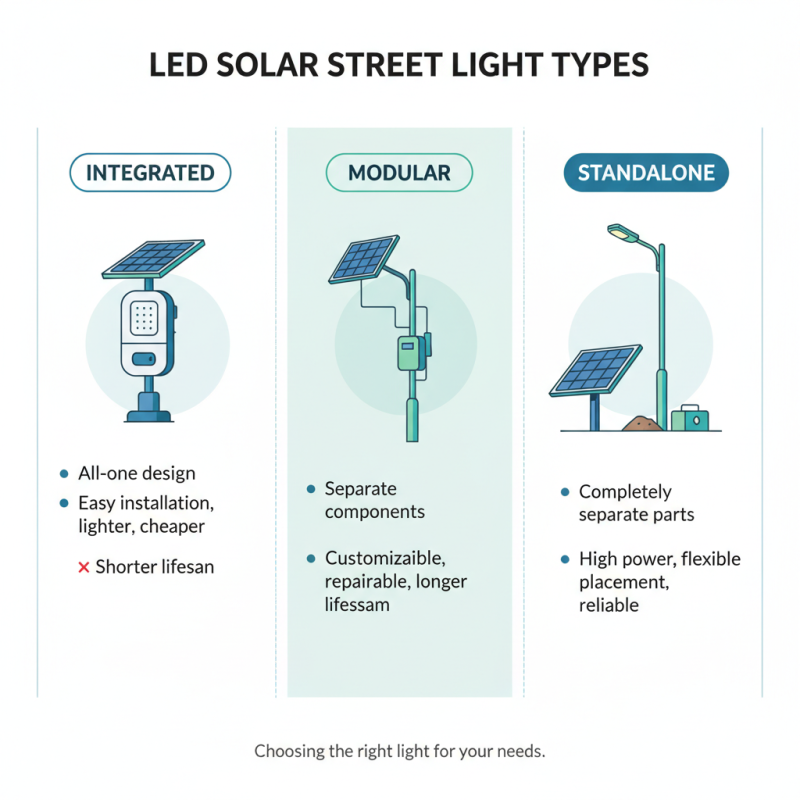
When selecting LED solar street lights, understanding the types available is crucial. There are primarily three categories: integrated, modular, and standalone solar street lights. Integrated lights feature all components in one unit, making installation easier. They are lightweight and often more affordable. However, their lifespan may be shorter due to the compact design.
Modular lights have separate components. This allows for flexibility and easier upgrades. You can replace batteries or LEDs as needed. The initial investment can be higher, but they often last longer. Standalone lights offer varying features based on specific locations. They come with advanced sensors, which can optimize energy use. However, the complexity might confuse some users, requiring more technical knowledge.
Choosing the right type often comes down to specific needs and installation conditions. Some environments need robust configurations, while others may favor simplicity. Climate and location also play a role. An area with little sunlight may not benefit from solar lights as much. In each case, it’s essential to evaluate the site and reflect on which design truly fits your requirements.
Evaluating Brightness and Energy Efficiency in Solar Street Lights
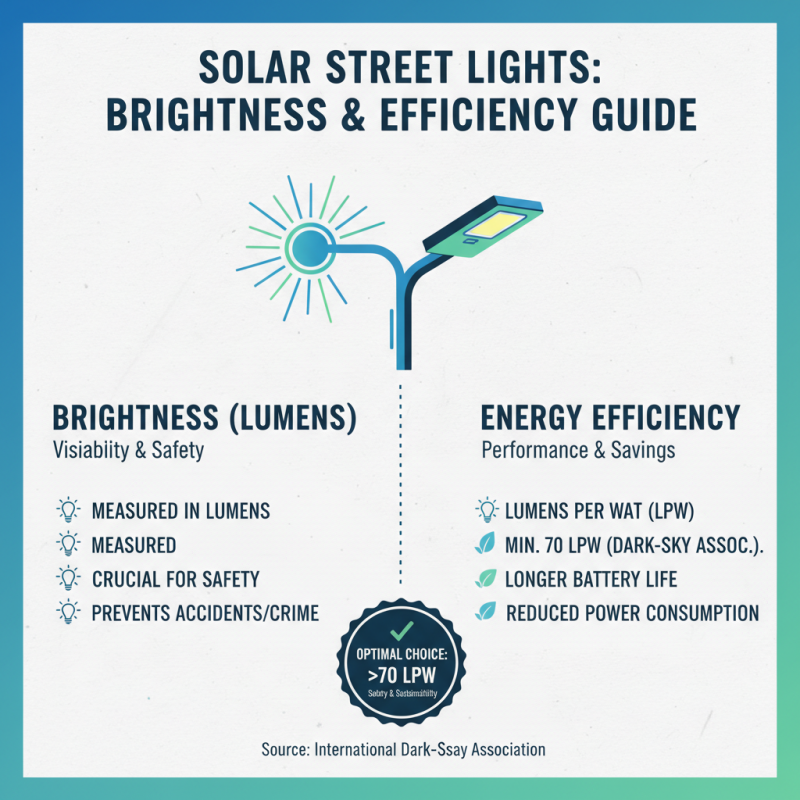
When selecting LED solar street lights, evaluating brightness and energy efficiency is essential. Brightness is typically measured in lumens. According to the International Dark-Sky Association, effective street lighting should provide at least 70 lumens per watt for optimal illumination. Poorly lit areas can increase safety concerns, making brightness a top priority.
Energy efficiency is equally critical. A study by the U.S. Department of Energy indicates that LED solar lights can save up to 60% more energy than traditional fixtures. They also have a longer lifespan, reducing replacement costs. Solar panels should have an efficiency rating above 15% to harness enough sunlight for adequate power. However, many solar lights fall short in cloudy climates, leading to inconsistent performance.
Finding the right balance of brightness and energy efficiency can be challenging. Inadequate lighting may lead to safety issues. Conversely, overly bright lights can create glare, affecting visibility. Opt to choose products that offer adjustable brightness settings, allowing for customization based on the environment. This adaptability ensures that light levels match the specific needs of various locations.
Installation and Maintenance Tips for LED Solar Street Lights
When considering the installation of LED solar street lights, understanding their maintenance is crucial. Regular maintenance can extend the lifespan of these lighting systems significantly. According to the U.S. Department of Energy, properly maintained solar street lights can last up to 25 years or more. It's essential to perform checks every few months, especially after adverse weather. Dust and debris can accumulate on solar panels, reducing their efficiency. Simple cleaning can restore power output.
Battery care is another vital component. Many solar street lights use lithium-ion batteries, which require specific handling. Reports indicate that improper maintenance can reduce battery life by up to 50%. Consider monitoring the battery's charge cycle regularly. If the performance declines, replacement may be necessary sooner than expected.
Installation sites should be chosen wisely. Obstructions can lead to decreased sunlight exposure. Installing lights in areas with ample sun can boost their performance significantly. Pay attention to local climate patterns, as prolonged rain or snow can also affect functionality. Staying aware of these factors can facilitate more efficient use of LED solar street lights. Adjustments might be necessary over time, highlighting the importance of regular assessments.
Comparison of LED Solar Street Lights Based on Key Features
This bar chart provides a visual comparison of key features for LED solar street lights such as brightness, battery life, charge time, and warranty period. These features are essential when choosing the right solar street light for your needs.