What is a solar street lamp and how does it work?
In recent years, solar street lamps have gained popularity for their innovative design and sustainability. Experts, like Dr. Emily Chen, a leading figure in solar energy technology, emphasize their benefits: "Solar street lamps are a smart solution for urban lighting." These lamps harness solar energy to provide illumination, reducing reliance on conventional power sources.
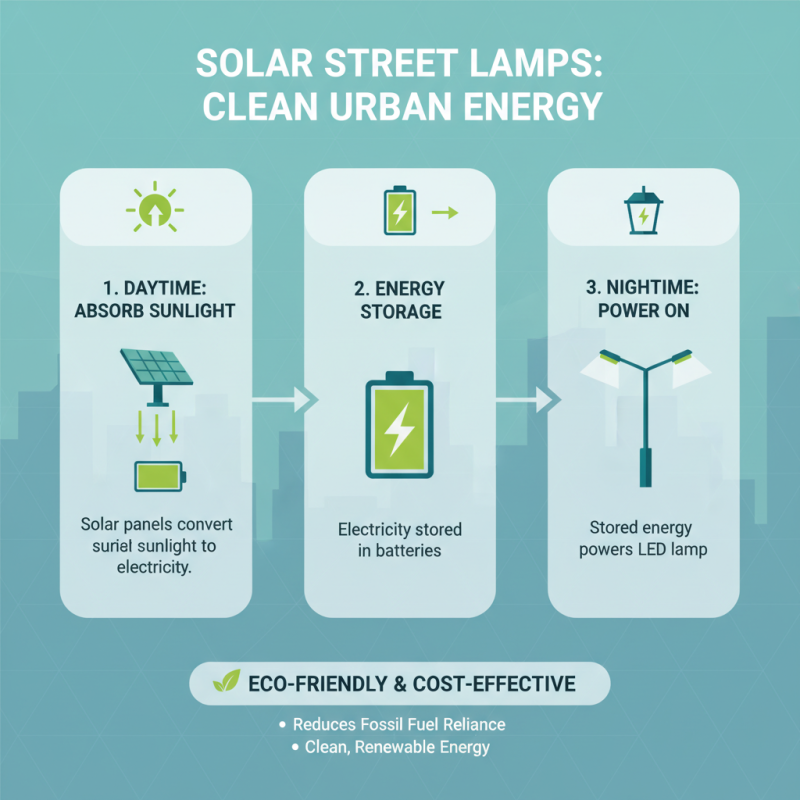
A solar street lamp typically consists of a solar panel, batteries, and an LED light fixture. The solar panel converts sunlight into electricity during the day, storing it in batteries for nighttime use. This system not only decreases energy costs but also minimizes environmental impact. Many cities are now adopting this technology in their streets and parks.
However, challenges remain. Not every area receives sufficient sunlight year-round for optimal performance. The upfront costs can be daunting for some municipalities. Additionally, maintenance may be overlooked, leading to a decrease in efficiency. Nevertheless, the potential benefits of solar street lamps are significant, encouraging a continued exploration of this green technology in urban planning.

What is a Solar Street Lamp?
A solar street lamp is a lighting solution that harnesses solar energy. It typically consists of a solar panel, a battery, an LED light, and a pole. The solar panel captures sunlight during the day. This energy powers the light at night, providing illumination for streets and pathways.
These lamps are environmentally friendly. They reduce reliance on the electrical grid, leading to lower carbon emissions. Installation is often easy, as they don’t require extensive wiring. However, the effectiveness can vary, depending on sunlight exposure. In areas with limited sun, performance may decline.
While solar street lamps are beneficial, they come with challenges. The initial cost can be high compared to traditional lamps. The battery life and maintenance must also be considered. Sometimes, they may not shine as bright as desired. These factors warrant careful evaluation when choosing solar lighting solutions.
Solar Street Lamp Energy Efficiency Comparison
This bar chart represents a comparison of various energy efficiency metrics for solar street lamps. The values are hypothetical and illustrate the efficiency of LED lights, battery capacity, solar panel output, and average lifespan.
Components of Solar Street Lamps
Solar street lamps are innovative lighting solutions powered by renewable energy. These lamps typically consist of three main components: solar panels, batteries, and LED lights. Solar panels capture sunlight and convert it into electricity. This energy is stored in batteries for use during the night.
The batteries in solar street lamps are crucial. They often come with varying capacities, typically between 12Ah to 100Ah. Depending on the model, they can provide light for 8 to 12 hours. However, poor weather can affect battery performance. If solar panels don't receive enough sunlight, the batteries may drain faster than expected.
Tip: Regularly clean your solar panels to maximize energy absorption. Dirt and debris can significantly reduce efficiency.
LED lights are the final component of solar street lamps. They are energy-efficient and have a long lifespan, often exceeding 50,000 hours. Yet, not all LEDs are created equal. Variability in quality can result in inconsistent brightness levels. Always consider the lumen output while choosing LED fixtures for your solar lamp.
Tip: For optimal illumination, calculate the total lumen requirement based on the area to be lit. Oversized streets may need additional lighting to prevent dark spots.
How Solar Street Lamps Generate and Store Energy
Solar street lamps are an innovative solution for outdoor lighting. They harness sunlight during the day and convert it into energy. This energy is stored in batteries for use at night. The process begins with solar panels that capture sunlight. These panels are often mounted on top of the lamp.
During the day, solar panels absorb sunlight. This energy is used to charge the batteries. The amount of energy stored varies based on sunlight availability. On cloudy days, charging efficiency drops. Sometimes, this can leave the lamps dim or even unlit at night. A well-placed solar street lamp can improve its energy collection. But even the best positioning may not guarantee consistent performance.
At night, the stored energy powers the LED lights. These lights are energy-efficient and have a long lifespan. However, if the batteries are weak, the illumination may diminish quickly. Factors like temperature and age affect battery performance. Some lamps include motion sensors, which help conserve energy. This function turns off lights when no one is around. Yet, such technology can be imperfect. It may not always detect movement effectively, leaving areas dark. Understanding these limitations is important for optimizing solar street lighting.
What is a solar street lamp and how does it work? - How Solar Street Lamps Generate and Store Energy
| Feature |
Description |
| Energy Source |
Solar panels convert sunlight into electricity. |
| Storage |
Batteries store the generated energy for later use, especially during the night. |
| Lighting Technology |
Typically uses LED lights for energy efficiency and long lifespan. |
| Control System |
Equipped with sensors for automatic operation based on ambient light levels. |
| Installation |
Typically mounted on poles in outdoor locations with ample sunlight. |
| Environmentally Friendly |
Reduces carbon footprint by utilizing renewable energy sources. |
| Maintenance |
Requires minimal maintenance; regular cleaning of solar panels is suggested. |
Operation Mechanism of Solar Street Lamps at Night
Solar street lamps are innovative lighting solutions harnessing solar energy. During the day, solar panels convert sunlight into electricity. This energy is stored in batteries, ready for use at night.
When night falls, the operation mechanism kicks in. The lamps automatically sense the surrounding darkness. Then, the stored energy powers the LED lights. This process is seemingly smooth, yet it can have flaws. A cloudy day may result in insufficient energy storage. The lamp might struggle to stay lit all night in such cases.
Additionally, the positioning of the solar panels matters. Dirt and debris can reduce their efficiency. Regular cleaning shows dedication to sustainability. However, many overlook this maintenance. Inconsistent performance can affect public safety. Overall, solar street lamps present a promising methodology, yet improvements are needed for optimal functionality.
Advantages of Using Solar Street Lamps in Urban Areas
Solar street lamps are gaining popularity in urban areas. They run on solar energy and have solar panels installed on top. These lamps absorb sunlight during the day and convert it into electricity. This is stored in batteries for nighttime use. They offer a clean energy solution, reducing reliance on fossil fuels.
The advantages of solar street lamps are numerous. They lower electricity bills since they do not require grid power. Cities can save significant money over time. Installation is generally simpler and faster. There are no extensive wiring needs, which means less disruption to public spaces. However, their effectiveness can vary in cloudy weather. Some areas may not receive enough sunlight, leading to limited performance.
Additionally, solar street lamps contribute to urban aesthetics. They can be designed in various styles to complement local architecture. This helps improve the overall ambiance of public spaces. However, the initial investment may be a concern for some municipalities. The technology is still advancing, and prices can fluctuate. Cities need to weigh these factors before fully committing.