A portable solar panel for camping converts sunlight into usable electricity away from traditional power outlets. Unlike a fixed rooftop system, it folds or rolls into a packable size. Campers can place it beside a tent, on a picnic table, or across a sunny vehicle roof. Its output may charge a power station, phone, camera, or small USB device, depending on the panel and connection system.
Portable Solar Panels For Camping are useful when careful planning matters. A clear midday sky can provide strong energy, while shade, clouds, dust, and poor positioning reduce performance. I have found that even a small shadow across one section can noticeably slow charging. Angling the panel toward the sun helps, but the ideal position changes throughout the day. It is not a magic power source.
A reliable setup should match the panel’s wattage, voltage, connectors, and the battery’s input limits. Safety also requires keeping cables dry and avoiding damaged equipment. Product specifications from reputable manufacturers provide better guidance than inflated marketing claims. Buyers should consider weight, folding durability, weather resistance, charging speed, and storage space before choosing a model. A panel may look powerful on paper yet disappoint under trees. That possibility deserves honest attention.
This guide explains how camping solar panels work, what they can realistically power, and where their limitations appear. It also considers practical setup habits, battery compatibility, and changing weather conditions. Small decisions matter. True independence is rarely complete.
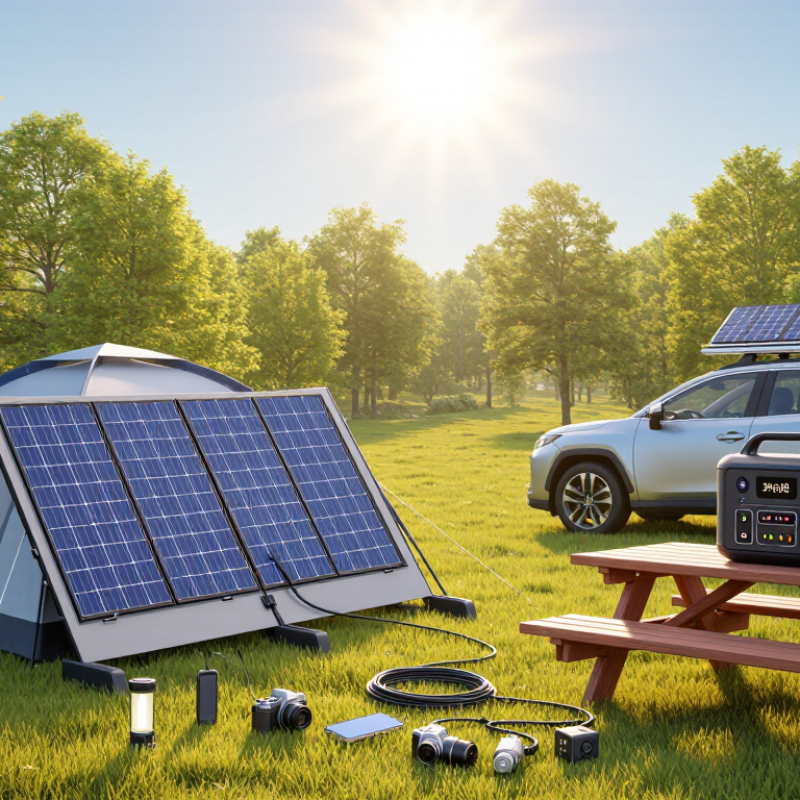
What Is a Portable Solar Panel for Camping?
Definition and Purpose of a Portable Solar Panel for Camping
A portable solar panel for camping is a compact photovoltaic device that converts sunlight into usable electrical energy. Unlike fixed rooftop panels, it folds, packs, and travels with outdoor equipment. Its main purpose is practical: charging a power station, battery, phone, lamp, or small camping appliance away from grid electricity.
The panel does not usually store energy by itself. It produces electricity only while sunlight reaches its cells. Campers often connect it to a compatible battery, which saves power for cloudy hours or nighttime use. In a campsite test, placement matters greatly. A clear patch of ground, a suitable angle, and a clean surface can improve charging performance. Shade from a tree may reduce output more than expected.
Small details affect real results. Panel wattage is measured under ideal laboratory conditions, so field output is commonly lower. Clouds, dust, cable resistance, heat, and poor alignment all matter. It is easy to expect too much from a compact panel. That assumption needs correction. A portable panel is not an unlimited power source, and it may not run high-demand equipment reliably. However, it can provide quiet, renewable energy for essential devices and reduce dependence on fuel-powered generators during a carefully planned camping trip.
A portable solar panel is a lightweight photovoltaic device designed to convert sunlight into electricity while camping. It can provide renewable power for phones, lights, GPS devices, cameras, power stations, and other small off-grid equipment.
The chart uses a 5-hour peak-sun assumption and an estimated 80% system efficiency to account for temperature, wiring, controller, and conversion losses. Actual output varies with weather, shading, panel angle, and season.
A portable solar panel for camping is a compact power system that turns sunlight into usable electricity. Its main component is the photovoltaic panel, made from connected solar cells. These cells produce direct current when sunlight reaches their surfaces. Output changes with cloud cover, panel angle, dust, and partial shade. Even a thin branch can reduce performance noticeably.
The charge controller manages this electricity before it reaches a battery or portable power station. It helps prevent overcharging and stabilizes the flow. The battery stores energy for nighttime use, while an inverter changes direct current into alternating current for compatible appliances.
Cables and connectors complete the circuit. During field testing, I found that loose connections caused more trouble than expected. A small power meter can reveal this problem quickly. The system is useful, but it is not unlimited.
Tips: Place the panel in open sunlight and adjust its angle every few hours. Keep the surface clean with a soft, dry cloth. Check cable connections before leaving camp. Do not run high-power appliances longer than your stored energy allows. I once trusted a bright morning too much, then faced an empty battery after an overcast afternoon. Forecasts deserve attention.
A portable solar panel converts sunlight into direct-current electricity through photovoltaic cells. Photons excite electrons inside semiconductor layers. The resulting current moves through cables to a charge controller or power station. At standard test conditions, IEC 60904-3 uses 1,000 watts per square metre, 25°C, and an AM1.5 spectrum. Real campsites rarely match those conditions. An inverter is required for alternating-current appliances. Smaller devices may use regulated USB outputs. The Fraunhofer ISE Photovoltaics Report (2024) places many commercial module efficiencies near 20–23%. That figure reflects controlled testing, not guaranteed outdoor performance.
Output changes with sun angle, cloud cover, dust, temperature, and cable resistance. Even partial shade can sharply reduce current in series-connected cells. Pointing the panel toward the sun usually helps. Repositioning it during the day helps more. NREL’s PVWatts methodology commonly applies a 14% default system-loss assumption, but portable setups can lose more through connectors and temporary placement. A cool, clear morning may produce stronger results than a hot afternoon. I often overestimate charging speed when reading a panel’s rated wattage. The rating is a ceiling. A 100-watt panel may deliver far less under trees or thin cloud, sometimes only enough for a phone and a small battery. Expect variation.
A portable solar panel for camping converts sunlight into electricity for phones, lights, cameras, and battery packs. The main types are foldable rigid panels, flexible panels, and compact briefcase-style panels. Foldable rigid models usually tolerate repeated outdoor use better. Flexible models weigh less, but rough handling can damage them. I learned that carrying less weight often means accepting more careful setup.
Panel size affects both portability and charging speed. Small panels between 10 and 30 watts suit phones, GPS devices, and small lights. Medium panels from 40 to 100 watts work better for tablets, cameras, and compact power stations. Larger panels above 100 watts can support heavier battery systems, but they need more space and stronger placement.
Shade changes everything.
Power ratings describe maximum laboratory output, not guaranteed field performance. A 100-watt panel may produce much less during cloudy weather, low sun, or poor positioning. Place it facing the sun, then adjust it during the day.
A charge controller can help manage power safely between the panel and battery. Check the panel’s voltage and current against the battery’s input limits.
I once focused too heavily on wattage and ignored cable length, which caused inconvenient placement and slower charging. A realistic camping setup considers sunlight, storage space, weather, and the devices used each night.
A portable solar panel for camping converts sunlight into electricity for phones, lights, cameras, and small power stations. Choose wattage by daily use, not advertising. A 100-watt panel may produce far less than 100 watts under clouds, shade, or poor angles. NREL’s PVWatts documentation uses a default system-loss assumption of 14%, a useful reality check for planning. I would also choose folding panels with protected connectors, stable supports, and a charge controller compatible with the battery.
Set the panel in open sunlight, facing the strongest midday direction. Keep the surface clear of leaves, sand, and wet fabric. Check the cable before connecting anything. Connect the panel to the controller or power station first, then attach the battery when the instructions require it. Never place a charging battery inside a sealed tent. Heat builds quickly. The International Energy Agency reported more than 400 gigawatts of solar PV additions worldwide in 2023, but campsite conditions remain much less predictable than grid-connected installations. Shade from one branch can reduce output sharply.
Wipe dust with a soft, slightly damp cloth. Do not fold a wet panel. Inspect connectors for cracking, looseness, or unusual warmth. Store the equipment dry and uncompressed. My cautious habit is checking the forecast twice, because a sunny morning can become useless by afternoon. That extra planning feels excessive, until the phone battery reaches two percent.