2026 How to Choose a Compact Floor Scrubber?

Choosing a Compact Floor Scrubber in 2026 is less about buying the smallest machine and more about matching its working width, runtime, and recovery capacity to the building. A unit that fits between café tables may struggle across a long corridor. One with a large tank may not turn easily in a crowded clinic. Measure doorways, lift access, storage space, and the narrowest cleaning route before comparing models.

The market context is growing, but it needs careful interpretation. Allied Market Research valued the broader global floor-cleaning-equipment market at about $5.7 billion in 2021 and projected it could reach $9.4 billion by 2031. That category includes more than compact scrubbers, so the figures indicate sector demand—not sales of one machine type. Cleaning scientist Dr. Michael A. Berry defines cleaning as “the removal of unwanted matter from the environment.” That principle makes practical tests important: check whether the scrubber lifts gritty soil, leaves little moisture, and reaches close to wall edges. Numbers help. A wet turn at a doorway matters, too.

This guide compares compact models by measurable work rate, brush or pad access, battery performance, noise, maintenance, and operator comfort. Ask suppliers for a demonstration on your actual floor; smooth showroom concrete can hide problems on textured tile. Check how quickly the recovery tank empties and whether the squeegee leaves a clean, dry pass. Then compare purchase price with parts, service, and consumables over the expected life of the machine. No single specification settles the choice. Real buildings are untidy, and my first shortlist may still need revision after a hands-on trial.
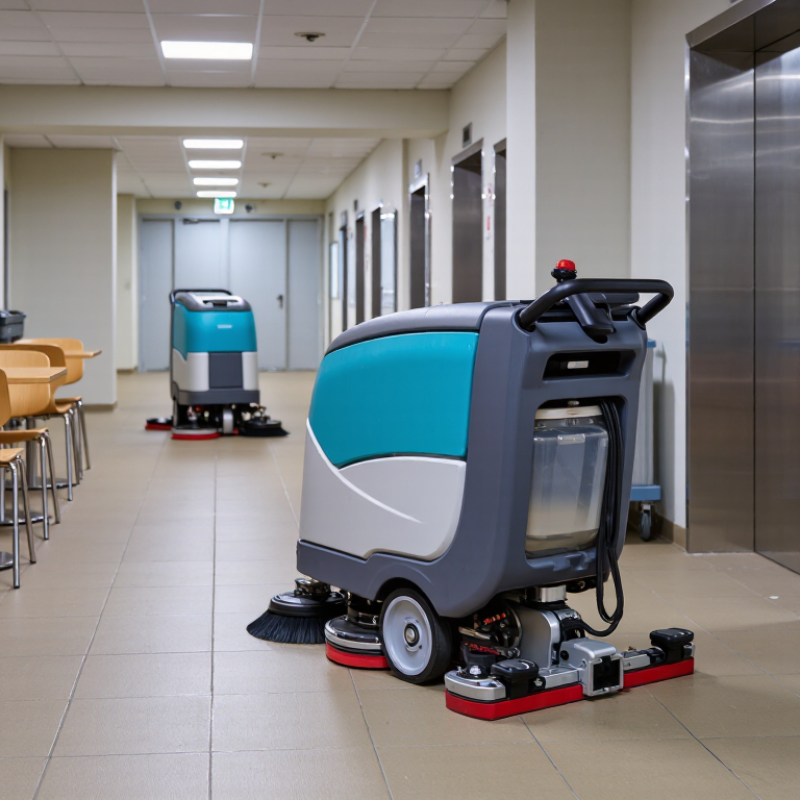
2026 How to Choose a Compact Floor Scrubber?

Define Your Cleaning Tasks and Facility Requirements

Choosing a Compact Floor Scrubber? Define Your Cleaning Tasks and Facility Requirements

Start with the floor. List each surface, soil type, and cleaning frequency before comparing machines. A grocery aisle may collect grit and sticky spills; a clinic corridor may need quiet operation and quick drying. Measure the narrowest doorway, tightest turn, and available storage space. The U.S. Energy Information Administration’s 2018 Commercial Buildings Energy Consumption Survey counted 5.9 million commercial buildings, covering 96 billion square feet. That variety is a reminder: facility size alone cannot determine the right machine.

Tips: Walk the actual route with a tape measure. Note thresholds, parked carts, floor drains, and where clean and recovered water can be handled. Ask operators to test the controls, too.

Estimate the area cleaned per shift, then compare it with the machine’s practical productivity—not just its advertised maximum. Consider whether staff can refill, empty, and charge it during the available cleaning window. A compact unit can maneuver around chair legs and display stands, but a small tank may require frequent stops. It is easy to overvalue a neat specification sheet; a brief on-site trial may reveal awkward turns or poor access to a sink. Record those details before deciding.

Measure the Area and Identify Site Constraints

2026 How to Choose a Compact Floor Scrubber?

Measure the actual cleaning area, not just the room’s listed dimensions. A tape measure and a simple floor plan can reveal tight turns that drawings miss. Note aisle widths, doorway openings, and the space around shelving. Check the narrowest point, too. A machine may pass through an aisle but fail to turn beside a display or storage rack. Allow room for the operator and for the scrubber’s handle or squeegee to move. Measurements are rarely perfect, so recheck awkward corners before comparing machine dimensions.

Mark fixed obstacles such as counters, floor drains, posts, and low furniture. Also note temporary clutter, including carts that often remain in walkways. Use removable tape to outline a scrubber’s footprint in a tight area, then walk its likely route. This can expose pinch points without moving equipment. Measure slopes and uneven transitions; a compact machine still needs safe, stable access. Consider where the operator will refill, empty, and park it. A smaller scrubber may fit neatly, yet its tank could require frequent stops across a large floor. That trade-off is easy to overlook. If possible, test the planned route during normal site activity, when people and obstacles make the space less forgiving.

Compare Compact Floor Scrubber Types and Designs

Compact Floor Scrubber Types and Designs

Compact floor scrubbers generally fall into walk-behind and ride-on designs. Walk-behind models suit tight aisles, small shops, and rooms with frequent turns. Their smaller footprint can make storage easier, but the operator must guide the machine around obstacles. Compact ride-on models cover open areas faster and reduce walking, though their turning radius and access width need careful checking.

Brush design matters, too. Disc brushes work well on smooth, sealed floors and are easy to inspect. Cylindrical brushes can collect small debris while scrubbing, which may help in busy entrances. Check the squeegee width, clean- and recovery-tank capacity, and battery access. A large tank sounds efficient, but it can make a compact machine awkward to maneuver when full. Doorways and storage corners are easy to overlook.

Tips: Measure the narrowest doorway and turning space before comparing models. Check whether the machine can reach beneath counters or shelving. Match brush pressure and pad type to the floor finish; an aggressive setup may dull a delicate surface. Ask for a practical demonstration on your actual flooring, if possible. A specification sheet cannot show every tight turn.

Evaluate Cleaning Performance, Battery Life, and Usability

2026 How to Choose a Compact Floor Scrubber?

Evaluate Cleaning Performance, Battery Life, and Usability

A compact floor scrubber should clean edges and tight turns without leaving streaks behind. Check its cleaning path, brush pressure, and water recovery on the floor type you actually maintain. A polished showroom test can be misleading. Try a marked patch with dried spills and ordinary foot traffic instead. Look for an even finish after one pass, then note whether the machine needs repeated scrubbing or leaves excess water. That matters.

Battery life depends on more than the number printed on a product sheet. Brush condition, floor texture, and frequent stops can all reduce working time. Compare the stated runtime with the area you need to clean, and leave a practical buffer for refills or missed spots. If possible, test a full shift. It may be inconvenient, but a short demonstration will not reveal how the battery performs near the end of a route.

Usability often decides whether a capable machine gets used consistently. Check whether the handle adjusts comfortably, controls are easy to reach, and tanks can be removed without awkward lifting. Listen to the machine indoors; noise can matter in occupied spaces. Also inspect how quickly the brush and recovery tank can be cleaned after use. Small annoyances add up. A compact scrubber may still feel heavy when turning, so try it around a chair leg or doorway before choosing.

Check Maintenance Needs, Safety Features, and Total Cost of Ownership

Choosing a compact floor scrubber in 2026 means looking beyond its size and cleaning speed. Check how easily the brush, squeegee, and recovery tank can be reached. If routine cleaning requires awkward tools or several steps, staff may put it off. Ask how often filters and squeegee blades need attention, and whether replacement parts are easy to obtain. Small details matter.

Safety features should suit the actual cleaning area. Look for clear controls, steady handling around tight turns, and good visibility from the operator’s position. Test how the machine behaves on a damp turn and near doorways, if a trial is available. Check whether the brakes and emergency stop are easy to identify. Training still matters. A useful feature cannot prevent every mistake, and a compact machine may feel less stable when its tank is full.

Compare total ownership costs over the period you expect to use the scrubber. Include the purchase price, batteries, brushes, blades, cleaning supplies, service, and likely downtime. Also consider water and energy use, plus the labor needed to empty and rinse the tank. A lower price can be tempting, but it may not mean lower costs later. Estimates are imperfect; local service access and floor conditions can change the calculation. Request a written maintenance schedule and cost breakdown before deciding.

Go to Top