How to Find a Reliable China Generator Factory?
Reliable sourcing begins before the first quotation. A China generator factory may offer attractive pricing, polished catalogs, and fast replies, but these details alone do not prove manufacturing capability. Buyers should verify the factory’s business identity, production address, product range, and export experience. Ask for current certificates relevant to the generator model and destination market, then confirm their scope and validity independently.
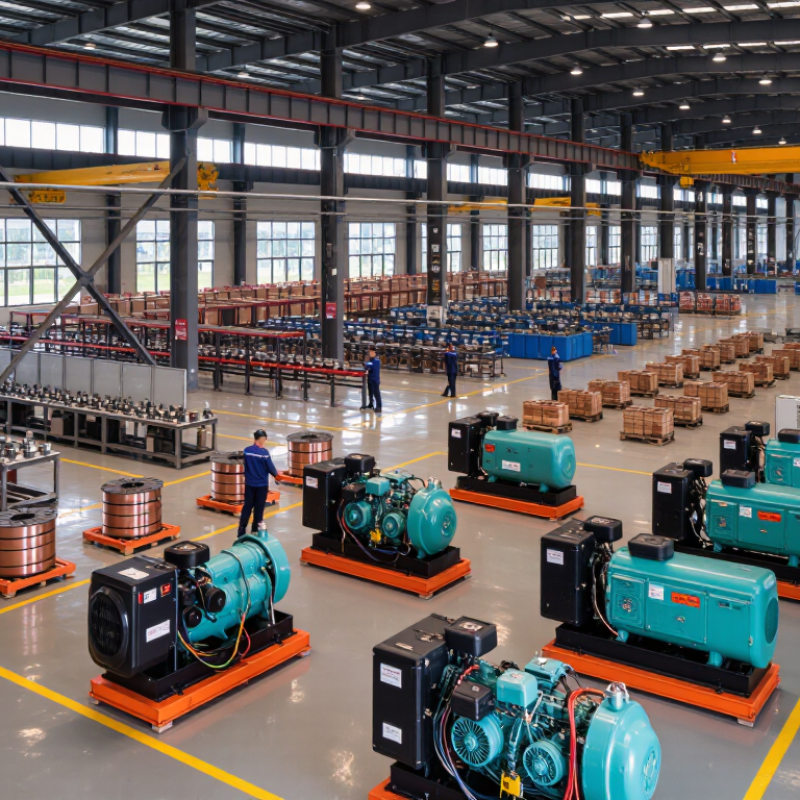
The evaluation should get practical. Request a live video tour or an in-person visit, if feasible. Look for winding, assembly, load-testing, and inspection areas—not just a showroom. Ask how the factory tests output, voltage stability, fuel use, noise, and protection features. A credible supplier can explain its test procedures and provide dated reports tied to a specific model or serial number. It should also clarify warranty terms, spare-parts availability, lead times, packaging, and post-shipment support. Get key promises in writing.
Pay attention to the questions the supplier asks you, too. A capable team will need details about operating conditions, duty cycle, required output, and service expectations. Vague answers deserve follow-up. Ask for evidence. So do unusually low prices. Still, a small factory is not automatically unreliable, and a glossy website is no proof of quality. Buyers can focus heavily on price, then discover that parts support was the real issue. That lesson is imperfect, but useful. Comparing documents, factory evidence, sample performance, and communication can reduce risk without pretending to remove it. The goal is not a perfect supplier on paper. It is a partner whose claims can be checked and whose equipment fits the job.
Define Your Generator Requirements and Factory Criteria
Before contacting a China generator factory, write down how the unit will actually be used. Record the required output in kilowatts or kilovolt-amperes, along with voltage, frequency, phase, and starting loads. A pump or compressor may draw much more power when starting than it uses while running. Be specific. Note expected daily operating hours, backup runtime, fuel preference, ambient temperature, altitude, and installation space. If you are unsure about peak load, have a qualified electrician measure it rather than guessing.
Set factory criteria that match those requirements. Ask for a technical datasheet, written configuration, and a load-test report for the proposed model. Check whether the factory can explain its alternator, engine, control panel, and protection settings clearly. Request details on inspection steps, spare-parts availability, warranty terms, and technical support after delivery. Ask how serial numbers and test records are linked to each unit. Price matters, but a low quote may exclude useful options or service. Compare like with like.
Tips: Send the same requirement sheet to each supplier. Ask for photos of the actual test setup, not only product images. Confirm what is included in the quotation. A tidy spreadsheet helps, though it cannot reveal every production issue; keep room for questions and verify important claims in writing.
Verify the Factory’s Identity, Experience, and Production Capacity
A reliable generator factory should be verified as a manufacturer, not just presented as one. Check its Chinese business name, registered address, business license, and Unified Social Credit Code against China’s National Enterprise Credit Information Publicity System. Then compare the registered scope with the factory’s actual activities. Paper is not proof. Ask to see assembly lines, machining areas, and finished-unit storage during a live video call or independent site visit.
Experience needs evidence. Request dated production records, export documentation with sensitive details removed, and references from buyers of comparable generator sizes. UNIDO’s International Yearbook of Industrial Statistics 2024 reports that China produced about 31% of global manufacturing value added in 2022. That scale does not confirm any single supplier’s expertise. I would not rely on a polished showroom alone; it is an easy shortcut, but a weak one.
Production capacity should be visible and measurable. Ask how many sets the factory completes monthly, which steps happen on-site, and where key components are sourced. Request a recent production schedule, quality-control records, and a witnessed load-bank test showing output, voltage, and frequency readings. Check that the test unit’s serial number matches its inspection documents. A capacity figure without records deserves a second look. Even experienced buyers can miss subcontracted assembly, so confirm who builds, tests, and signs off on the exact model you plan to order.
Assess Generator Quality, Testing, and Certifications
A reliable generator factory should show how each set performs, not merely display certificates. Ask for the model-specific test report, serial number, rated voltage, frequency, and measured output. Watch a load-bank test at staged loads, such as 25%, 50%, 75%, and 100%. Check voltage and frequency stability, alarms, leakage, and shutdown functions. Request a cold-start demonstration when it reflects your operating conditions. Paper is not proof.
The 2024 Uptime Institute Global Data Center Survey reported that 54% of respondents’ most recent significant outages cost more than US$100,000.
That figure concerns data centers, not every generator buyer, but it shows why testing matters.
Ask the factory to explain any failed readings and provide retest records. Verify that ISO 9001 certification covers the manufacturing site and current scope; it does not certify a generator’s performance. For generator ratings and test methods, check whether documentation refers to the relevant ISO 8528 requirements. A certificate folder can look reassuring. I would still match every document to the exact factory, model, and serial number, then review the test procedure with an independent inspector when risk warrants it.
Compare Quotations, Warranty Terms, and After-Sales Support
When evaluating a China generator factory, compare quotations line by line, not just by total price. Check whether each offer includes the same engine rating, alternator, control panel, canopy, testing, and delivery terms. Ask for a written list of exclusions. A cheaper quote may omit commissioning or essential accessories. Small details matter.
Warranty terms should state the start date, covered components, labor costs, claim process, and who pays for replacement-part shipping. Ask how quickly the factory acknowledges a service request and whether technical support is available in your time zone. Uptime Institute’s 2024 Annual Outage Analysis reported that 54% of respondents’ most recent significant outages cost more than US$100,000. The figure concerns data-center outages, not generator purchases, but it shows why dependable backup support matters. No quotation can promise zero delays; check how parts and repairs are handled in practice.
Tips: Request a sample warranty and a written after-sales response-time commitment. Ask for recent test records and customer references for comparable installations. Compare the documents side by side. If a term is vague, get clarification in writing before placing an order. I would not treat a polished brochure as proof of service quality.
Confirm Reliability Through Samples, Audits, and Customer References
A factory’s brochure cannot show how a generator behaves under load. Request a sample built with the same engine, alternator, controller, and wiring planned for your order. During a witnessed test, record cold-start time, voltage and frequency stability, exhaust temperature, vibration, and fuel use at several load levels. Ask for the test method and calibration dates, not just a pass certificate. ISO 8528-5 provides performance requirements for generating sets, but the test should reflect your actual operating conditions. Small details matter. A loose terminal or undocumented component substitution can change field performance.
Audit the production floor, not only the office. Check incoming-part records, assembly instructions, final-test logs, and how serial numbers connect to component batches. The ISO Survey 2022 reported more than 1.2 million ISO 9001 certificates worldwide; that scale shows how common quality systems are, but certification alone does not prove a factory’s output is consistent. It is a starting point. Request references from customers using comparable power ratings and duty cycles, then ask about delivery delays, warranty response, and parts availability after installation. Speak with the users directly if possible. Their feedback may be uneven, and one call can miss important context, so compare several accounts with audit findings and sample-test records.
How to Find a Reliable China Generator Factory?
Confirm reliability through samples, audits, and customer references.
Illustrative due-diligence scores on a 0–5 scale, not results from a specific factory. Check product samples for performance and consistency, audit production and quality-control processes, and verify customer references independently.
