How to Choose the Best EV Charger for Your Electric Car?
Choosing the right EV charger for your electric car can be a daunting task. The market is bustling with options, each promising unique benefits. As John Miller, an EV charger expert, once said, "Selecting an EV charger is often about balancing speed and compatibility." This statement captures the essence of making a smart choice.
When considering an Ev Charger Car, several factors come into play. Power output is crucial. Level 2 chargers provide faster charging times compared to Level 1 chargers. However, this speed can come at a higher cost. Installation complexities can also vary. Some installations are straightforward, while others may require professional assistance.
Personal needs should always guide the decision. Do you drive frequently? A higher-powered charger may be ideal. If you charge overnight, perhaps a standard charger suffices. It’s also essential to examine future needs. Will your car battery capacity grow? The right charger must be adaptable. Overall, it’s a balancing act between efficiency, cost, and your driving habits. Making an informed choice is key.
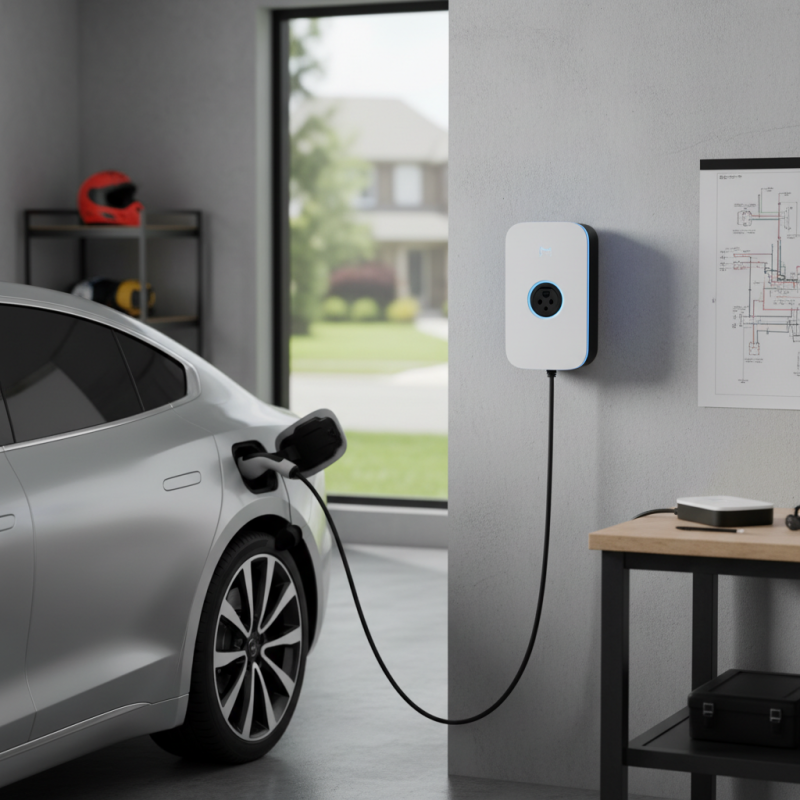
Understanding Different Types of EV Chargers Available on the Market
Choosing the right EV charger for your electric car can significantly impact your charging experience. The market offers various charger types, each tailored to unique needs. Level 1 chargers use a standard household outlet and are easy to use. However, they are slower, often taking several hours for a complete charge. Many users overlook this option, not realizing its simplicity.
Level 2 chargers are more common for home installations as they provide a faster charge. They operate at 240 volts and can fully charge most EVs within a few hours. According to industry reports, nearly 80% of EV owners prefer Level 2 chargers for their efficiency.
Tip: Evaluate your daily driving habits. If you drive longer distances regularly, investing in a Level 2 charger may be worthwhile.
DC fast chargers are another option, popular at public charging stations. They can charge a vehicle up to
80% in about 30 minutes. However, they tend to be more expensive and aren’t typically installed at home. Many drivers limit their use due to availability and accessibility, especially in less urban areas.
Tip: Always check your local charging station map to plan longer trips effectively.
While considering your options, think about installation costs and space requirements. Some may find the installation daunting, leading to delays. Reflecting on these factors is crucial to making the best decision for your EV charging needs.
Evaluating Charging Speed and Compatibility with Your Electric Vehicle
When choosing an EV charger, charging speed and compatibility are crucial. Different electric cars have varying charging capabilities. Some models can handle high-speed chargers, while others are limited to standard outlets. It's essential to know your vehicle's charging capacity. This knowledge helps in selecting the right charger for your needs.
Evaluate the charger’s output. Chargers are often rated in kilowatts (kW). Level 1 chargers provide basic power, often around 1.4 kW. They are suitable for overnight charging. Level 2 chargers can go up to 22 kW. They significantly reduce charging time. If you frequently drive long distances, a faster charger may suit you better.
Don’t overlook compatibility. Not all chargers fit every vehicle. Charging ports can vary. Many newer models use a standard connector, but older cars may require an adapter. This can add complexity to the installation. It's easy to assume any charger will work, but double-check compatibility. Reflect on your driving habits to make the best choice.
Assessing Installation Options: Home vs. Public Charging Stations
Choosing between home and public charging options is a critical factor for electric vehicle (EV) owners. Home charging offers unparalleled convenience. You can plug in your car overnight and wake up with a full battery. Installing a charger at home might require some upfront investment. However, it often pays off in the long run. You may need to check your home’s electrical capacity. Could it handle the load?
Public charging stations present a different scenario. They can be found in various locations—shopping centers, office parks, and highway rest stops. The accessibility is great for long trips. However, the availability can be hit or miss. You might find yourself waiting, which can be frustrating. Additionally, some public chargers may be slower than expected. This could affect your travel plans.
Analyzing both options is crucial. Consider your driving habits and local infrastructure. Do you make long trips often? Or do you mostly drive short distances? What if there are no charging stations nearby? Reflecting on these questions will guide your decision. Each choice has its pros and cons. Find what best fits your lifestyle and needs.
Considering Smart Charging Features and User Interfaces
When selecting the best EV charger, smart charging features play a crucial role. Many chargers offer functionalities like scheduled charging, energy consumption tracking, and the ability to control charging via smartphone apps. According to a recent industry report, nearly 70% of EV owners prefer chargers with these smart capabilities. These individuals find convenience in monitoring charging status or adjusting settings remotely. Such tech not only enhances user experience but also contributes to energy efficiency.
User interfaces should prioritize simplicity. Clear displays and intuitive navigation make a significant difference. Studies indicate that 65% of users struggle with complex interfaces, leading to frustration. Touchscreens, LED indicators, and voice controls can ease user interaction. Yet, some manufacturers still rely on outdated designs, which could deter buyers. A seamless experience is vital in promoting EV adoption, especially for non-tech-savvy users.
Furthermore, consider the installation process. Complicated installations can lead to delays, diminishing the user experience. A good charger should have straightforward installation guidelines. A report from industry analysts states that chargers requiring professional installation can reduce sales by 30%. Accessibility matters. If potential users find a product hard to understand, they may seek alternatives, even if those options lack comparable features.
Budgeting: Cost of EV Chargers and Installation Expenses
When considering an electric vehicle (EV) charger, budgeting is crucial. The cost of a home EV charger ranges from $500 to $1,500. Installation expenses can add $400 to $2,500, depending on electrical upgrades needed. A recent industry report highlighted that many homeowners underestimate installation costs. This often leads to frustration and budget overruns.
Tips to consider: Anticipate additional electrical work. Ensure your home’s wiring can support the charger. This unforeseen expense can significantly impact your overall budget. It is wise to get a quote from a qualified electrician.
Do not overlook local incentives or rebates. Many areas offer financial aid to EV owners. These incentives can reduce your total investment. However, navigating these options can be daunting and requires research. Some homeowners end up missing out on savings simply due to lack of knowledge. Always stay updated on available programs.
