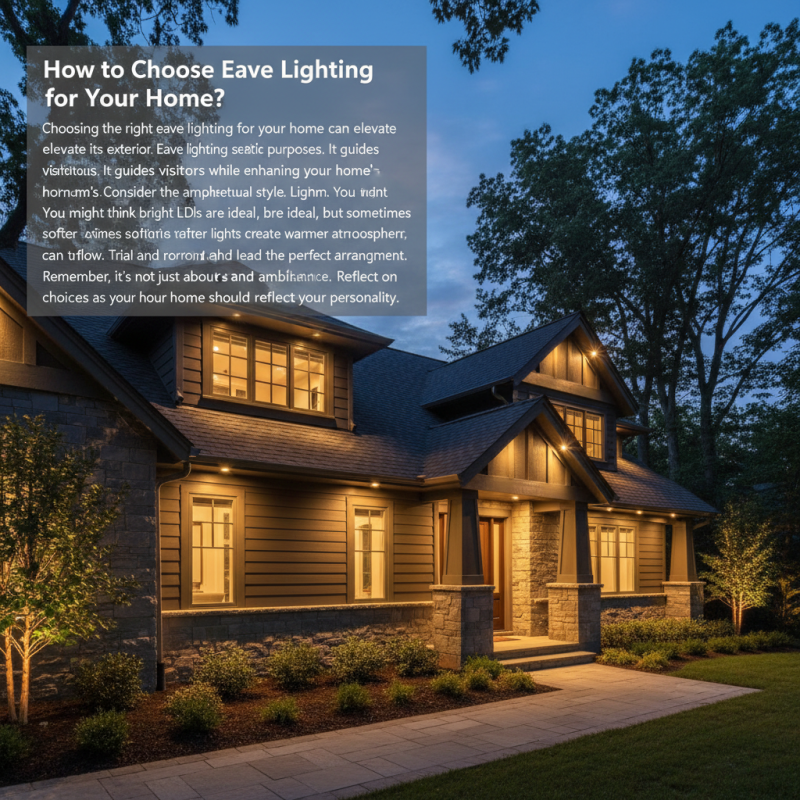
How to Choose Eave Lighting for Your Home?
Choosing the right Eave Lighting for your home can elevate its exterior. Eave lighting serves both functional and aesthetic purposes. It guides visitors while enhancing your home's charm.
Consider the architectural style of your house. Lights should complement features, not overshadow them. You might think bright LEDs are ideal, but sometimes softer lights create a warmer atmosphere.
Placement can be tricky. Too high or too low can disrupt the flow. Trial and error might lead to the perfect arrangement. Remember, it’s not just about illumination; it’s about balance and ambiance. Reflect on your choices as your home should reflect your personality.
Understanding Eave Lighting: A Comprehensive Guide
Eave lighting plays a crucial role in enhancing your home’s exterior. This type of lighting not only serves a decorative purpose but also provides safety and security. According to the American Lighting Association, proper outdoor lighting can reduce crime by up to 20%. However, many homeowners overlook it.
When choosing eave lighting, consider practical aspects. The brightness, style, and placement significantly impact effectiveness. Aim for a color temperature between 2700K to 3000K for a warm ambiance. In contrast, cooler temperatures above 4000K can create a more modern look. Keep in mind that improper installation or placement can lead to shadows, which may invite safety hazards.
Cost is another factor. Comprehensive studies reveal that homeowners can spend anywhere from $100 to $2,000 on eave lighting, including installation. While it’s tempting to go for the cheapest option, quality should not be sacrificed. Using durable materials can prevent frequent replacements. Often, people end up with misaligned or poorly lit eaves, which can mar the home’s overall appearance. Aim for a balance between aesthetics and functionality.
Types of Eave Lighting Fixtures Available on the Market
When it comes to eave lighting, several types of fixtures are available on the market. Wall-mounted sconces are popular for their versatility. They add warmth and elegance to your home's exterior. String lights are another fun option. They create a cozy atmosphere while being easy to install. For a more modern look, consider integrated LED lighting. This can enhance architectural details beautifully.
Tips: Choose lights that complement your home’s style. Consider the brightness level; too much light can feel harsh.
One common mistake is neglecting weather resistance. Outdoor fixtures must withstand rain and snow. Look for lights rated for outdoor use. Additionally, think about energy efficiency. Solar lights can save on electricity bills, but they may not be as bright at night.
Don't forget to plan your layout. Improper spacing can create dark areas or overwhelming brightness. Take time to visualize how each fixture will interact. The goal is to achieve balance.
Types of Eave Lighting Fixtures Available on the Market
Factors to Consider When Choosing Eave Lighting for Your Home
When choosing eave lighting for your home, consider several important factors. First, think about the purpose of the lights. Are they meant for security, ambiance, or both? Security lights should be bright and focused. Ambient lights can be softer and more decorative. The placement is crucial. Ensure they illuminate walkways and doorways.
Next, the style of your home should guide your choice. Modern homes may benefit from sleek, minimalist designs. Traditional homes might look best with classic fixtures. Height is another factor to remember. Lights positioned too low may create a harsh glow. Fixtures hung higher can provide a more inviting atmosphere.
Don’t overlook energy efficiency. LED lights consume less power and last longer. However, they may come with a higher upfront cost. Consider maintenance, too. Fixtures that are hard to reach can be a hassle. Choose options that combine beauty with ease of care. Ultimately, finding the right balance can be challenging, but it’s worth the effort.
How to Choose Eave Lighting for Your Home?
| Factor | Description |
| Purpose | Determine if the lighting is for security, aesthetics, or both. |
| Style | Choose a style that complements your home's architecture. |
| Brightness | Consider lumens needed based on the area size and usage. |
| Energy Efficiency | Opt for LED options for longer life and lower energy costs. |
| Weather Resistance | Ensure fixtures are rated for outdoor use to withstand elements. |
| Installation | Consider ease of installation and whether a professional is needed. |
| Color Temperature | Select between warm, cool, or daylight options based on the ambiance desired. |
Energy Efficiency and Eco-Friendly Options for Eave Lighting
Eave lighting not only enhances the aesthetic of your home but also plays a crucial role in energy efficiency. When choosing lights for your eaves, consider LED options. They consume less electricity and last much longer than traditional bulbs. Many LED lights emit bright, clear light, making your home safer at night. Moreover, these lights generate less heat, reducing cooling costs in hot weather.
Another eco-friendly choice involves solar-powered lights. These can harness sunlight during the day and illuminate your home at night. They are easy to install and require no wiring. However, on cloudy days, their performance may vary. Think about how the changing seasons affect light availability in your area.
Lastly, consider fixtures made from recycled materials. Not only do they contribute to sustainability, but they often bring a unique design to your space. Still, be cautious; some recycled materials may not withstand harsh weather over time. Reflecting on your choices can lead to a more informed and responsible decision for your home lighting.
Installation Tips and Safety Considerations for Eave Lighting
When installing eave lighting, safety must come first. It’s crucial to select fixtures that are rated for outdoor use. According to the National Fire Protection Association, improper installation of lighting can lead to electric fires. Use weather-resistant materials. Sealing connections properly helps prevent moisture damage.
Pay attention to electrical load. An average home can usually support about 15-20 Amps per circuit. Overloading can cause issues. For example, if a circuit is maxed out, it can lead to tripped breakers or even electrical failure. Always consult with a professional electrician if you’re unsure about the load your system can handle.
Proper installation technique is key. Lights should not hang too low. This can create hazards for people walking underneath. Furthermore, positioning fixtures too close to combustible materials is risky. Always check guidelines that suggest at least 12 inches of clearance. Regular maintenance is necessary too. Inspect lights for damage or dirt that may reduce brightness over time. Inadequate maintenance can lead to decreased performance and higher energy costs.