How to Choose the Best Solar Street Lamp for Your Needs?
Selecting the right solar street lamp can be a daunting task. With numerous options available, making an informed choice is crucial. This decision impacts both usability and energy efficiency. Solar street lamps provide sustainable lighting, but not all products meet the same standards.
Consider the power output and battery life when choosing your solar street lamp. This affects how long the light lasts overnight. Furthermore, the brightness level should align with your specific needs. Some lamps may look appealing but fail to deliver adequate illumination.
Understanding local regulations is essential too. Some areas have specific guidelines on lamp placement and brightness. While many products claim to be the best, you should focus on reliability and durability. Do thorough research before purchasing, and check reviews and ratings. This will guide you towards a wise investment.
Understanding Your Lighting Requirements for Solar Street Lamps
When selecting a solar street lamp, understanding your lighting requirements is crucial. Start by assessing the area you wish to illuminate. Consider its size, height, and any obstacles. A report from the International Energy Agency indicates that proper illumination can improve safety by up to 50%. This data underscores the importance of choosing the correct lumen output for your specific needs.
Solar street lamps come in different wattages, generally ranging from 20 to 100 watts. For narrower paths, lower wattage may suffice. However, for broader and busier areas, higher lumens are a necessity. An estimated 30% of street lighting failures stem from inadequate lighting levels. It’s essential to ensure the lamp’s specifications meet your environment's demands.
Battery life is another critical factor. Many solar lamps offer 10-15 hours of illumination after a full charge. However, performance can vary based on weather conditions. A 2022 study noted that 25% of solar street lamps fail to charge efficiently during winter. Always consider weather impact when evaluating solar lighting solutions. Inadequate consideration can lead to costly adjustments later.
Evaluating Different Types of Solar Street Lamps Available
When evaluating different types of solar street lamps, it's essential to consider several factors. The market offers a range of options, such as all-in-one systems, modular designs, and solar-powered LED lamps. According to a report from the International Energy Agency, the adoption of solar street lighting has surged by 20% annually in recent years. This growth reflects the increased emphasis on renewable energy sources.
All-in-one solar street lights are compact and easy to install. They typically integrate the solar panel, battery, and LED into one unit. Modular designs offer flexibility, allowing users to upgrade individual components as needed. The choice depends on your specific needs, such as installation location and local weather conditions.
Tip: Assess the lumen output of the solar lamp. A higher lumen rating means brighter light. Many urban areas recommend at least 1000 lumens for effective street lighting.
It is also crucial to evaluate battery capacity. Typical lithium-ion batteries last between 3-5 years. Be prepared for potential replacements. In some cases, budget constraints might limit your options. Higher-quality lamps may not fit everyone's budget, yet they often offer better performance and longevity.
Tip: Review warranties. A longer warranty period often indicates a manufacturer's confidence in their product.
Key Features to Consider When Selecting a Solar Street Lamp
Choosing the right solar street lamp can greatly impact your outdoor space. Key features play a crucial role in making an informed decision. Start with brightness.
Consider the lumen output. This determines how well the lamp illuminates your area at night. An adequately bright lamp ensures safety and visibility.
Battery capacity is another important aspect. Look for lamps with long-lasting batteries. They should provide power throughout the night, even during cloudy days. Solar panels should also be efficient. Larger panels capture more sunlight but may increase the installation footprint. Think about where you will place the lamp. Compact designs may fit better in smaller spaces.
Don’t overlook durability. Weather-resistant materials can withstand harsh conditions. Some lamps might not perform well in extreme temperatures. Regular maintenance is also necessary. Check the battery and panels regularly. It’s important to address issues quickly to avoid complete darkness in your space. Finding the best solar street lamp involves balancing features with practical needs. Reflect on your specific requirements to make a suitable choice.
Assessing Battery Life and Solar Panel Efficiency
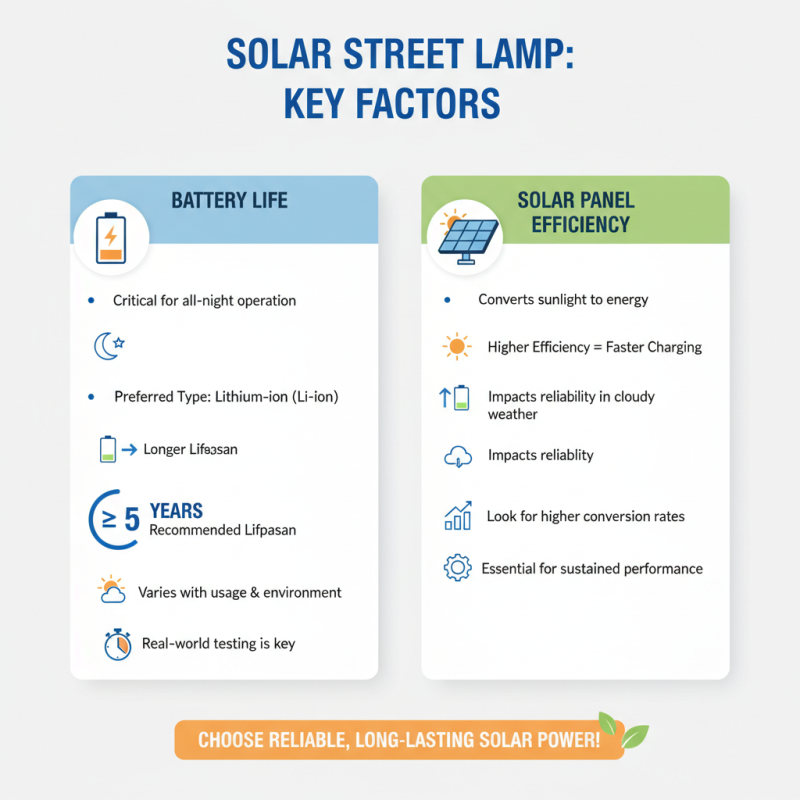
When choosing a solar street lamp, the battery life and solar panel efficiency are critical factors to consider. A solar lamp's battery should store enough energy to ensure reliable operation throughout the night. Typically, lithium-ion batteries are preferred due to their longevity. Look for a lamp with a battery life of at least five years. However, the true lifespan can vary based on usage and environmental conditions. Testing the product under real-life conditions can highlight its reliability.
Solar panel efficiency directly impacts how well a lamp charges during the day. Panels with higher efficiency convert more sunlight into usable energy. Aim for panels with an efficiency rating of over 15%. Yet, it’s essential to recognize that efficiency can fluctuate with weather changes and panel orientation. Sometimes, positioning the lamp incorrectly can reduce its effectiveness. Regular maintenance, such as cleaning the panels, can enhance performance. Reflect on your specific needs and surroundings as you evaluate these features to ensure the lamp meets your expectations.
Budgeting and Cost Analysis for Your Ideal Solar Street Lamp
When considering solar street lamps, budgeting is crucial. The initial cost of a solar lamp typically ranges from $200 to $1,500. Factors influencing this price include wattage, durability, and battery capacity. Industry reports indicate that high-efficiency models can save up to 60% on energy costs compared to traditional street lights over five years. Understanding long-term savings is essential.
Calculating total cost involves analyzing installation expenses as well. Some localities may require professional installation, adding $100 to $500 to your budget. It’s important to weigh these costs against potential savings. Consider also maintenance; many solar lamps require minimal upkeep, reducing long-term operational costs.
**Tip:** Look for models with a warranty of at least five years. This ensures you’re covered for any manufacturing defects, enhancing reliability.
Another critical consideration is battery life. Most solar street lamps offer batteries lasting between 3 to 5 years before replacement. It's a significant factor in your overall cost analysis. Be wary of models with lower quality batteries to avoid frequent replacements that could escalate your expenses.
**Tip:** Calculate the total energy savings over the expected lifespan of the lamp. This helps evaluate whether the initial high price is worth it in the long run.
How to Choose the Best Solar Street Lamp for Your Needs? - Budgeting and Cost Analysis for Your Ideal Solar Street Lamp
| Feature |
Budget Range |
Average Cost |
Lifespan (Years) |
Brightness (Lumens) |
Battery Capacity (Ah) |
| Standard Solar Street Lamp |
$100 - $200 |
$150 |
5 |
600 |
20 |
| Premium Solar Street Lamp |
$200 - $400 |
$300 |
10 |
1000 |
40 |
| Industrial Solar Street Lamp |
$400 - $800 |
$600 |
15 |
1500 |
60 |