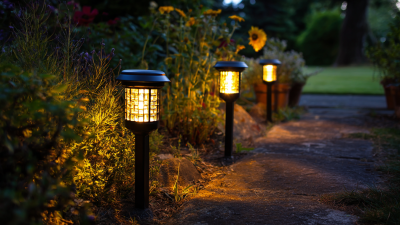
Tips for Choosing the Best Solar Pathway Lights for Your Home
As urban landscapes continue to evolve towards sustainability, the demand for
energy-efficient outdoor lighting solutions has surged. Among these,
solar pathway lights have emerged as a favorite choice for
homeowners looking to illuminate their gardens and walkways while reducing their carbon footprint. According
to a report by the Solar Energy Industries Association, the installation of
solar-powered lighting systems has increased by over 30% annually,
indicating growing consumer preference and environmental awareness.
Expert in solar technologies, Dr. Emily Lerner, notes,
"The advancement in solar pathway lights technology not only provides eco-friendly alternatives
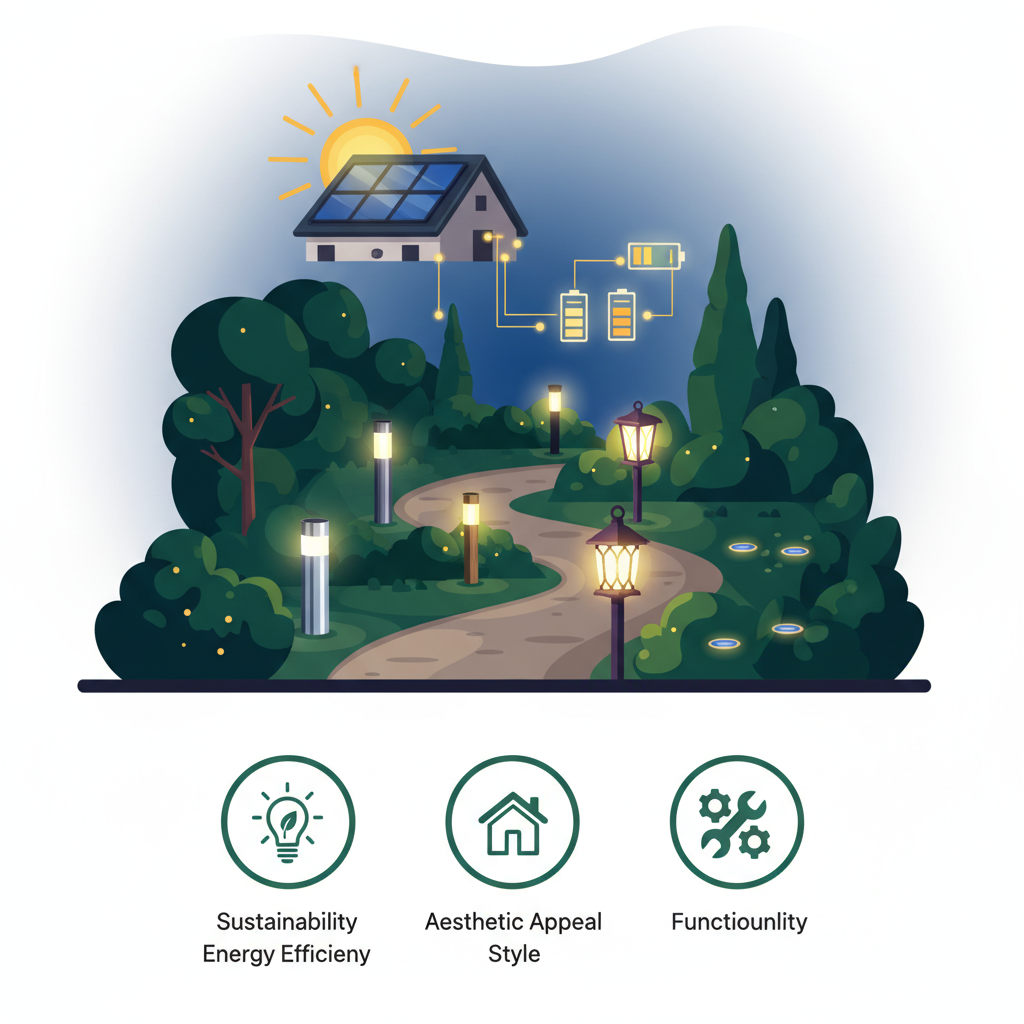
but also enhances the aesthetic appeal of outdoor spaces." These lights utilize solar panels to
harness sunlight during the day, converting it into electrical energy that powers LEDs at night,
making them an excellent choice for cost-effective and low-maintenance
outdoor lighting. As you consider options for your home, it's essential to understand the various factors
that can influence your choice of solar pathway lights, ensuring you find the perfect balance of
style, functionality, and sustainability.
Factors to Consider When Selecting Solar Pathway Lights
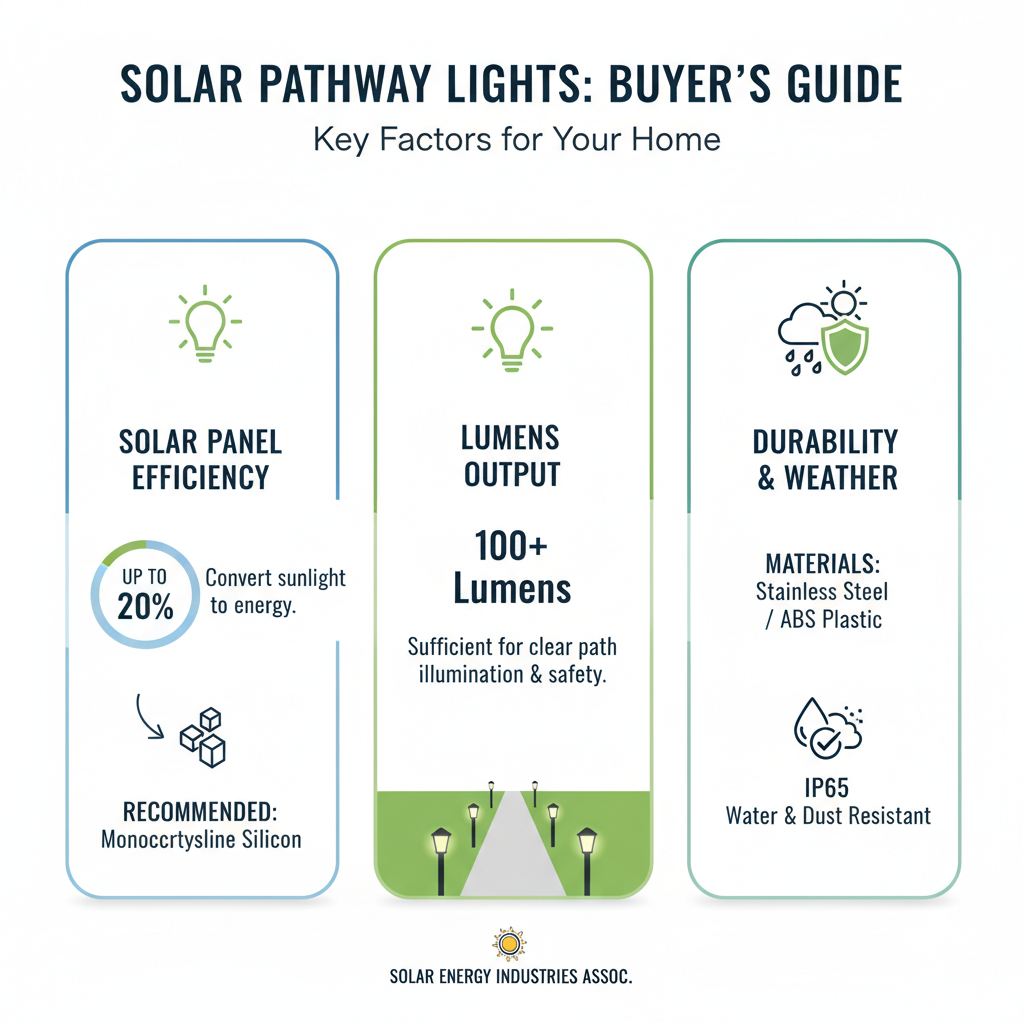
When selecting solar pathway lights for your home, it's essential to consider several key factors that influence their effectiveness and appearance. According to the Solar Energy Industries Association, the efficiency of solar lights can vary significantly, with the best models converting up to 20% of sunlight into usable energy. This efficiency often depends on the quality of the solar panel used, which should ideally be crafted from monocrystalline silicon for optimal performance. Additionally, consider the lumens output; lights that produce 100 lumens or more are typically sufficient for pathway illumination, providing a clear view while enhancing safety on your property.
Another crucial aspect is the runtime of the solar lights, as many models can only last between 6 to 12 hours on a full charge. Research indicates that battery quality also plays a pivotal role, with lithium-ion batteries offering longer life and better performance compared to lead-acid options. Lastly, look for features such as adjustable brightness settings or motion sensors, which can enhance both the functionality and energy efficiency of your pathway lights. As you assess various products, ensure that they are rated for your specific climatic conditions to ensure longevity and consistent performance.
Types of Solar Pathway Lights and Their Benefits
When selecting solar pathway lights for your home, it's essential to understand the different types available and their benefits. One common type is the solar LED light, which is not only energy-efficient but also provides a bright illumination that can enhance the aesthetic appeal of your pathways. These lights typically come with a longer lifespan compared to traditional bulbs, making them a cost-effective choice in the long run.
Another option is solar lanterns, which can add a charming and warm glow to your outdoor spaces. They are particularly effective in creating a cozy atmosphere for evening gatherings. Decorative solar pathway lights come in various styles and designs, allowing you to align your lighting with your home’s overall decor while offering functionality.
When choosing the best solar pathway lights, consider factors like brightness, duration of charge, and weather resistance. It's also wise to assess the placement of the lights to ensure they receive adequate sunlight during the day. Always opt for high-quality products that come with good warranties for durability and peace of mind.
Types of Solar Pathway Lights and Their Benefits
Evaluating Brightness and Solar Battery Life
When selecting solar pathway lights for your home, evaluating brightness and solar battery life is crucial. Brightness is quantified in lumens, which measures the amount of light emitted. Opt for lights that offer at least 100 lumens for effective illumination of pathways. Higher lumens can enhance visibility, but it’s important to strike a balance since overly bright lights may cause discomfort. Additionally, consider adjustable settings that allow you to change the brightness according to your preferences.
Solar battery life directly affects how long your pathway lights will operate each night. Most solar lights are equipped with rechargeable batteries that charge during the day and power the lights after sunset. Look for models that utilize lithium-ion batteries, as they generally have a longer lifespan and better performance in varying weather conditions. Assess the charging time and ensure that the lights can run for six to eight hours on a full charge. This ensures that your home is not only well-lit but also energy-efficient, making your outdoor spaces safer and more inviting.
Tips for Choosing the Best Solar Pathway Lights for Your Home - Evaluating Brightness and Solar Battery Life
| Feature |
Option 1 |
Option 2 |
Option 3 |
| Brightness (Lumens) |
100 |
200 |
300 |
| Solar Battery Life (Hours) |
8 |
10 |
12 |
| Charging Time (Hours) |
6 |
8 |
10 |
| Material |
Plastic |
Aluminum |
Stainless Steel |
| Water Resistance Rating |
IP44 |
IP65 |
IP67 |
Design Options: Style and Aesthetics for Your Home
When selecting solar pathway lights for your home, it's essential to consider not only their functionality but also their design options that enhance your home's aesthetics. The variety of styles available ranges from modern and sleek designs to more traditional lanterns. If you have a contemporary landscape, consider lights with geometric shapes and metallic finishes that can complement clean lines and minimalist features. Conversely, if your home boasts a classic or rustic look, go for ornate designs, such as lantern-style lights that evoke charm and warmth.
Color temperature also plays a significant role in the overall aesthetic. Warm white lights create a cozy and inviting atmosphere, ideal for creating a welcoming pathway. In contrast, cool white lights can lend a more modern and energetic vibe to your outdoor space. Additionally, consider the materials used in the lights; fixtures made of durable metal or weather-resistant plastic can withstand the elements while also contributing to the visual appeal. Ultimately, the right choice of solar pathway lights can seamlessly blend functionality with style, elevating your home’s exterior decor.
Installation and Maintenance Tips for Longevity of Solar Lights
When installing solar pathway lights, it's crucial to select a location that maximizes sunlight exposure throughout the day. Ideally, place the lights in areas where they will receive unobstructed sunlight for a minimum of six hours daily. This ensures that the batteries can fully charge, providing maximum illumination during the night. Additionally, ensure that the surface is level to keep the lights stable and effective. Some models come with stakes for easy installation, while others might require a more permanent mount. Always follow the manufacturer’s instructions to avoid common pitfalls during installation.
To maintain the longevity of your solar lights, regular cleaning is essential. Dust, dirt, and debris can accumulate on the solar panels, significantly reducing their efficiency. Use a soft cloth or sponge with mild soap and water to clean the solar panels gently. Additionally, check the batteries every few months; rechargeable batteries may need replacing every 1-3 years, depending on usage and type. Replace any burnt-out LED bulbs promptly to keep the overall brightness consistent. By adhering to these maintenance tips, you can ensure that your solar pathway lights remain functional and efficient for years to come.