2025 How to Choose the Best All in One Solar Street Light for Your Needs
As urban environments continue to evolve, the importance of sustainable and efficient lighting solutions becomes increasingly paramount. One innovative option that has gained considerable attention is the all in one solar street light. These integrated lighting systems not only harness solar energy to power themselves but also feature streamlined designs that simplify installation and maintenance. In 2025, with advancements in technology and an ever-growing emphasis on eco-friendly practices, choosing the best all in one solar street light tailored to your specific needs is more crucial than ever.
In this guide, we will explore the key factors to consider when selecting the perfect all in one solar street light for your environment. From assessing your lighting requirements and understanding solar energy capabilities to evaluating features such as battery life and durability, this introduction will equip you with the essential knowledge to make an informed decision. Emphasizing efficiency, sustainability, and cost-effectiveness, we aim to illuminate the path forward for those looking to enhance their outdoor spaces with cutting-edge solar lighting solutions. Let’s delve into the essential criteria that will guide you toward making the right choice in selecting an all in one solar street light that meets your needs and promotes a greener future.
Understanding the Benefits of All-in-One Solar Street Lights
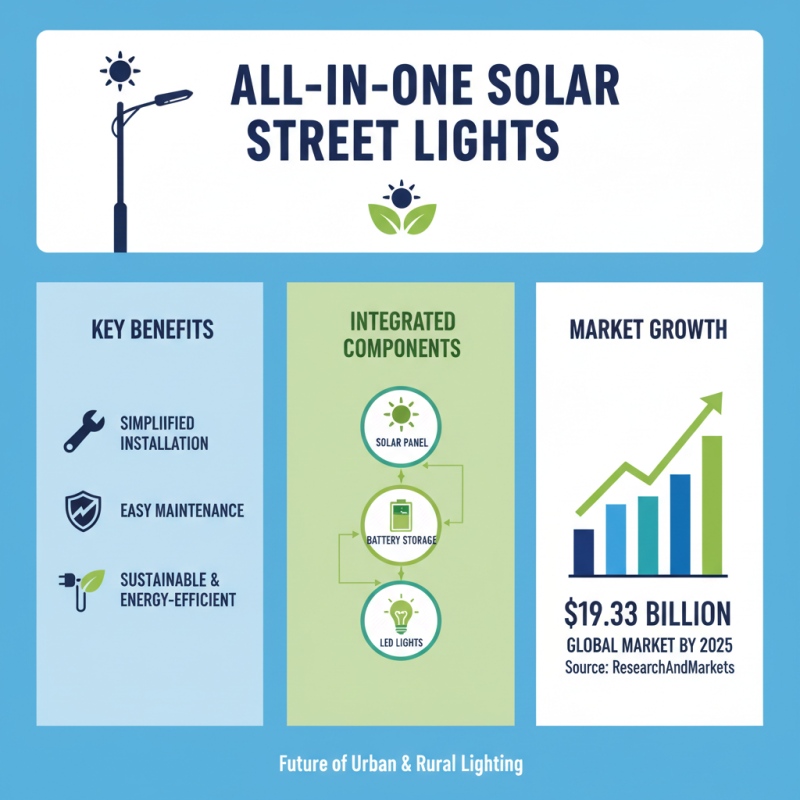
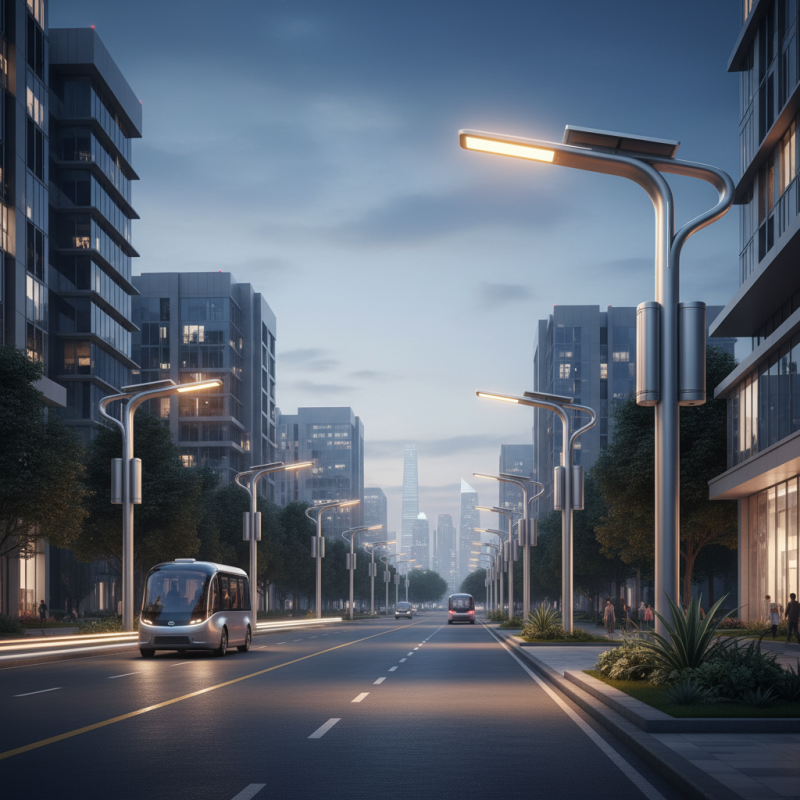
All-in-one solar street lights are increasingly becoming a popular choice for urban and rural lighting solutions, thanks to their unique benefits. These systems combine solar panels, LEDs, and batteries into a single unit, simplifying installation and maintenance. According to a report by ResearchAndMarkets, the global solar street lighting market is projected to reach $19.33 billion by 2025, indicating a growing trend towards sustainable and energy-efficient lighting solutions.
One of the primary advantages of all-in-one solar street lights is their environmental impact. They harness solar energy, which reduces reliance on traditional power sources and lower electricity costs. Further studies have shown that solar street lights can decrease carbon emissions by an average of 1.5 tons per unit annually, contributing significantly to climate change mitigation efforts. Additionally, these lights offer enhanced safety in public spaces, as they provide consistent illumination through night cycles, deterring crime and increasing visibility.
**Tips:** When choosing the best all-in-one solar street light for your needs, consider the brightness level, battery capacity, and solar efficiency. It’s crucial to select a model with sufficient lumens for your area’s requirements, allowing for adequate visibility. Assessing the quality of materials and warranty offered will also ensure that your investment is protected against environmental wear and tear, ensuring longevity.
Key Features to Consider When Selecting Solar Street Lights
When selecting an all-in-one solar street light, several key features should be prioritized to meet specific needs effectively. One of the most critical factors to consider is the lumen output. According to the Solar Energy Industries Association (SEIA), street lights typically range from 1,000 to 20,000 lumens, depending on the application. For residential areas, lights with a lumens output between 3,000 and 4,000 are often sufficient, while commercial spaces might require outputs closer to 10,000 lumens to ensure adequate illumination for safety and visibility.
Another essential feature is the battery capacity and type. A report by the International Renewable Energy Agency (IRENA) indicates that the efficiency of solar street lights can be significantly impacted by battery performance. Lithium-ion batteries are often favored for their longer lifecycle and faster charging capabilities compared to traditional lead-acid batteries. It is critical to ensure that the chosen light has a battery that can sustain illumination throughout the night, especially during periods of low sunlight.
Additionally, the durability of the materials used is noteworthy. The average lifespan of a solar street light ranges from 5 to 10 years, and selecting products made from high-quality, weather-resistant materials can enhance longevity. As per data from the U.S. Department of Energy, street lights exposed to harsh weather conditions can suffer significant wear, which impacts their performance. Therefore, selecting models with robust construction and protective features, like a high IP rating for water and dust resistance, can lead to a more sustainable and low-maintenance lighting solution.
2025 How to Choose the Best All in One Solar Street Light for Your Needs - Key Features to Consider When Selecting Solar Street Lights
| Feature |
Description |
Importance |
Average Rating (1-5) |
| Lumens Output |
Measures the brightness of the light |
High |
4.5 |
| Battery Life |
Duration the light can operate without sunlight |
High |
4.7 |
| Solar Panel Efficiency |
Effectiveness of converting sunlight into energy |
Medium |
4.2 |
| Durability |
Resistance to weather and physical damage |
High |
4.6 |
| Installation Time |
Time needed to set up the light |
Medium |
4.0 |
| Smart Features |
Ability to control and manage operations remotely |
Low |
3.8 |
Evaluating Solar Street Light Brands and Models for Reliability
When evaluating solar street light brands and models for reliability, it's essential to consider various factors that contribute to their long-term performance. Key aspects include the quality of materials used in the light’s construction, the efficiency of the solar panels, and the capacity of the batteries. A well-constructed solar street light can withstand harsh weather conditions, ensuring it remains functional over time. Researching customer reviews and product ratings can also provide insights into the reliability and durability of different models.
Tips: Look for products that offer warranties or guarantees, as these often indicate a manufacturer’s confidence in their product. Additionally, check if the model has been tested under real-world conditions; this can be a good measure of its reliability.
Another vital consideration is the brand's reputation. A brand that has been in the market for an extended period typically has established protocols and quality assurance practices that can enhance product reliability. Comparing the features of different brands, such as light output, energy efficiency, and ease of installation, will help narrow down your choices to find the best fit for your needs.
Tips: Prioritize brands that provide detailed technical specifications and customer support. Engaging with online forums can give you access to personal experiences and insights, allowing you to make a more informed decision.
Cost Analysis: Budgeting for Your Solar Street Light Purchase
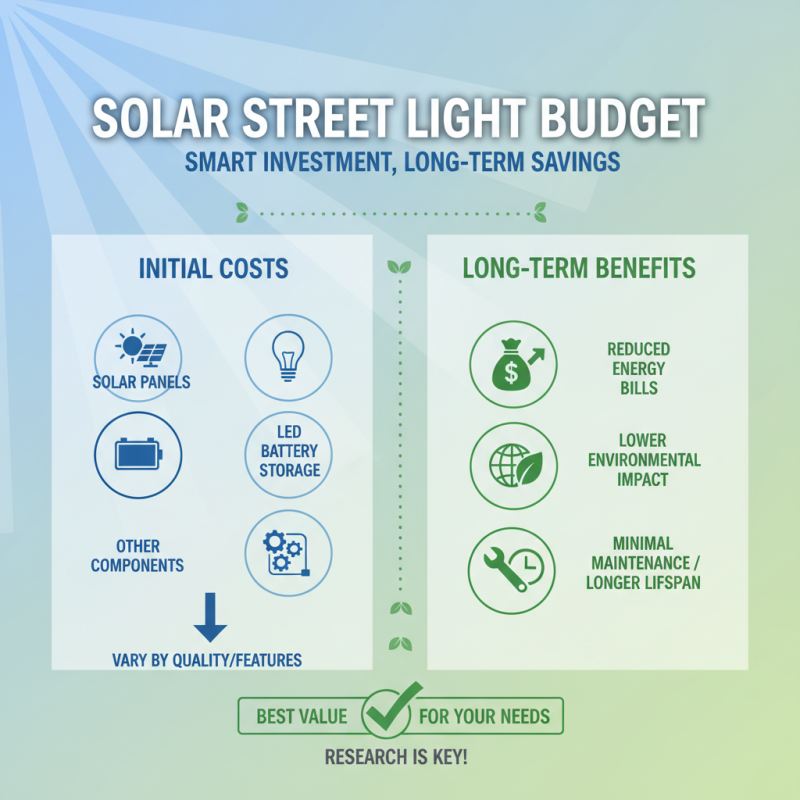
When budgeting for a solar street light purchase, it's crucial to consider the initial costs as well as the long-term savings and benefits associated with solar technology. The upfront investment typically includes the price of the solar panels, LED lights, batteries, and other necessary components. While these costs can vary significantly based on quality and features, it's essential to perform thorough research to find options that provide the best value for your specific needs.
In addition to the initial purchase price, evaluating long-term operational costs can provide insights into the overall financial impact of your decision. Solar street lights generally require lower maintenance and no electricity costs once installed, leading to considerable savings over time. Additionally, analyzing the potential return on investment (ROI) in terms of energy savings and reduced utility bills can further justify the initial expenditure. A well-planned budget that accounts for both immediate and ongoing costs will ensure that you make a sound investment in a solar street lighting system that meets your needs effectively.
Installation and Maintenance Tips for Optimal Solar Light Performance
When it comes to optimizing the performance of all-in-one solar street lights, installation and maintenance play crucial roles. Proper installation ensures that solar panels receive maximum sunlight exposure, which is essential for efficient energy conversion. According to the International Energy Agency, the optimal tilt angle for solar panels varies by location but typically ranges from 15 to 45 degrees. Ensuring that the solar street light is installed in a south-facing direction and free from obstructions such as trees or buildings will significantly enhance its energy harvesting capability, ultimately prolonging the lifespan of the battery and consistent brightness at night.
In addition to installation, regular maintenance is essential for ensuring that solar street lights continue to function effectively over time. A report by the Solar Energy Industries Association indicates that routine inspections—every 6 to 12 months—can help identify potential issues such as dirt accumulation on solar panels or wear and tear on LED fixtures. Cleaning the solar panels regularly and checking the battery health can prevent energy inefficiencies and extend the operational life of the solar street light. With an estimated 25-year lifespan for solar batteries, proper care can result in significant long-term savings and provide reliable lighting for community safety and security.