How to Choose the Best LED Solar Lights for Your Outdoor Space?
When it comes to enhancing your outdoor space, choosing the right LED solar lights is essential. Sarah Thompson, a lighting expert at EcoBright, once said, "LED solar lights can transform any garden into a serene oasis." This statement rings true for many homeowners seeking sustainable and beautiful lighting options.
However, selecting the best LED solar lights isn't always straightforward. With numerous options flooding the market, you may find yourself overwhelmed. Brightness, battery capacity, and design are crucial factors to consider. Imagine illuminating your pathways or highlighting your favorite trees with just the right glow. Yet, it’s easy to overlook important details in this decision-making process.
Additionally, compatibility with your home’s aesthetics is vital. Many people choose lights that clash with their outdoor layout. It’s important to remember that not every LED solar light suits every environment. Think critically about your space, and don’t shy away from experimenting. Finding the perfect lighting might take time, but the results will enhance your evenings outside in ways you didn’t expect.
Understanding LED Technology: The Basics of Solar Lights
LED technology has transformed outdoor lighting, particularly through solar-powered options. These lights harness sunlight and convert it into energy. According to a report by the U.S. Department of Energy, LED lights are 75% more energy-efficient than traditional incandescent bulbs. This efficiency is significant, especially for outdoor spaces that require consistent lighting.
Understanding the components of solar lights is crucial. Most solar lights include solar panels, rechargeable batteries, and LED bulbs. Research indicates that high-quality solar panels can convert around 20% of sunlight into usable energy. However, not all products meet this threshold. Consumers often encounter lower efficiency rates, which can lead to inadequate lighting. Poor battery performance, especially in cold weather, is another common issue.
While choosing solar lights, consider the lumens output. A brightness of 100 lumens is generally suitable for pathways, while 300 lumens works well for wider areas. A report from Outdoor Lighting Perspectives highlights that installation in shaded areas can lead to performance drops. Proper placement and selection are critical for maximizing illumination in your space.
How to Choose the Best LED Solar Lights for Your Outdoor Space?
| Feature |
Description |
Importance |
| Lumens Output |
Measures brightness; higher lumens indicate brighter lights. |
Critical for visibility and safety in outdoor areas. |
| Battery Life |
Duration the light can operate on a single charge. |
Essential for uninterrupted lighting at night. |
| Material Quality |
Durability of the light's exterior; resistant to weather. |
Important for longevity and performance over time. |
| Solar Panel Efficiency |
How effectively the panel converts sunlight to power. |
Affects charging speed and operational duration. |
| Light Sensor |
Automatically turns on at dusk and off at dawn. |
Enhances convenience and energy efficiency. |
| Adjustable Settings |
Options for brightness and motion detection. |
Provides flexibility based on outdoor usage and needs. |
Evaluating Brightness: Lumens and Their Impact on Outdoor Lighting
When choosing LED solar lights for your outdoor space, brightness matters significantly. Lumens measure the amount of light emitted. A brighter area typically needs more lumens. For pathways, lights with 100 to 200 lumens are often sufficient. For security, consider lights that emit 700 lumens or more. It’s important to assess your lighting needs before buying.
Tips: Always check the specifications. Not all high-lumen lights are equal. Some may consume more power or have a shorter lifespan. Think about your outdoor area. Areas with dense trees may require brighter lights for visibility. However, make sure it doesn’t disrupt wildlife.
Also, too much light can create a harsh atmosphere. A soft glow can enhance the beauty of your garden. Balance is key. It’s worth reflecting on how you use the space. Will you entertain often? Look for lights that create ambiance. Adjust your choices based on the mood you wish to set. It’s okay to change your mind as you experiment with different styles and intensities.
Types of Solar Lights: Pathway, Flood, and Accent Options
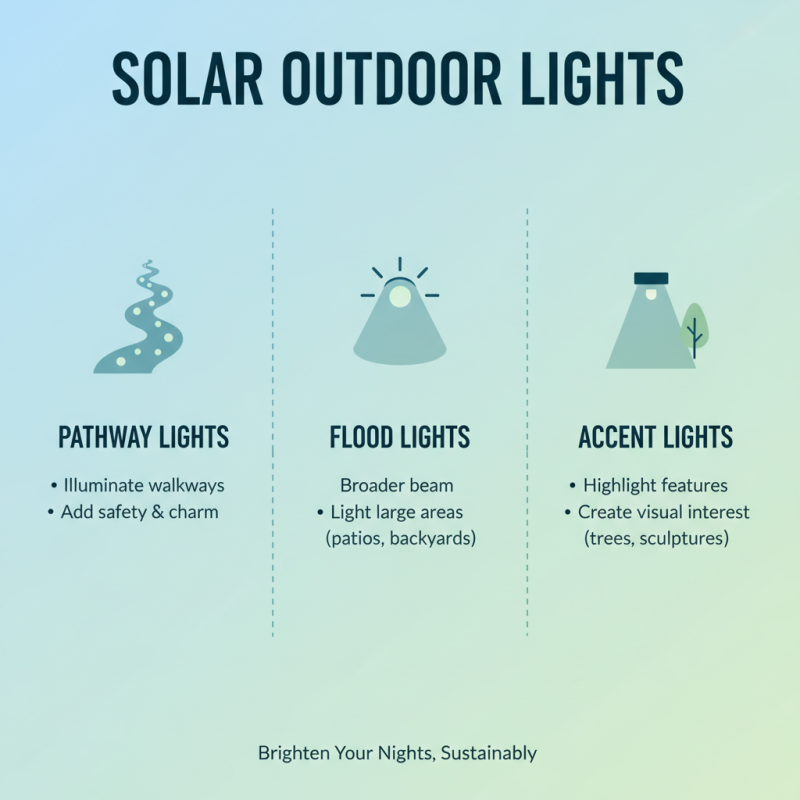
When considering solar lights for your outdoor space, think about the different types available. Pathway lights illuminate your walkways, adding safety and charm. They are available in various styles, making it easy to find a match for your garden. Flood lights provide a broader beam, perfect for illuminating larger areas like patios or backyards. Accent lights can highlight specific features, such as trees or sculptures, creating visual interest in your landscape.
Tips: Choose lights with adjustable brightness. This makes them versatile for different occasions. Always check the solar panel's position. Ensure it receives enough sunlight for charging. If your area has minimal direct sunlight, consider hybrid options. They combine solar power with battery backup.
When selecting the perfect solar light, consider your specific needs. Do you want ambient lighting or security? Too many lights can be overwhelming. A balanced setup creates a more inviting atmosphere. Get creative with placement and layering. Imagine varying heights and angles to enhance depth. Avoid the common mistake of uniformity. Embrace imperfection in your design; it adds character.
Battery Life and Solar Panel Efficiency: Key Factors to Consider
When selecting LED solar lights for your outdoor space, battery life and solar panel efficiency are crucial. The battery life determines how long the lights can stay illuminated after sunset. High-quality batteries can last through the night, while inferior ones may fail quickly. Look for lights with lithium-ion batteries for better performance.
Solar panel efficiency also matters. A more efficient panel can convert sunlight into energy faster. This means your lights will charge quickly during the day, even on cloudy days. If the panel isn’t efficient, the lights may not receive enough energy. Seek models with larger panels to capture more sunlight throughout the day.
Tips: Assess the number of sunlight hours in your area. This affects charging conditions. Also, consider the placement of the lights. Avoid spots that are shaded by trees or buildings. These factors can diminish light performance. Regularly clean solar panels to ensure maximum efficiency. Dust and debris can block sunlight and reduce energy absorption.
Weather Resistance Ratings: Ensuring Durability for Outdoor Use
When choosing LED solar lights, weather resistance is crucial. These lights need to endure rain, snow, wind, and extreme temperatures. Look for products with high weather resistance ratings. Generally, an IP rating of 65 or above is ideal. This indicates that the fixture can resist water and dust ingress effectively. It's important to check these ratings carefully.
Different materials impact durability. Stainless steel and aluminum often fare better in harsh conditions than plastic. Plastic can become brittle over time. Check for robust seals on the light fixtures. Poor seals can lead to moisture buildup, causing failure.
It’s worth noting that even well-rated lights may falter under consistent exposure. Pay attention to customer reviews regarding durability. Many people share their experiences with weather resistance. Sometimes reviews highlight unexpected failures during storms. Such insights can guide your selection process.
Aim for lights designed specifically for your climate. They should match the environmental conditions of your area. This can enhance their longevity significantly.