Why Should You Choose an Ev Charger Wall Plug for Home Use?
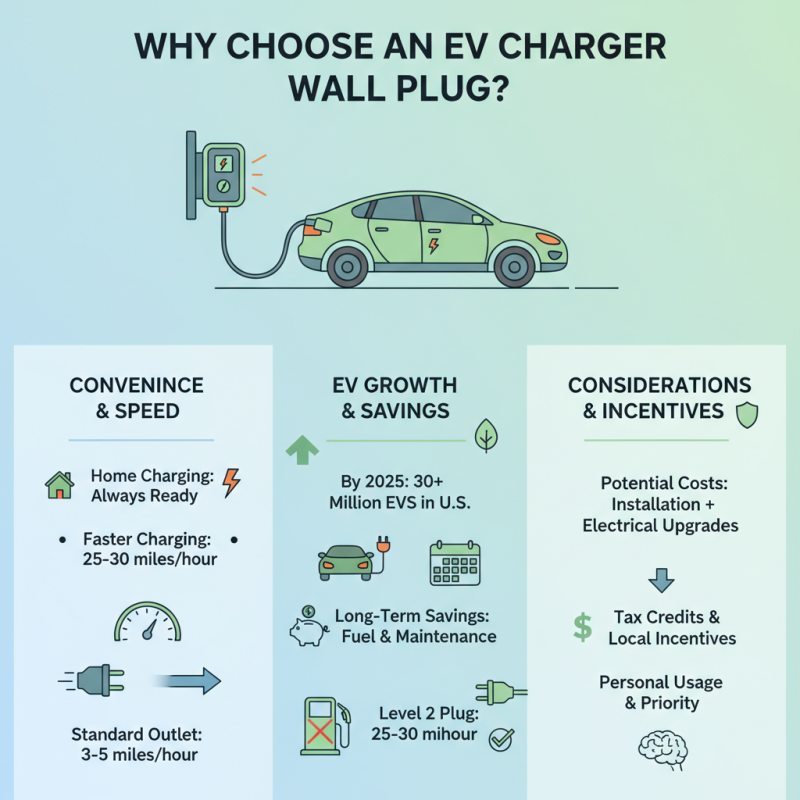
As electric vehicle (EV) adoption rises, the demand for home charging solutions grows. By 2025, experts predict over 30 million EVs will be on the road in the U.S. An Ev Charger Wall Plug offers convenience and faster charging than standard outlets. This is essential for daily commuters.
Charging speed makes a significant difference. A standard 120-volt outlet might provide 3-5 miles of range per hour. In contrast, a level 2 Ev Charger Wall Plug typically delivers 25-30 miles per hour. This means less waiting and more driving. Home installations can also be eligible for tax credits. However, not every household is ready for this upgrade.
Potential costs can be a concern. Installation fees for Ev Charger Wall Plugs may vary. Homeowners should prepare for electrical upgrades, which can add to expenses. Yet, the long-term savings on fuel and maintenance are worth considering. Examining local incentives can ease the financial burden. Even so, consumers must reflect on their personal usage. Prioritizing a charging solution is key in the EV transition.
Benefits of Installing an EV Charger Wall Plug at Home
Installing an EV charger wall plug at home offers numerous benefits. With the rise of electric vehicles, having a dedicated charging station becomes essential. According to the U.S. Department of Energy, over 80% of electric vehicle charging happens at home. This statistic emphasizes the convenience of having an EV charger right where you park. It allows for overnight charging, ensuring your vehicle is ready each morning.
Moreover, home charging can lead to significant cost savings. Many utility companies provide lower rates for electricity used during off-peak hours. A recent report by the International Council on Clean Transportation indicates that charging an electric vehicle at home could save users up to $800 annually compared to gas-powered vehicles. However, homeowners should assess their electrical capacity before installation. Not all households may be prepared for the added load, which might necessitate system upgrades.
Additionally, the range anxiety associated with electric vehicles can be alleviated with a home charger. Studies show that drivers are more confident when they know they can charge at home. It creates a sense of security in daily commutes. Yet, some may struggle with the upfront costs and the installation process. It’s important to weigh these factors carefully.
Key Features to Consider When Choosing an EV Charger Wall Plug
When selecting an EV charger wall plug for home use, several key features warrant attention. Power output is vital. Most home chargers range from Level 1, with 120 volts, to Level 2, with 240 volts. A Level 2 charger can deliver up to 32 amps, reducing charging time significantly. According to the U.S. Department of Energy, a Level 2 charger can fully charge many electric vehicles in about four to six hours.
Another important consideration is the charger’s compatibility. Ensure the charger works with your EV. Many homes still have older electrical systems. Upgrading may be necessary to support higher charging levels. A recent study highlighted that about 20% of homes need electrical upgrades to accommodate new EV chargers.
Safety features also play a crucial role. Look for built-in protections like overcurrent protection and ground fault circuit interrupters. These features can prevent damage to both the charger and the vehicle. Further, a mobile app integration can add convenience, allowing for monitoring charging status and scheduling charging times. However, be mindful that not all models offer robust app support, and this can lead to frustration.
Why Should You Choose an EV Charger Wall Plug for Home Use? - Key Features to Consider When Choosing an EV Charger Wall Plug
| Feature | Description | Benefits |
| Charging Speed | The rate at which your EV can be charged, usually measured in kW. | Faster charging means less waiting time for you. |
| Safety Features | Includes protections like overcurrent, overvoltage, and temperature control. | Helps to prevent accidents and damage to both your vehicle and the charger. |
| Compatibility | Ensure the charger is compatible with your specific EV model. | Guarantees efficient charging without the need for adapters. |
| Installation | Consider if you can self-install or need professional help. | Proper installation ensures optimal performance and safety. |
| Smart Features | Includes Wi-Fi connectivity and app integration for monitoring. | Allows you to track energy usage and receive updates remotely. |
How to Install an EV Charger Wall Plug Safely and Efficiently
Installing an EV charger wall plug at home can greatly enhance your electric vehicle experience. However, safety and efficiency are paramount during installation. To ensure a smooth process, begin by gathering the necessary tools: a drill, wire stripper, and screwdrivers. This will prepare you for each step.
Before starting, assess your electrical system. Check if your home can handle the additional load of an EV charger. It often requires a dedicated circuit. Consult an electrician if you're uncertain. They can help avoid potential hazards.
Tips: Always turn off power at the circuit breaker before starting. This simple action can prevent accidents. Also, ensure you use high-quality materials. Using inferior connectors can lead to inefficiencies and safety issues.
Your installation area should be dry and well-ventilated. Position the charger close to your parking area for convenience. Take time to secure the wall plug properly. Loose connections can be problematic. Double-check all wiring once installed. It's easy to overlook small details that can lead to inefficiencies. Regular maintenance will keep your charger functional and safe for the long term.
EV Charger Wall Plug Installation and Benefits
Comparing Different Types of EV Charger Wall Plugs for Home Use
When choosing an EV charger wall plug for home use, various types offer different features. Level 1 chargers use a standard household outlet. They deliver around 4 to 5 miles of range per hour. This option is often less expensive but can be inefficient for daily needs. Many users find this inadequate as EVs demand quicker charging solutions.
Level 2 chargers provide a significant upgrade. They can charge most EVs at a rate of 25 to 30 miles per hour. Reports show that these chargers have become the preferred choice, accounting for about 75% of home installations. They typically require a 240-volt outlet and may need professional installation. This step is essential for maximizing charging efficiency and safety.
DC fast charging is another option. It's rare in home settings but valuable. It can deliver 80% charge in just 30 minutes. However, it's costly and often requires special infrastructure. Many homeowners aren’t ready to invest in such complexity. While fast charging sounds appealing, not all homes can accommodate it. It's vital to weigh the pros and cons carefully.
Cost Analysis: EV Charger Wall Plugs vs. Public Charging Stations
When considering cost, EV charger wall plugs offer significant savings compared to public charging stations. Installing a charger at home often requires an upfront investment. However, the long-term benefits can outweigh these initial costs. Charging at home can be more economical. You'll save on convenience fees charged at public stations.
On average, public charging can cost twice as much per kilowatt-hour as home charging. The ability to charge overnight at lower electricity rates adds to the savings. Yet, some may find the installation cost daunting. It might require electrical upgrades. This decision also depends on your driving patterns.
Not everyone drives long distances daily. If your usage is minimal, public charging might seem sufficient. Still, reliable access to home charging is crucial for peace of mind. Weighing the costs and benefits requires careful thought. An EV wall plug can transform your energy expenses into a more manageable budget over time.
