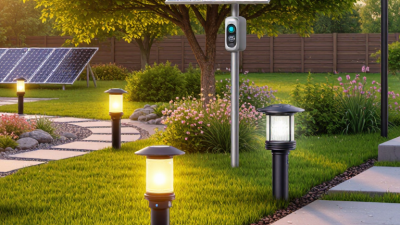
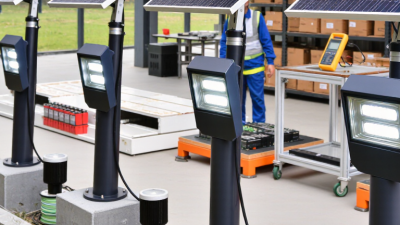
Choosing reliable solar post lights manufacturers in China requires more than comparing catalog photos and factory prices. Global buyers need evidence of product quality, manufacturing experience, testing procedures, and export reliability. A well-qualified supplier should explain panel efficiency, battery capacity, LED lifespan, waterproof protection, and expected lighting hours. These details matter when lights face coastal salt air, winter frost, or long summer nights.
Experienced manufacturers usually provide samples before bulk orders. A sample can reveal loose caps, weak hinges, uneven brightness, or charging problems that product descriptions often hide. Ask for test reports, production photographs, packaging details, and clear warranty terms. Factory audits and video inspections may also confirm whether assembly, aging tests, and quality checks happen on site.
Look for manufacturers serving different climates and installation environments. Their engineering teams should understand aluminum alloys, stainless steel, ABS materials, battery safety, and efficient solar charging. Reliable suppliers communicate openly when a design has limitations. That honesty is valuable. Not every solar post lights model performs equally well under shade or cloudy weather.
Some buyers focus too heavily on the lowest quotation. That decision can create higher replacement costs later. A stronger evaluation considers lighting consistency, spare parts, delivery records, customization support, and after-sales response. Certifications should be checked against the destination market rather than accepted without verification. This guide introduces leading China solar post lights manufacturers for global buyers, while recognizing that supplier performance can change over time. Careful sampling, written specifications, and practical testing remain essential before committing to a large order.
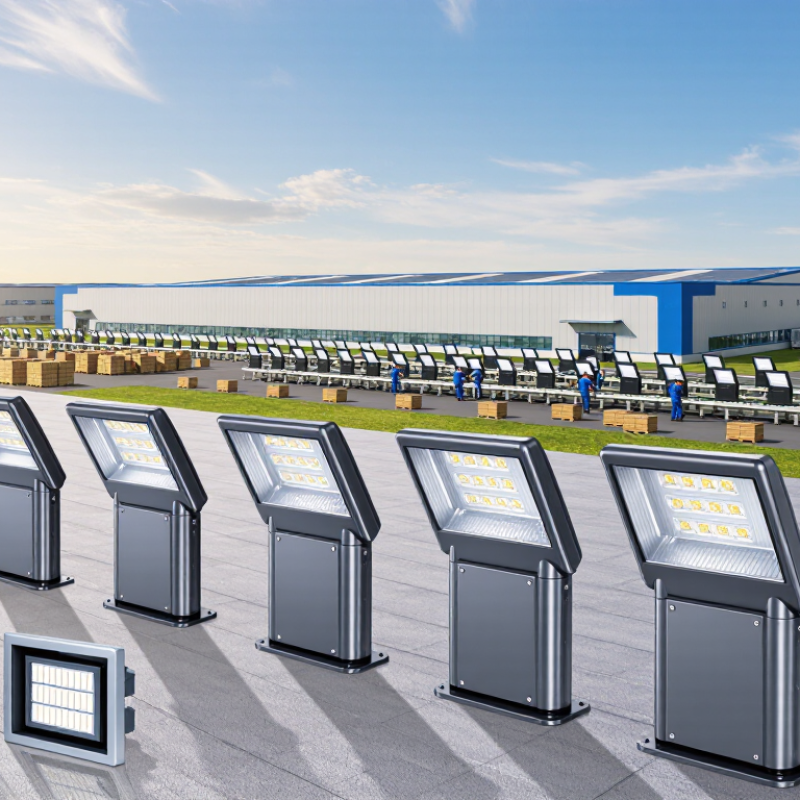
China’s solar post light industry combines LED assembly, battery production, metalwork, and outdoor testing. Manufacturers commonly offer aluminum, stainless steel, and weather-resistant polymer housings. Production usually includes solar panel bonding, battery installation, wiring, sealing, and illumination testing. Experienced factories inspect charging performance under controlled light conditions. They also test water resistance, corrosion resistance, and repeated switching cycles. However, quality can vary between suppliers using similar product images.
Tips: Request factory audit records, material specifications, sample test reports, and production photos. Confirm battery capacity under real operating conditions, not only advertised values. Ask how suppliers manage temperature, humidity, and winter charging losses. A small pilot order can reveal packaging or assembly problems early.
Reliable sourcing requires more than comparing unit prices. Buyers should review quality systems, traceability procedures, and worker training records. Current compliance documents should match the exact model and target market. Certifications and test reports need independent verification where possible. Clear drawings should define pole dimensions, light distribution, battery type, and operating hours. An honest supplier should explain limitations, including reduced brightness during cloudy seasons. Even experienced buyers sometimes overlook replacement parts and warranty response times. That mistake becomes expensive after installation. Pricing remains important, but dependable manufacturing depends on evidence, communication, and repeatable inspection.
China’s solar post light manufacturers benefit from a mature photovoltaic supply chain. The IEA PVPS Trends 2024 report recorded 216.9 GW of new solar capacity in China during 2023. This scale supports competitive cells, batteries, controllers, and LED components. Buyers should still verify factory-level quality, not rely on national production statistics alone.
Key features include monocrystalline panels, lithium battery systems, and programmable lighting controls. Many outdoor models use IP65 or IP66 protection, which helps resist rain and dust around driveways. Some manufacturers provide 2,700K to 6,500K color temperatures and motion-sensing options. Battery specifications deserve close attention. A light with a large panel may still fail after several cloudy nights. Request test records for capacity, charging cycles, and winter performance.
The IEA’s 2024 lighting analysis continues to emphasize LED efficiency and connected controls as major energy-saving tools. Experienced Chinese suppliers often support sample testing, private tooling, packaging changes, and compliance documents for different markets. Ask for photometric files, salt-spray results, and a clear warranty procedure. IP ratings can be misunderstood. They do not prove long-term outdoor durability by themselves. In my view, the strongest manufacturers combine engineering support with honest limits on runtime claims. Some quotations look attractive, but their battery data remains vague. That is a warning worth investigating.
When evaluating solar post light suppliers, inspect more than product photos. Request a factory video, production address, and recent quality records. A serious supplier should explain panel wattage, battery chemistry, charging time, and expected nighttime runtime clearly.
Ask for samples from normal production, not specially prepared units. Test them outdoors for several nights. Note brightness after cloudy days, water entry, loose screws, and uneven color.
Check the supplier’s quality process at each stage.
It should include incoming material inspection, battery testing, waterproof checks, and final lighting tests. Ask for the rated IP protection level and supporting laboratory reports. These documents should match the exact model and your destination market.
Confirm packaging strength with a drop test, especially for glass covers and decorative frames.
Review communication and after-sales support before placing a large order.
Request a clear specification sheet, inspection standard, warranty terms, spare-part policy, and production schedule. Verify whether the supplier can trace batteries and electronic components by batch.
Independent inspection can reduce risk, but it cannot replace your own product testing. I once treated a strong sample as proof of stable production; that assumption failed when a later batch showed weaker batteries.
Leave room for re-testing, corrective action, and honest discussion. Reliable purchasing depends on evidence, not confident promises.
China Top Solar Post Lights Manufacturers for Global Buyers
Reliable solar post lights begin with controlled production, not attractive photographs. Experienced manufacturers should inspect solar panels, LED output, battery capacity, sealing, and charging performance. Quality checks should cover different weather conditions, including heat, rain, dust, and long winter nights. ISO 9001 systems can support consistent processes, but certification alone does not prove product quality. Ask for inspection records, sample results, and traceable batch numbers. Small gaps in testing can become large complaints after installation.
Certifications must match the destination market and product design. Common documents may include CE, RoHS, EMC, and relevant IEC test reports. Battery-powered models may also require transport testing and safety documentation. Request complete reports from accredited laboratories, rather than copied certificates with unclear product details. Export-ready suppliers should provide accurate invoices, packing lists, product specifications, carton measurements, and battery shipping information. They should also understand labeling and import requirements for your target country. Some factories communicate well but still miss document details. That weakness deserves a careful review.
Tips: Test pre-production samples outdoors for several nights. Compare brightness, charging time, and battery duration. Confirm the IP rating through supporting test evidence. Check whether packaging protects glass, poles, and connectors during ocean transport. Keep one approved sample for future comparison. Do not rely on promises alone. Written records are safer.
The chart shows the number of core compliance and export documents typically assessed in each category. Relevant frameworks include IEC 60598-1 for luminaire safety, IEC 60598-2-1 for fixed general-purpose luminaires, EN 55015 and EN 61547 for electromagnetic compatibility, RoHS for restricted substances, CE technical documentation for applicable European Union directives, and UN 38.3 transport testing for lithium batteries. Exact requirements vary by destination market, product configuration, and battery type.
China Top Solar Post Lights Manufacturers for Global Buyers
Ordering solar post lights from China requires more than comparing unit prices. Ask for a complete specification sheet covering lumen output, battery capacity, panel wattage, lighting duration, materials, and ingress protection. Request production samples before confirming a large order. A sample may reveal weak hinges, uneven powder coating, or poor charging performance. Small details matter.
Customization should begin with a clear drawing and measurable requirements. Manufacturers can adjust post dimensions, color, mounting holes, logos, packaging, and lighting controls. Confirm whether custom tooling is needed, and identify its cost and ownership in writing. Ask for a pre-production sample. It prevents expensive surprises. However, customization often extends lead times, and buyers sometimes underestimate approval delays. I have seen projects lose weeks because one artwork file lacked the correct dimensions.
International logistics needs careful planning. Confirm the HS code, carton size, gross weight, pallet method, and shipping terms before payment. Solar lights may contain lithium batteries, so the supplier should provide accurate transport documents and packaging information. Check destination-market testing and labeling requirements with qualified specialists. Do not rely only on a supplier’s general certificate. Factory inspections, batch photographs, and third-party quality checks improve traceability. Plan around peak shipping periods, port congestion, customs clearance, and possible replacement units. A small spare-parts quantity can reduce service delays after installation. Yet every extra item increases freight cost, so the calculation deserves a second review.
| Evaluation Dimension | Typical Market Data or Requirement | What Global Buyers Should Request | Ordering and Logistics Considerations |
|---|---|---|---|
| Solar Panel Technology | Monocrystalline silicon panels are widely used because they generally offer higher efficiency per unit area than polycrystalline panels. | Panel rated power, dimensions, operating voltage, conversion-efficiency data, and performance tolerance. | Confirm whether the panel is integrated into the top cap or installed separately, and check whether the design allows replacement after delivery. |
| Battery Chemistry | Common options include lithium-ion and lithium iron phosphate (LiFePO4). LiFePO4 is frequently selected for outdoor products because of its thermal stability and cycle-life characteristics. | Battery chemistry, nominal voltage, rated capacity in Wh, operating-temperature range, protection circuit, and cycle-life test conditions. | For lithium batteries, request applicable transport documentation, including UN 38.3 test evidence and a safety data sheet when required by the carrier or destination country. |
| Lighting Output | Decorative solar post lights commonly use low-power LED modules, while larger commercial units may use higher wattages and multiple lighting modes. | Measured luminous flux in lumens, LED color temperature, color-rendering index, beam distribution, and lumen-maintenance information. | Do not evaluate brightness by LED wattage alone; request photometric data or a sample tested under the intended operating mode. |
| Operating Duration | Advertised night-time operation often varies from approximately 8 to 12 hours under favorable charging conditions; actual duration depends on solar irradiation, battery condition, temperature, and lighting mode. | Runtime at different brightness levels, autonomy after consecutive cloudy days, low-temperature performance, and test conditions. | Use local solar-resource data when sizing the panel and battery. A claim based only on a full sunny day may not represent winter or rainy-season performance. |
| Ingress Protection | IP65 indicates protection against dust ingress and water jets from any direction; IP66 provides stronger protection against powerful water jets. The rating applies only under the stated test configuration. | IP test report, test standard, tested assembly configuration, gasket details, and evidence that the battery compartment is protected. | Verify the rating under IEC 60529 or an equivalent recognized standard. An IP rating does not automatically confirm resistance to condensation, corrosion, or immersion. |
| Mechanical Materials | Aluminum alloy, stainless steel, ABS, polycarbonate, and glass are common material choices for housings, poles, lenses, and decorative components. | Material grade, wall thickness, coating system, UV resistance, corrosion test results, and fastener material. | For coastal or high-humidity locations, request salt-spray testing and specify corrosion-resistant fasteners and suitable powder-coating requirements. |
| Control Functions | Typical functions include dusk-to-dawn activation, fixed brightness, motion sensing, multi-level dimming, remote control, and programmable schedules. | Sensor detection range, activation delay, dimming profile, memory function, remote-control range, and manual override method. | Specify the default operating mode in the purchase order to avoid receiving units configured for a different market or installation environment. |
| Customization Scope | Common customization areas include housing color, dimensions, pole height, mounting base, LED color temperature, control software, packaging, and user manuals. | Technical drawing, material specification, color reference, logo artwork if applicable, sample approval procedure, and change-control process. | Tooling, engineering, sampling, and certification costs should be separated from the unit price. Approve a golden sample before mass production. |
| MOQ and Sampling | Minimum order quantities are commercial terms rather than fixed industry standards. Stock models may support smaller trial orders, while customized products usually require higher quantities. | Sample price, sample lead time, refundable tooling or sample charges, inspection criteria, and acceptable defect limits. | Use a paid pre-production sample for customized orders and define whether the sample cost will be credited against the first bulk shipment. |
| Production Lead Time | For standard items, production is often quoted in weeks rather than days; customized designs may require additional time for engineering, tooling, testing, and packaging approval. | Lead time from deposit, sample approval, artwork approval, and final specification freeze, with a clear shipment-ready date. | Build schedule buffers around Chinese public holidays, port congestion, vessel availability, and destination customs procedures. |
| Product Compliance | Relevant requirements may include electrical-safety, EMC, battery, radio, environmental, and chemical regulations depending on the destination market and product functions. | Declaration of conformity where applicable, test reports, component information, labeling artwork, user instructions, and country-specific compliance evidence. | CE, UKCA, FCC, RoHS, or other marks are not interchangeable. Confirm the exact legal requirements for the destination and product configuration. |
| Packaging and Protection | Export packaging commonly combines individual cartons, protective inserts, palletization, and moisture protection where necessary. | Carton dimensions, gross and net weight, drop-test requirements, packaging material, pallet specifications, and spare-part packing method. | Request a carton packing list before booking freight. Accurate dimensions and weights are essential for freight quotations and container planning. |
| Incoterms and Payment | Commonly negotiated Incoterms include EXW, FOB, CIF, and DAP. Incoterms 2020 allocates responsibilities, costs, and risk but does not determine payment terms or ownership transfer. | Named place, version of Incoterms, export-clearance responsibility, insurance scope, payment milestones, and documents to be provided. | Compare landed cost rather than unit price alone, including inland transport, export charges, ocean or air freight, duties, taxes, brokerage, and destination delivery. |
| Battery Transportation | Lithium batteries may be regulated as dangerous goods in air, sea, road, or multimodal transport depending on battery type, configuration, watt-hour rating, packaging, and applicable rules. | Battery test summary, UN 38.3 documentation, safety data sheet where required, packaging declaration, and battery installation configuration. | Confirm requirements with the freight forwarder before production. Incorrect declarations can cause booking rejection, delay, fines, or cargo rework. |
| Quality Inspection | Pre-shipment inspection commonly checks appearance, dimensions, function, charging behavior, battery voltage, packaging, labeling, and random sample performance. | Approved inspection checklist, sampling level, critical-major-minor defect definitions, functional test duration, and corrective-action procedure. | Use an independent inspection or documented factory inspection before releasing the balance payment, especially for private-label or customized orders. |
| Warranty and Spare Parts | Outdoor solar products typically require replacement planning for batteries, LED modules, controllers, seals, screws, and plastic or glass components. | Warranty duration, covered components, exclusions, claim evidence, replacement ratio, repair instructions, and spare-parts pricing. | Define warranty start date, remedy method, and responsibility for freight. Keep replacement batteries and controllers compatible with the original design. |
| Destination-Country Requirements | Import duties, product registration, energy labeling, packaging rules, language requirements, and electrical or radio approvals vary by jurisdiction. | Country of origin, commercial invoice, packing list, bill of lading or airway bill, certificates, labels, manuals, and any required customs classification support. | Ask a local customs broker to confirm tariff classification and import requirements before placing the order; classification can vary according to product construction and included functions. |
Note: Technical values and commercial ranges shown above are common reference points for buyer evaluation, not universal specifications. Final requirements should be confirmed in the approved product specification, purchase contract, and destination-country regulations.