China Top 10 FPGA Chip Manufacturers for Global Buyers?
Choosing a Chinese Fpga Chip supplier takes more than comparing prices or reading a “top ten” list. Buyers should examine the device family, logic capacity, memory resources, I/O options, and development tools. Just as important are lifecycle plans, technical support, sample availability, and clear documentation. A chip that looks attractive on a specification sheet may still be a poor fit for a production design.
Jonathan Rose, a leading FPGA researcher, has helped show why architecture must be judged against real applications. In paraphrase, his work points to a practical lesson: FPGA architecture matters when it serves the target workload. That is a useful lens for comparing manufacturers, not a substitute for testing. Ask suppliers for datasheets, device status, toolchain details, and representative evaluation samples. Then test timing, power, and compatibility with your own design. Details matter.
This guide introduces ten China-based manufacturers for global buyers and outlines what to verify before starting a sourcing conversation. It considers product focus, engineering capabilities, export experience, and the evidence available to support each company’s claims. Some suppliers may be stronger in configurable logic; others may focus on embedded systems or custom solutions. Those differences can be easy to miss. Rankings also have limits: public information may be incomplete, and product portfolios change. Treat this list as a starting point, then confirm specifications, support terms, and supply continuity directly with each manufacturer.
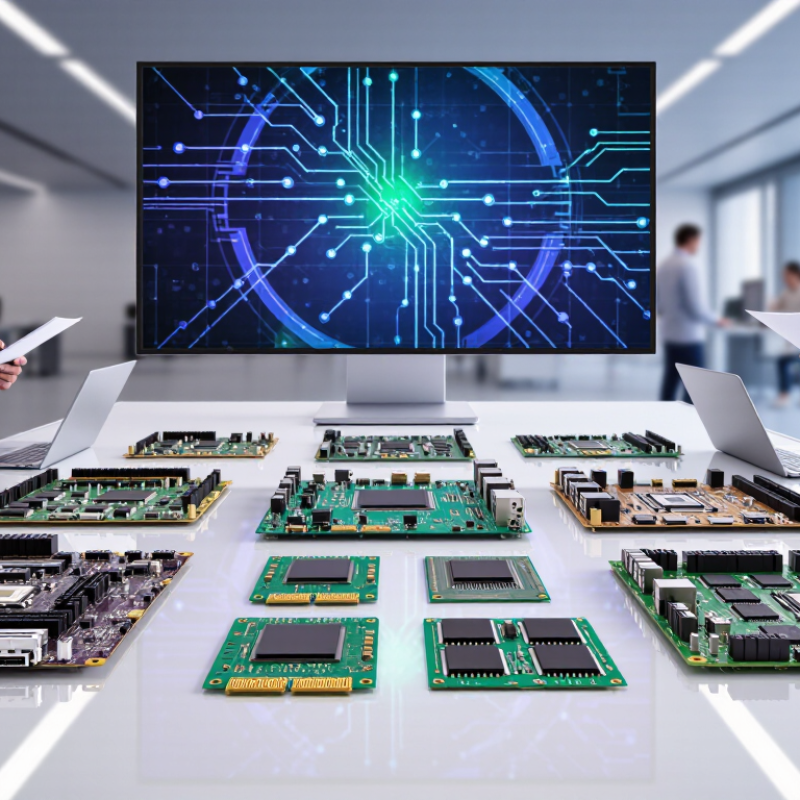
Define FPGA Fundamentals: LUTs, Logic Cells, DSPs, BRAM, and SerDes
When buyers compare FPGA devices, start with the fabric, not a headline logic count. A LUT, or look-up table, stores a truth table and implements combinational logic. A six-input LUT can represent a Boolean function of six signals, but actual packing depends on the design. Small detail. It matters.
A logic cell typically combines LUTs with registers and routing resources, so “logic cell” counts are not directly comparable across architectures. DSP blocks accelerate operations such as multiply-accumulate, useful in filtering and image pipelines. BRAM provides on-chip storage for buffers, coefficients, or packet queues. SerDes blocks convert parallel data into high-speed serial lanes and back; board traces, clocking, and signal integrity still constrain real throughput. The terminology is not perfectly tidy.
For scale, the Semiconductor Industry Association, using WSTS data, reported global semiconductor sales of $627.6 billion in 2024, up 19.1% year over year. That is an industry-wide figure, not an FPGA market estimate, but it reflects the expanding range of systems engineers must serve. Compare resources against a concrete workload: count required multipliers, estimate buffer depth, and check lane rates. Then test timing and power with realistic constraints. Datasheet maxima can mislead. A design that fits on paper may still struggle with routing congestion or heat.
Profile 10 Chinese FPGA Suppliers by Product Range and Process Node
A useful comparison of ten Chinese FPGA suppliers starts with product range, not headline capacity. Some focus on compact devices for sensor interfaces and simple control logic. Others offer larger logic arrays, embedded memory, DSP blocks, and high-speed transceivers for communications or industrial equipment. Check the actual device family: a supplier’s broad catalog may still have gaps in package options or I/O voltage support. Small details matter.
Process node is another useful filter, but it does not tell the whole story. Mature nodes can suit long-life designs, while newer options may provide higher density or lower power at a given workload. Ask for the node of each specific part, not a general company-wide claim. Then compare logic-cell counts, memory resources, speed grades, package dimensions, and published power data. A 28 nm label alone does not predict performance.
For each supplier profile, note whether the range covers entry-level, mid-range, and high-density devices, and whether development tools and documentation are available. Confirm lifecycle status and sample availability directly through current datasheets and sales channels. The comparison is not perfectly tidy: naming, capacity figures, and test conditions may differ. A board-level trial can expose timing or toolchain issues that a product table cannot. Shortlist carefully.
Compare Device Specs: Logic Capacity, I/O, and PCIe Gen 4 at 16 GT/s
When comparing FPGA devices, start with the workload, not the largest logic-capacity figure. Logic cells or lookup tables indicate scale, but they do not reveal how efficiently a design will map. Check available memory blocks, DSP units, and clock resources alongside the headline count. A video pipeline may need abundant memory bandwidth, while a control interface may depend more on predictable timing. Small detail. Package choice can also reduce the number of usable I/O pins.
PCIe Gen 4 signals at 16 GT/s per lane. That is not 16 GB/s of application data. With 128b/130b encoding, one lane carries about 1.97 GB/s in one direction before protocol overhead; an x4 link approaches 7.88 GB/s under ideal conditions. Real throughput depends on negotiated lane width, host support, buffering, and transaction size. Check the device’s transceiver count and supported link configurations, then verify them on the target board. A datasheet can look reassuring. Bring-up may disagree. I/O banking, voltage limits, connector routing, and cooling deserve equal attention, because a strong paper specification does not guarantee a stable system.
Assess Toolchains, HDL Support, Standards, and Global Design-In Readiness
For global buyers comparing FPGA manufacturers, toolchain quality can matter as much as headline logic capacity. Ask which synthesis, simulation, timing-analysis, and on-chip debug functions are included, and how often tools are updated. Check whether the flow supports your HDL code, including the required Verilog or VHDL revisions.
A small test project can reveal friction: import a design, apply timing constraints, run synthesis, and inspect a failing path. Fast? Not always. Also verify license terms and whether tools run reliably on your team’s operating systems.
Standards support needs evidence, not a checklist alone. Request interface documentation, timing limits, package details, and tested examples for the protocols your design actually uses. Then assess global design-in readiness: English-language manuals, accessible technical support across time zones, sample availability, lifecycle notices, and a clear process for reporting silicon issues.
In a real review, these details often expose gaps that a polished product brief misses. One caution: a promising evaluation board does not prove production readiness. Ask how reference designs are maintained and whether errata are documented. Some answers may remain vague; record that uncertainty and test the highest-risk functions before committing engineering time.
Screen Suppliers by Qualification, Lead Time, Lifecycle, and Export Compliance
For global buyers comparing FPGA manufacturers in China, a polished product page is only a starting point. Request the exact device grade, package, temperature range, and qualification reports for the part you plan to buy. Check that report numbers match the offered device, not a similar family member. A sample review should include startup behavior, interface timing, and performance under expected operating temperatures. Small differences matter.
Lead time needs evidence. Ask whether quoted stock is physically available, allocated, or still in production, and request a dated delivery schedule. Dates matter. For lifecycle planning, seek written notice periods for design changes and end-of-life announcements, plus details on last-time-buy options. A long product lifespan is useful only when the supplier can support it consistently. Verify claims against current documentation; a spreadsheet can still mislead.
Export compliance should be checked before payment and shipment. Confirm the supplier can provide accurate product classification, origin, and shipping documents for the destination and intended use. Requirements vary by market, so buyers should consult their own compliance teams or qualified advisers. Keep records. One uncomfortable point: smaller suppliers may answer technical questions quickly but lack mature change-control processes. Test that assumption with a limited evaluation order before committing production volumes.
