Best Solar Wall Lights for Outdoor Spaces How to Choose?
As outdoor spaces gain popularity for relaxation and social gatherings, the demand for solar wall lights is rapidly increasing. According to a report by Grand View Research, the global market for solar lighting is expected to reach $14 billion by 2025. Solar wall lights not only enhance safety and aesthetics but also offer eco-friendly solutions for homeowners.
Expert Sarah Thompson, a renowned specialist in renewable energy solutions, emphasizes, "Solar wall lights are crucial in creating sustainable outdoor environments." This highlights their growing importance in modern landscaping.
Selecting the right solar wall lights involves careful consideration of efficiency, brightness, and durability. Not all options perform equally well. Some products may not withstand harsh weather conditions or provide adequate illumination. Paying attention to these details can lead to a more satisfying purchase. Remember, the goal is to find reliable products that truly enrich your outdoor experience.
Factors to Consider When Selecting Solar Wall Lights for Exterior Use
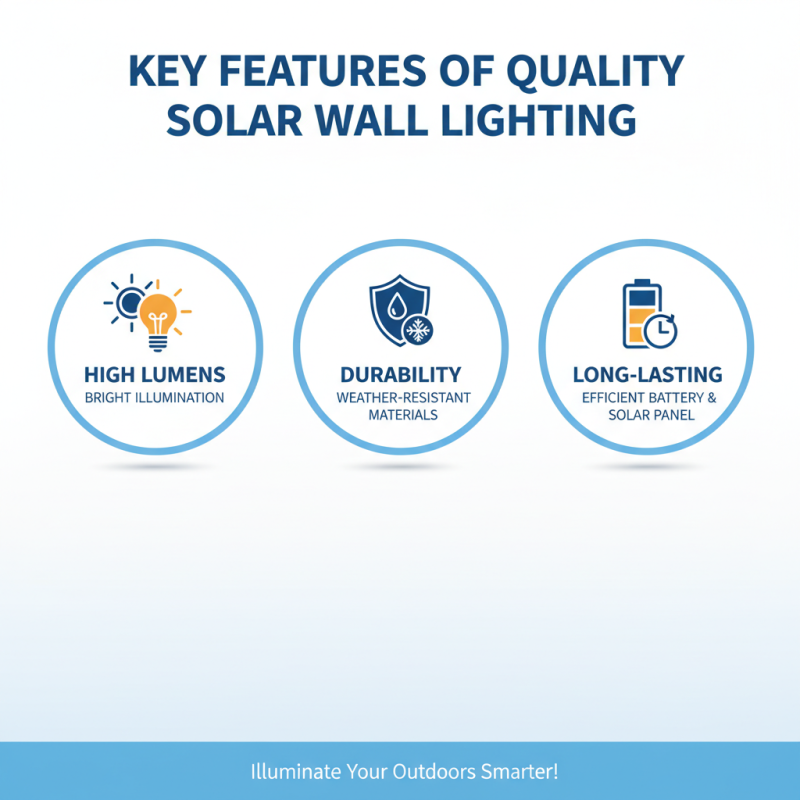
When selecting solar wall lights for exterior use, there are several factors to consider. One key aspect is brightness. According to the American Society of Landscape Architects, around 30 lumens are sufficient for illuminating pathways, while 100 lumens effectively light larger areas. Choosing the right brightness helps to enhance safety and visibility outdoors.
Next, consider the design and material of the lights. Durable materials like stainless steel and tempered glass can withstand harsh weather conditions. Reports indicate that solar lights with IP65 ratings can offer adequate protection against dust and moisture. Opting for aesthetically pleasing designs can also enhance the visual appeal of your outdoor space.
Another important factor is battery capacity. Most solar wall lights come with lithium-ion batteries, which have a cycle life of around 500 to 1,000 charges. It is essential to choose lights with long-lasting batteries. Poor performance can lead to lights that don’t illuminate during peak hours, affecting your outdoor enjoyment. Evaluating these aspects helps ensure a reliable, efficient lighting solution for your outdoor environment.
Types of Solar Wall Lights and Their Suitable Applications
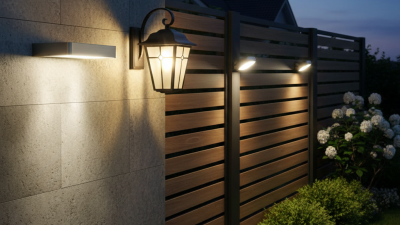
When selecting solar wall lights for outdoor spaces, understanding their types is essential. Solar wall lights come in various forms, each serving distinct purposes. The common types include wall-mounted fixtures, sconces, and motion-sensor lights. Wall-mounted fixtures offer a broad illumination range, making them suitable for patios or driveways. Sconces give a decorative touch, ideal for entryways or gardens. They enhance aesthetics while providing functional lighting.
Motion-sensor lights are practical for security. They activate when movement is detected, alerting residents to any activity. This type is particularly useful near entrances or along pathways. However, placement is crucial to avoid false alarms. Solar lights might not perform well in shaded areas, so consider sun exposure when installing.
While solar technology has improved, not all products deliver the same efficiency. Some lights may not hold a charge as long in cloudy weather. It’s worthwhile to investigate battery options and solar panel quality. Choosing the right type depends on both your lighting needs and the specific environment. Determining how much light you require can streamline your selection process.
Best Solar Wall Lights for Outdoor Spaces
Choosing the right solar wall lights depends on their types and suitable applications. The following chart illustrates the popularity of different types of solar wall lights based on consumer preferences.
Installation and Maintenance Tips for Solar Wall Lights
When considering solar wall lights for outdoor spaces, installation and maintenance are crucial for optimal performance. Industry reports indicate that nearly 30% of solar lights fail within the first two years due to improper installation. Ensuring that your lights receive adequate sunlight is vital. Aim for a mounting height that allows direct sunlight exposure for at least six hours a day. This setup can significantly enhance the battery life and light output.
Maintenance is often overlooked, yet it plays a critical role in the longevity of solar wall lights. Regularly cleaning the solar panels is essential; dirt and debris can diminish charging efficiency by over 20%. It's advisable to check for any obstructions that might block sunlight. Additionally, consider replacing batteries every one to three years, depending on usage. Many users fail to realize that aging batteries can drastically reduce performance.
While solar wall lights are generally low maintenance, some challenges may arise. Occasionally, the lights may flicker or not operate as intended. This may be due to faulty solar panels or old batteries. Regular inspections can help prolong the life of your solar lights and ensure they remain effective. Always prioritize safety and ensure that installation complies with local regulations. Remember, an informed choice leads to a well-lit outdoor space.
Best Solar Wall Lights for Outdoor Spaces: How to Choose? - Installation and Maintenance Tips for Solar Wall Lights
| Model |
Lumens |
Battery Life |
Charging Time |
Material |
Weather Resistance |
Installation Type |
| Model A |
300 lumens |
8 hours |
6-8 hours |
Plastic |
IP65 |
Wall-mounted |
| Model B |
500 lumens |
10 hours |
5-7 hours |
Aluminum |
IP67 |
Hangable |
| Model C |
200 lumens |
6 hours |
8-10 hours |
Stainless Steel |
IP64 |
Screw-mounted |
| Model D |
400 lumens |
9 hours |
6 hours |
ABS Plastic |
IP66 |
Wall-mounted |
Energy Efficiency and Environmental Benefits of Solar Wall Lighting
Solar wall lights offer numerous energy efficiency and environmental benefits for outdoor spaces. They convert sunlight into electricity using photovoltaic cells, drastically reducing reliance on traditional energy sources. This process not only lowers electricity bills but also curtails greenhouse gas emissions. By using renewable energy, these lights promote sustainability.
In addition, solar wall lights are often equipped with LED technology, enhancing their energy efficiency. LED bulbs consume less electricity and have a longer lifespan compared to incandescent bulbs. However, it’s important to consider that solar lights may not perform well on cloudy days. Also, they require adequate sunlight during the day to charge properly. Regular maintenance ensures they continue to function optimally.
Installing solar lighting can transform outdoor spaces while being mindful of the environment. These lights blend seamlessly into landscaping, providing safety and ambiance. However, users should be aware of the importance of placement for maximum sunlight exposure. Reflecting on these factors can lead to better choices in outdoor lighting solutions.