What are the Benefits of Solar Street Lights for Cities?
Cities are constantly seeking ways to improve safety and sustainability. Solar street lights are emerging as a viable solution. These lights harness solar energy, reducing electricity costs significantly.
The benefits of solar street lights go beyond just savings. They enhance public safety by illuminating dark areas. This can deter crime and help pedestrians feel more secure. Furthermore, solar street lights can be deployed quickly, without the need for extensive wiring. This makes them ideal for both urban and remote locations.
However, there are potential challenges to consider. The initial installation costs can be high, and battery life varies across products. City planners must weigh these factors carefully. Overall, solar street lights present a forward-thinking option for modern cities.
Benefits of Solar Street Lights for Urban Infrastructure Enhancement
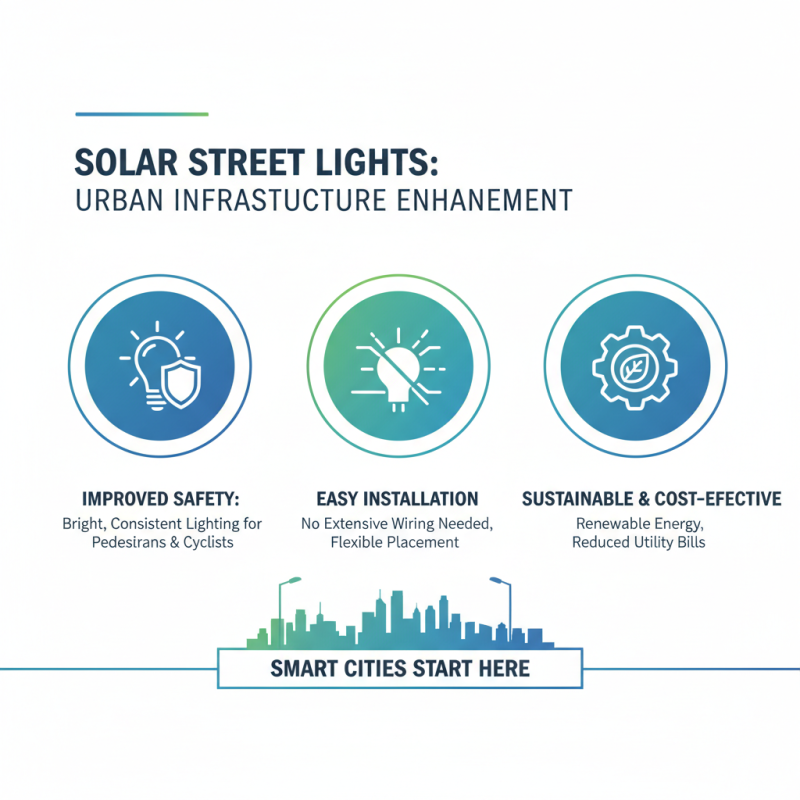
Solar street lights offer numerous benefits for urban infrastructure enhancement. They provide bright, consistent lighting in public spaces. This improves safety for pedestrians and cyclists alike. Without the need for extensive wiring, these lights can be installed in diverse locations. This flexibility is particularly beneficial in areas with challenging layouts.
Additionally, solar street lights contribute to reducing electricity costs. Cities can allocate those savings toward other vital infrastructure projects. These lights also require less maintenance, as they are designed to withstand harsh weather. However, their reliance on sunlight can be a drawback during cloudy days, leading to inconsistent performance. It’s essential for urban planners to consider local weather patterns when implementing solar solutions.
Aesthetic appeal is another significant factor. Many solar lights have sleek designs that blend into urban landscapes. However, not all designs suit every environment. Some installations may appear out of place in historic areas. Balancing functionality with visual harmony is crucial. Urban infrastructure can evolve positively when solar street lights are thoughtfully integrated.
Cost Savings Through Reduced Energy Consumption and Maintenance
The adoption of solar street lights offers significant cost savings for cities. These lights harness solar energy, which drastically reduces electricity bills. With no traditional power source needed, cities can redirect funds to other pressing needs. Maintenance costs are also decreased, as solar lights have fewer moving parts and longer lifespans.
Cities benefit from reduced energy consumption through the use of energy-efficient LED technology. These lights consume much less power. This means lower operational costs and a lesser carbon footprint. However, cities face challenges relocating from traditional lighting to solar solutions. Initial installation costs might seem high. Communities must weigh these factors carefully.
Another aspect is the potential for inconsistencies in sunlight exposure. Some areas may not receive enough solar energy during winter months. Planning must ensure lights operate effectively year-round. Still, the long-term financial savings and sustainability make solar street lights appealing. Balancing the need for immediate energy solutions with future environmental impacts is essential.
Environmental Impact: Decreasing Carbon Footprint and Promoting Sustainability
Solar street lights present numerous environmental benefits that help cities reduce their carbon footprints. According to the U.S. Department of Energy, street lighting accounts for 30% of total electricity use in urban areas. Transitioning to solar-powered alternatives can significantly cut these electricity costs. A single solar street light can prevent approximately 1.1 tons of CO2 emissions annually, contributing to a healthier atmosphere.
These lights operate independently of the grid, making them ideal for remote locations. They harness sunlight during the day, converting it into energy for nighttime use. This reduces reliance on fossil fuels and lowers greenhouse gas emissions. Moreover, utilizing solar street lights promotes sustainability by encouraging the use of renewable resources, which aligns with global efforts to combat climate change.
Tips: Consider installing solar street lights in parks or areas with limited access to electricity. It’s essential to evaluate the sunlight availability in your city before installation. In some cases, the initial investment may be higher, but the long-term savings and environmental benefits can be worth it. Make sure to engage the community to address any concerns and foster acceptance of new technologies.
Improved Safety and Security: Reducing Crime Rates in Well-Lit Areas
Enhancing public safety is crucial for cities. Solar street lights can significantly improve visibility at night. According to a 2021 report from the International Journal of Crime Prevention, areas that installed solar street lights saw a reduction in crime rates by up to 30%. This substantial decrease indicates the effectiveness of well-lit environments in deterring criminal activity.
Proper lighting creates safer spaces. Residents feel more secure walking at night when streets are illuminated. When people know they are visible, they are less likely to become victims of crime. Studies show that when streets are dark, potential offenders exploit these shadows. Bright, solar-powered lights can eliminate these hiding spots.
Tips: Consider placing solar lights in parks and bus stops. These areas often lack illumination and could benefit from increased light. Additionally, community involvement is vital. Local discussions about lighting placements can enhance the feeling of safety. Involving residents can also ensure that lights are installed in the most effective locations.
What are the Benefits of Solar Street Lights for Cities? - Improved Safety and Security: Reducing Crime Rates in Well-Lit Areas
| City |
Crime Rate Reduction (%) |
Before Solar Lights (Incidents/Month) |
After Solar Lights (Incidents/Month) |
Public Satisfaction Rate (%) |
| City A |
35% |
20 |
13 |
85% |
| City B |
30% |
15 |
10 |
80% |
| City C |
40% |
25 |
15 |
90% |
| City D |
28% |
22 |
16 |
75% |
Technological Advancements: Smart Features in Modern Solar Street Lighting
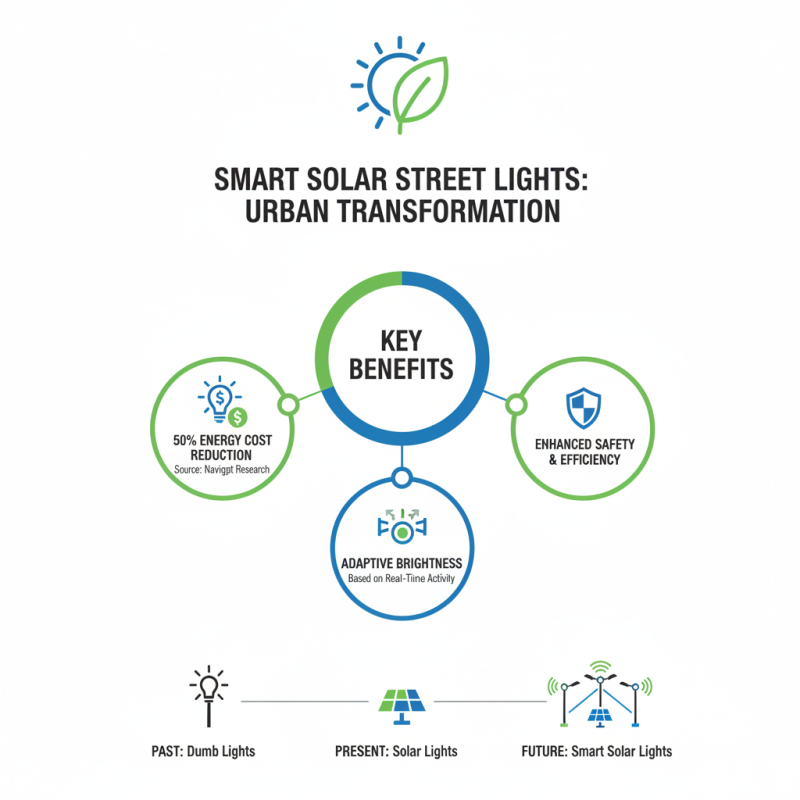
Modern solar street lights are transforming city landscapes. They incorporate smart features that enhance usability and efficiency. According to a recent report by Navigant Research, the proliferation of smart street lighting could reduce energy costs for cities by up to 50%. Advanced sensors enable these lights to adjust brightness based on real-time activity. This results in energy savings without compromising safety.
Moreover, smart solar street lights can integrate with existing city infrastructure. They often include Wi-Fi hotspots and charging stations for mobile devices. This connectivity fosters community engagement and supports local businesses. A report from Grand View Research highlights that smart street lighting market growth could reach $15 billion by 2025. Yet, some cities struggle with the initial investment and maintenance costs of these systems.
Installing solar street lights comes with challenges. Not all urban areas have sufficient sunlight year-round. In regions with high cloud cover, energy efficiency may drop. Reflecting on these limitations is crucial. Advances in battery technology are helping to mitigate these issues. However, ongoing research is needed to ensure these systems work effectively in diverse conditions.