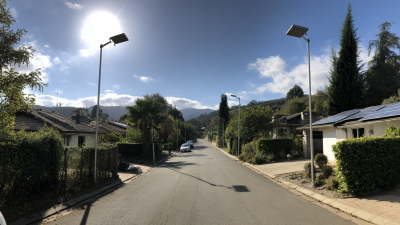
Top 10 Benefits of Solar Powered Street Lights for Sustainable Cities

As cities around the globe strive for sustainability, the integration of solar powered street lights has emerged as a pivotal solution in urban infrastructure. According to a recent report by the International Renewable Energy Agency (IRENA), the global market for solar lighting is projected to grow at a compound annual growth rate (CAGR) of 15%, reflecting an increasing recognition of the environmental and economic benefits associated with renewable energy sources. Solar powered street lights not only reduce reliance on traditional grid systems but also contribute to substantial reductions in greenhouse gas emissions, making them an essential component of smart city initiatives.

Industry expert Dr. Emily Johnson, a prominent advocate for renewable energy technologies, emphasizes the transformative potential of solar powered street lights, stating, "Investing in solar lighting is not just about illuminating streets; it's about creating vibrant, sustainable communities that prioritize environmental responsibility." With the capability to operate autonomously, these systems not only enhance public safety by providing reliable illumination but also decrease operational costs significantly over time. The growing adoption of solar powered street lights is indicative of a larger trend towards innovative solutions that support sustainable urban living while addressing the pressing challenges posed by climate change.

Top 10 Benefits of Solar Powered Street Lights for Sustainable Cities

Advantages of Solar Powered Street Lights for Urban Sustainability

Solar powered street lights are increasingly recognized as a critical component for urban sustainability. These systems utilize renewable energy from the sun, reducing dependence on fossil fuels and significantly lowering greenhouse gas emissions. According to the International Renewable Energy Agency (IRENA), integrating solar energy into urban infrastructure can help cities cut their carbon emissions by up to 70% by 2050. This transition not only fosters environmental health but also enhances the resilience of urban areas as they adapt to climate change.

In addition to their environmental benefits, solar street lights offer significant economic advantages. A report from the U.S. Department of Energy highlights that municipalities can save between 50-70% on energy costs by investing in solar lighting solutions. Furthermore, the reduced need for traditional power sources lessens the strain on local grids, especially during peak demand hours, thus promoting a more efficient energy distribution system. These installations require minimal maintenance and eliminate the costs associated with digging and installing underground wiring, making them an economically viable choice for cities looking to modernize their infrastructure sustainably.

Beyond cost savings and emissions reduction, solar street lights enhance urban safety and quality of life. By improving illumination in public spaces, they deter crime and encourage nighttime activities, further supporting community engagement. Enhanced visibility not only promotes safety but also attracts businesses and tourism, stimulating local economies in a sustainable manner. With the numerous advantages solar powered street lights provide, they serve as a cornerstone for building sustainable urban environments.

Top 10 Benefits of Solar Powered Street Lights for Sustainable Cities
Benefit Description Environmental Impact Cost Savings
Energy Independence Utilizes renewable energy from the sun. Reduces reliance on fossil fuels. Lowers electricity costs.
Reduced Carbon Footprint Minimal greenhouse gas emissions. Contributes to cleaner air. Decreases financial investment in carbon credits.
Low Maintenance Long-lasting LED technology. Less frequent replacements reduce waste. Fewer maintenance costs over time.
Enhanced Safety Improved visibility at night. Reduces accidents and crime rates. Lower costs related to accidents.
Flexibility in Placement No need for grid connectivity. Can be installed in remote areas. Reduced infrastructure costs.
Aesthetic Value Modern designs enhance urban appearance. Supports urban beautification efforts. Increases property values in the area.
Job Creation Solar installations require skilled labor. Supports local economies. Potential savings through local economic growth.
Improved Public Health Encourages outdoor activities. Promotes healthier lifestyles. Lower healthcare costs related to inactivity.
Increased Public Engagement Encourages community events and gatherings. Strengthens community ties. Potential reduction in local service costs.
Emergency Preparedness Functions during power outages. Improves disaster resilience. Reduces emergency service costs.

Reduction in Carbon Footprint Through Clean Energy Solutions

Top 10 Benefits of Solar Powered Street Lights for Sustainable Cities

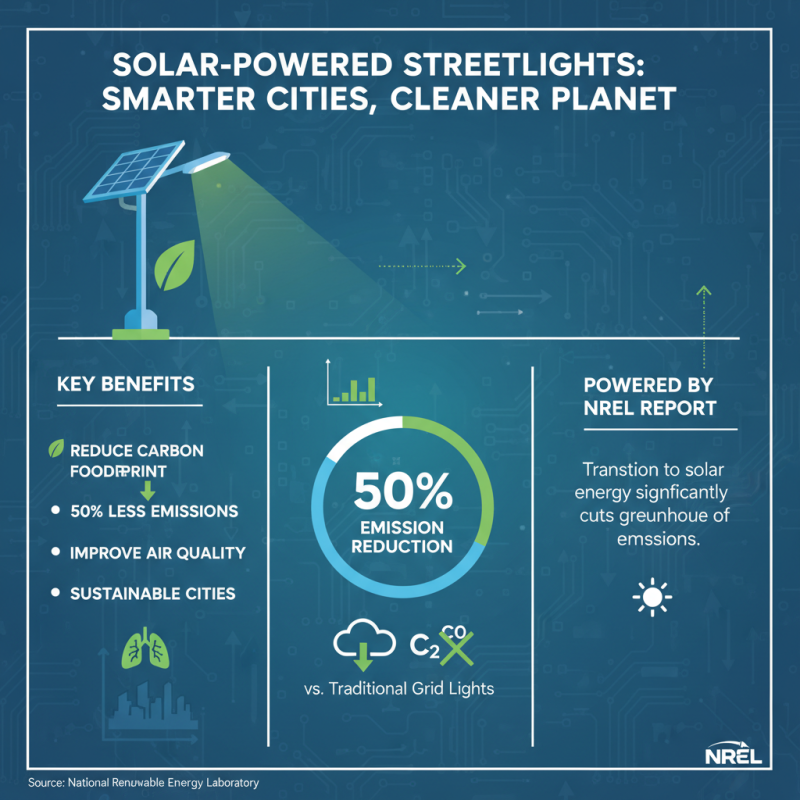
The implementation of solar powered street lights represents a pivotal move toward reducing the carbon footprint in urban environments, thereby supporting the goal of creating sustainable cities. According to a report by the National Renewable Energy Laboratory (NREL), transitioning to solar energy can reduce greenhouse gas emissions significantly, potentially cutting carbon emissions by 50% when compared to traditional grid-powered lights. This reduction is pivotal in combating climate change and improving air quality in urban areas plagued by pollution.

Moreover, solar street lights utilize clean, renewable energy, making them an excellent solution for municipalities aiming to enhance sustainability. The U.S. Department of Energy highlights that solar energy's role in urban infrastructure is not just about energy savings; it also contributes to energy independence and lowers the reliance on fossil fuels. As cities increasingly prioritize sustainability, the integration of solar-powered lighting can lead to reductions in overall energy consumption by up to 80%, further supporting cleaner air initiatives and promoting healthier lifestyles for urban dwellers. By adopting such solutions, cities can lead by example, demonstrating how innovative technology can pave the way for a greener, more sustainable future.

Cost Savings and Economic Benefits of Solar Lighting Systems

The installation of solar-powered street lights offers significant cost savings and economic benefits for cities striving for sustainability. According to the National Renewable Energy Laboratory (NREL), cities can save up to 75% on electricity costs by switching to solar street lighting systems. This reduction in energy expenditure not only alleviates the city budget burden but also allows funds to be redirected to other critical public services. Furthermore, the initial investment in solar street lights can typically be recovered within 4-7 years, making them a financially viable long-term solution.

From an employment perspective, the solar lighting sector has seen a 20% increase in job growth annually, according to the Solar Foundation's National Solar Jobs Census. This increase in job creation is crucial for local economies, as it fosters new roles in installation, maintenance, and manufacturing of solar solutions. Additionally, the widespread adoption of solar lighting can lead to enhanced property values in surrounding areas, attracting new businesses and residents who prefer eco-friendly municipal infrastructure.

Tip: When considering the transition to solar street lights, cities should evaluate financing options, such as performance-based incentives or government grants, to maximize their economic efficiency. Furthermore, collaborating with local communities during the planning phase can help identify the most suitable installation sites, enhancing both functionality and public support for the initiative.

Top 10 Benefits of Solar Powered Street Lights for Sustainable Cities

Enhancing Urban Safety and Security with Solar Street Lights

Solar powered street lights are transforming urban environments by significantly enhancing safety and security. These lights provide reliable illumination that deters crime and improves visibility during nighttime, making neighborhoods feel safer for residents and visitors alike. By using renewable energy, solar street lights minimize reliance on traditional power sources, contributing to sustainable city initiatives. Their presence helps create vibrant public spaces where people feel comfortable walking, cycling, and engaging in outdoor activities even after dark.

Tips for maximizing the benefits of solar street lights in your community include ensuring they are correctly positioned to illuminate areas with high foot traffic and potential safety concerns. Regular maintenance checks are also essential to guarantee that the solar panels and LED bulbs are functioning optimally. Encouraging community involvement in the planning and placement of these lights can ensure that they meet the specific needs of the area, further enhancing urban safety and security.

Moreover, integrating smart technology with solar street lights can provide real-time data on usage and energy efficiency, allowing cities to optimize lighting conditions according to varying levels of foot traffic and environmental factors. This intelligent approach not only enhances safety but also contributes to a greener urban landscape by reducing energy waste.

Promoting Energy Independence and Resilience in City Infrastructures

Top 10 Benefits of Solar Powered Street Lights for Sustainable Cities

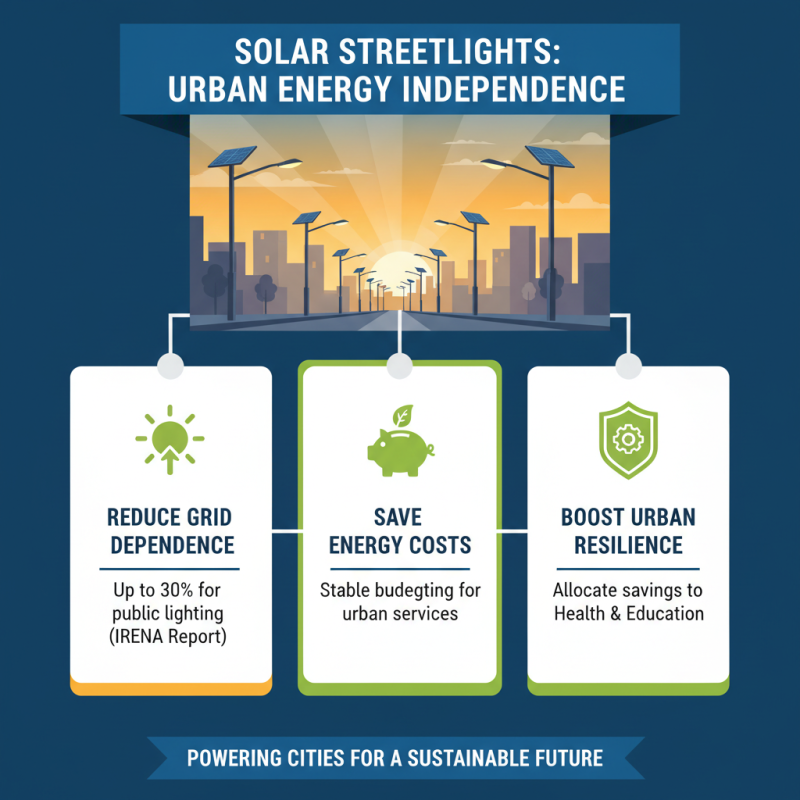
Solar powered street lights are significant in advancing energy independence and resilience within urban infrastructures. According to a report from the International Renewable Energy Agency (IRENA), cities that harness solar energy for public lighting can reduce their dependence on traditional power grids by up to 30%. This not only alleviates strain on local energy resources but also empowers municipalities to allocate savings towards other critical areas such as public health and education. By utilizing renewable energy sources, cities are better equipped to manage energy costs and avoid fluctuations in electricity prices, which can severely impact budgeting for urban services.

Furthermore, solar street lights enhance the overall resilience of city infrastructures in the face of climate change and extreme weather conditions. In a 2022 study by the Urban Sustainability Association, it was found that about 40% of urban areas experience power outages during severe weather events. Solar powered systems, often equipped with battery backups, provide a reliable light source during these critical times. This reliability not only enhances public safety but also fosters community resilience through improved navigation and mobility after storms or other disruptions. As cities increasingly prioritize sustainable solutions, integrating solar powered street lights stands as a forward-thinking approach to creating robust and self-sufficient urban environments.

Go to Top