Top Benefits of LED Solar Street Lights for Sustainable Urban Lighting Solutions?

In the quest for sustainable urban lighting solutions, LED solar street lights emerge as a pivotal innovation. These lights not only brighten streets but also contribute to reducing carbon footprints. Dr. Emily Foster, a leading expert in renewable energy, stated, "LED solar street lights represent a significant step towards greener cities." Her insight underscores the transformative impact of this technology.

The integration of LED solar street lights in urban landscapes offers numerous benefits. They harness solar energy, which is abundant and renewable. This significantly reduces electricity costs for municipalities. Additionally, these lights operate independently of the grid, enhancing resilience during outages. However, challenges persist. Installation costs and initial investments can deter adoption, especially in budget-constrained communities.

Some designs may face issues with brightness and coverage in certain areas. There is room for improvement. Continuous advancements in solar technology and LED efficiency can enhance performance. Cities must evaluate these systems holistically. This includes considering energy savings, community needs, and environmental impact. Thus, LED solar street lights not only illuminate paths but also pave the way for sustainable urban development.

Top Benefits of LED Solar Street Lights for Sustainable Urban Lighting Solutions?

Overview of LED Solar Street Lights in Urban Areas

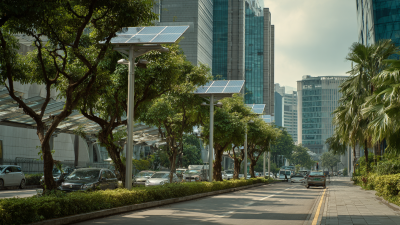
LED solar street lights offer a compelling solution for urban areas seeking sustainable illumination. They harness renewable energy from the sun, reducing reliance on traditional power sources. During the day, solar panels absorb sunlight to charge batteries, ensuring lights operate efficiently at night. This system not only cuts electricity costs but also minimizes carbon footprints.

The design of these lights is often sleek and modern, blending seamlessly into city landscapes. However, there are challenges. In regions with limited sunlight, performance may vary. Urban planners must consider geographical aspects when implementing these systems. Regular maintenance is also crucial, as dirt can hinder solar panel efficiency. Investing in high-quality materials can mitigate this issue, yet budget constraints often pose hurdles for municipalities.

Cities have started to recognize the importance of sustainable lighting solutions. Implementing LED solar street lights promotes safety while enhancing aesthetics. The bright, energy-efficient illumination can deter crime and improve visibility for pedestrians. However, community engagement is vital. Residents should be involved in discussions about placement and design to ensure the lights meet their needs. Effective integration into urban planning can make a significant difference in achieving sustainability goals.

Top Benefits of LED Solar Street Lights for Sustainable Urban Lighting Solutions

Benefit Description Environmental Impact Maintenance
Energy Efficiency LED lights consume significantly less energy than traditional street lights, reducing electricity costs. Lower energy consumption leads to reduced carbon footprint. Requires less frequent replacement, lowering maintenance efforts.
Solar-Powered Self-sustaining power source that uses solar energy, minimizing reliance on the grid. Promotes renewable energy use, aiding in sustainability. Limited maintenance required for solar panels; mainly periodic cleaning.
Durability LED lights have a long lifespan, often exceeding 25,000 hours of use. Reduced waste due to less frequent replacements of fixtures. Lower maintenance costs and reduced need for replacements.
Smart Technology Integration Compatible with smart city technology for enhanced monitoring and management. Better resource management leads to improved energy usage. Streamlined maintenance through remote monitoring systems.
Improved Safety Consistent and bright lighting improves visibility for pedestrians and vehicles. Contributes to safer urban environments, reducing incidents and accidents. Less need for immediate repairs and replacements enhances overall safety.

Energy Efficiency: How LED Technology Reduces Electricity Consumption

LED solar street lights are revolutionizing urban lighting with energy efficiency. This technology harnesses the sun’s power. During the day, solar panels absorb sunlight and convert it into electricity. At night, this stored energy illuminates streets, parks, and pathways. Such systems significantly reduce electricity consumption. Cities can save money on energy bills.

Using LED technology also means longer-lasting lights. Traditional street lights burn out quickly. In contrast, LEDs have a lifespan of up to 25,000 hours. This reduces the frequency of replacements. Less maintenance means less waste. However, not every city has embraced this change. Some areas still rely on older, inefficient lighting systems.

There are still challenges to overcome. Initial installation costs can be a barrier. Many municipalities question the long-term benefits. Some streets may not receive enough sunlight. Shadowed areas lead to concerns about brightness. These factors require careful consideration. Decision-makers must weigh the pros and cons.

Environmental Impact: Decreasing Carbon Footprint with Solar Power

Solar power is transforming urban lighting. LED solar street lights are efficient and sustainable. They harness sunlight during the day. This energy powers streetlights at night. It reduces reliance on the grid, lowering energy costs. Many cities face challenges in funding traditional infrastructure. Solar solutions offer a viable alternative.

The environmental impact is significant. By using solar energy, cities can decrease their carbon footprint. It avoids the burning of fossil fuels. This transition is essential for combating climate change. However, the adoption rate varies widely between regions. Not all areas have adequate sunlight or investment in technology. Some systems can face maintenance issues. The balance between sustainability and practicality needs careful consideration.

Implementing solar street lighting can lead to transformative change. Community decision-makers must weigh the pros and cons. They should assess local conditions and budget constraints. Even with challenges, the benefits of reduced carbon emissions are clear. An ongoing commitment to innovation is necessary. Cities must adapt their strategies in response to evolving technologies.

Cost-Effectiveness: Long-Term Savings on Installation and Maintenance

LED solar street lights offer significant cost-effectiveness that appeals to many urban planners. These lights require lower installation costs compared to traditional street lighting. No complicated wiring is necessary. The solar panels attached charge the batteries during the day, ensuring a consistent power supply at night. This independence from the grid is a big advantage.

Maintenance costs are also lower in the long term. LED lights have a longer lifespan, reducing the need for frequent repairs or replacements. However, the initial investment can be a reflection point. Cities need to consider budgets before making a switch. Not every locality has the same resources or needs.

Furthermore, while solar street lights can save money, they are not flawless. Energy storage can be an issue during cloudy days or extended periods of rain. This is a critical consideration for effective urban lighting. Cities must balance the benefits against potential drawbacks. Evaluation is key as they aim for sustainable solutions.

Top Benefits of LED Solar Street Lights for Sustainable Urban Lighting Solutions

This chart illustrates the long-term savings associated with LED solar street lights in terms of installation and maintenance costs compared to traditional lighting systems. The cost-effectiveness of LED solar street lights makes them a viable solution for sustainable urban lighting.

Enhanced Safety and Visibility in Urban Environments with LED Lighting

Top Benefits of LED Solar Street Lights for Sustainable Urban Lighting Solutions?

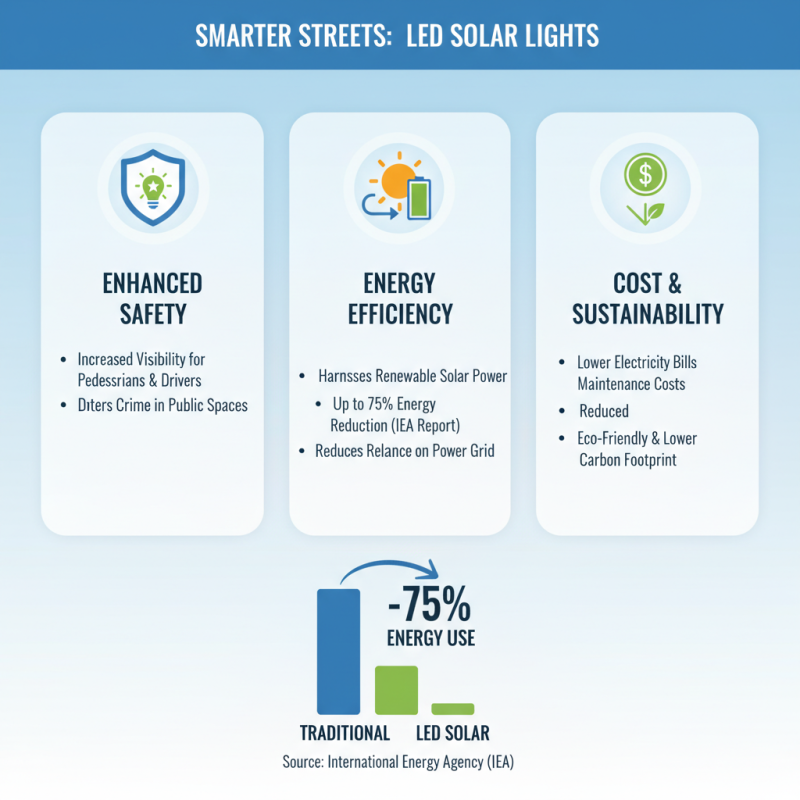
Urban lighting plays a crucial role in enhancing safety and visibility. LED solar street lights can improve this significantly. They harness solar energy, reducing reliance on traditional electrical grids. According to a report by the International Energy Agency, using LED technology can cut energy consumption by up to 75%. This reduction helps maintain brighter streets while limiting costs.

Visibility is essential in urban environments. Poor lighting contributes to accidents and crime. A study from the National Institute of Justice shows crime rates drop by 20% in well-lit areas. With LED solar lights, cities ensure safer streets during the night. They emit a bright white light, which improves clarity for pedestrians, drivers, and cyclists. This clarity is vital for reducing accidents and enhancing overall public safety.

However, not all areas are ideal for solar street lights. Some regions might not receive ample sunlight. Additionally, initial installation costs can be high, which might deter some municipalities. Cities must weigh these aspects carefully. The potential benefits often outweigh the drawbacks. Encouraging clearer, safer urban environments is worth the effort.

Go to Top