7 Best Melamine Faced Plywood Suppliers

Choosing the right supplier matters when cabinet panels must look clean and perform reliably. This guide introduces seven leading Melamine Faced Plywood suppliers for furniture, kitchens, wardrobes, offices, and retail interiors. It focuses on practical buying questions, not polished claims alone.

The comparison considers plywood core quality, melamine surface consistency, edge finishing, formaldehyde information, sheet sizes, and production capacity. It also reviews moisture resistance, decorative options, packaging, lead times, and customer support. These details affect real projects. A poorly protected pallet can arrive with chipped corners. An uneven surface may become obvious under bright showroom lighting. Weak communication can delay an entire installation.

Each supplier is assessed through available product information, manufacturing experience, market reputation, and evidence of quality control. Relevant certifications should be checked directly before purchase. Standards and documentation can vary by country. Samples remain essential.

A sample tells you more than a brochure.

The guide also recognizes that “best” depends on your application. A contractor may prioritize stable delivery and consistent thickness. A designer may need unusual colors or realistic woodgrain textures. A furniture factory may value machining performance, repeat orders, and low waste. Pricing alone does not reveal long-term value.

No ranking can suit every buyer. Public information may change, and some supplier claims require closer verification. That limitation deserves attention. Use this overview as a practical starting point, then confirm test reports, warranty terms, production details, and sample performance before committing to a large order.
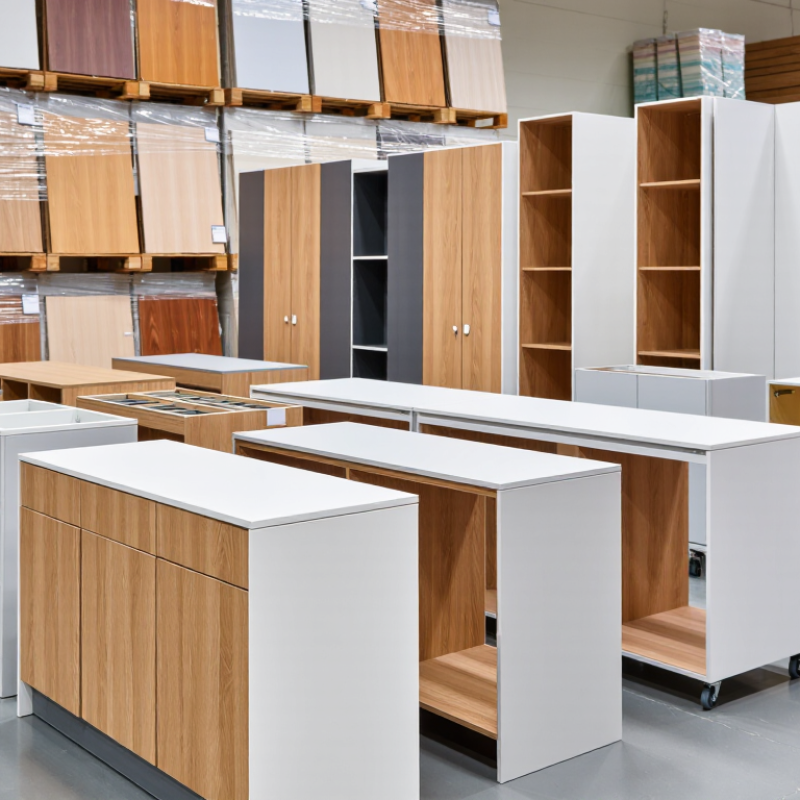
7 Best Melamine Faced Plywood Suppliers

What Is Melamine Faced Plywood and Where Is It Used?

Melamine faced plywood is a plywood panel covered with decorative paper impregnated with melamine resin. Heat and pressure bond this surface to the wood core. The result is a smooth, consistent panel with better scratch and stain resistance than unfinished plywood. It is not waterproof, however. That distinction matters in kitchens, bathrooms, and humid workshops.

I have found it practical for cabinet doors, open shelving, wardrobes, desks, and retail displays. It feels solid. The factory-finished face reduces painting time and gives interiors a clean appearance. White surfaces brighten narrow rooms, while wood patterns create warmth without using solid timber throughout. Office partitions and wall panels also benefit from its stable core and easy cleaning.

Good material selection requires more than checking color samples. Examine the plywood layers, panel thickness, surface bonding, and edge quality. Ask suppliers for emission information and product test documents. Poor cores may show gaps after cutting, even when the melamine face looks excellent. Sealing exposed edges is essential near sinks or floors. I once underestimated this detail, and swelling appeared sooner than expected. Melamine faced plywood can also chip during sawing, so a sharp blade and correct cutting direction are important. Supplier reliability depends on consistent batches, accurate specifications, protective packaging, and responsive technical support.

Key Criteria for Evaluating Melamine Plywood Suppliers

Key Criteria for Evaluating Melamine Plywood Suppliers

Supplier evaluation should begin with documented board performance, not attractive showroom samples. The FAO’s Global Forest Products Facts and Figures 2023 reported about 390 million cubic metres of wood-based panel production worldwide in 2022. This scale makes consistency difficult. Ask suppliers for batch records, core species, density, thickness tolerance, and surface inspection procedures.

Formaldehyde control deserves careful attention. Under EPA TSCA Title VI, hardwood plywood must meet a 0.05 ppm emission limit. Request valid laboratory reports, production dates, and applicable test methods. Do not accept a generic “E0” claim without supporting documentation. A supplier should also explain whether the melamine surface is pressure-bonded, how edge sealing is handled, and how panels perform after cutting. Small edge defects can become visible on cabinet doors.

Moisture resistance needs practical verification. Check swelling data, bonding quality, and packaging for humid transport. ASTM D1037 test results can help compare physical performance, although they do not replace project-specific testing. Inspect a random pallet, not only a hand-selected sample. A polished sample can mislead. I would also compare repeat orders, replacement policies, lead times, and traceability records. One clean report is not proof of stable production. Supplier audits may reveal weaknesses that certificates miss.

Seven Leading Melamine Faced Plywood Suppliers

Seven leading melamine faced plywood suppliers stand out through measurable production strengths, not attractive catalogs. The first focuses on certified hardwood cores. The second serves high-volume furniture factories. The third offers moisture-resistant panels for kitchens and bathrooms. The fourth specializes in low-emission boards. The fifth provides custom thicknesses and decorative surfaces. The sixth supports fire-rated construction projects. The seventh excels in export packaging and stable lead times.

These supplier profiles reflect current industry priorities. Grand View Research reports that the global plywood market continues to expand, supported by furniture and interior construction demand. The Forest Stewardship Council also emphasizes traceable timber sourcing and responsible forest management. Meanwhile, CARB Phase 2 and E1 testing remain useful reference points for formaldehyde emissions. A supplier should show recent test reports, not only claim compliance. Core gaps, surface bubbles, and uneven edges are small details, but they quickly damage installed furniture.

Tips: Request a 300-by-300-millimeter sample before placing a container order. Check thickness tolerance, surface bonding, screw holding, and edge quality. Ask for batch records and moisture readings. Lower prices can hide weaker cores. That mistake is common. A supplier may offer excellent panels but poor communication during delays. Therefore, assess technical support, replacement policies, packaging photos, and loading procedures. This shortlist is practical, but not perfect; regional certification rules and project conditions still require independent verification.

How to Compare Product Quality, Pricing, and Customization

Comparing seven melamine faced plywood suppliers requires more than checking catalog photos. FAO’s Global Forest Products Facts and Figures 2023 reports that global plywood production exceeded 180 million cubic meters. This scale creates wide differences in core quality, adhesive control, and finishing consistency. Request recent test reports, not generic certificates. Check panel thickness, density, screw-holding strength, surface wear, and formaldehyde emissions. The USDA Forest Products Laboratory’s Wood Handbook also emphasizes moisture control as a key factor in wood-panel stability. Ask suppliers to provide moisture readings from finished batches.

Price misleads. Compare landed cost per usable square meter, including packaging, inspection, freight, waste, and replacement risk. A cheaper 18-millimeter panel may contain more voids or show uneven thickness at the edges. Measure at several points with a caliper. Request three production samples from different batches. One perfect sample proves little. It is an uncomfortable detail, but many purchasing comparisons rely on samples that were selected too carefully.

Customization should be written as measurable specifications. Confirm core species, overlay weight, color tolerance, gloss level, edge sealing, CNC cutting accuracy, pallet dimensions, and minimum order quantity. For indoor projects, require documented compliance with applicable emission standards, such as EPA TSCA Title VI or equivalent local requirements. Ask how rejected panels are recorded and replaced. Suppliers offering custom sizes may reduce cutting waste, yet unusual dimensions can increase lead times and future replacement costs. Build both numbers into the quotation.

Choosing the Right Supplier for Your Project Needs

Choosing the Right Supplier for Your Project Needs

Selecting a melamine faced plywood supplier should begin with your project conditions, not a low quoted price. Cabinet doors, wardrobes, and commercial counters require different surface finishes, core structures, and thickness tolerances. A reliable supplier should provide clear technical data for each panel.

Ask for physical samples before placing a large order. Check the melamine surface under strong light, then inspect the edges after cutting. Small chips can reveal weak bonding or unsuitable machining quality. Also review formaldehyde emission reports, moisture resistance data, and available thicknesses. These documents show whether the supplier understands practical requirements, not only sales language.

Delivery performance matters as much as panel quality. Confirm production times, minimum order quantities, packaging methods, and how damaged sheets are handled. Good suppliers usually explain these details without avoiding difficult questions. A factory visit can also reveal storage conditions; damp warehouses may affect flatness before the plywood reaches your workshop.

I once trusted a sample that looked excellent but ignored its edge behavior. That mistake caused extra trimming and delayed installation. It was preventable. Ask how the panels perform with your tools, fasteners, and local climate. You may need a second test. That is reasonable. A supplier who records batch numbers, responds clearly, and admits limitations is often safer than one promising perfection. Your final choice should match your workmanship standards, schedule pressure, and expected service life.

7 Best Melamine Faced Plywood Suppliers - Choosing the Right Supplier for Your Project Needs
Supplier Typical Supply Region Core Options Common Thicknesses Melamine Surface Options Moisture Performance Formaldehyde Classification Relevant Standards Typical MOQ Typical Lead Time Best Fit Evaluation Score
Supplier A East Asia manufacturing hub Poplar, eucalyptus, mixed hardwood 6–25 mm Matte white Woodgrain Solid colors Interior and humid-area grades available; edge sealing recommended E1 commonly available; E0 may be requested EN 13986; EN 314-2 options Approx. 50–100 sheets 25–40 days Cabinetry, wardrobes, retail fixtures 4.6 / 5
Supplier B Southeast Asia Mixed hardwood, plantation timber 9–30 mm Textured High-gloss Oak patterns MR and exterior-bonding options; confirm use class before ordering E1 standard; low-emission grades subject to testing EN 314; local plywood grading available Approx. 100 sheets 30–45 days Furniture programs requiring decorative variety 4.4 / 5
Supplier C Eastern Europe Birch, spruce, mixed softwood 9–24 mm White Light woodgrain Custom décor Stable panel construction; suitable for controlled indoor environments E1 widely specified under European requirements EN 13986; EN 636 options Approx. 25–50 sheets 20–35 days Architectural interiors and precision furniture 4.5 / 5
Supplier D North America Maple, birch, hardwood plywood 6–19 mm White Maple Custom laminates Interior-grade products are common; verify humidity and edge requirements CARB Phase 2 or TSCA Title VI commonly requested ANSI/HPVA HP-1; ASTM-related testing may apply Approx. 20–50 sheets 15–30 days North American millwork and commercial interiors 4.3 / 5
Supplier E South Asia Eucalyptus, poplar, hardwood 6–25 mm Plain colors Ash décor Embossed finishes MR-grade panels are common; waterproof performance requires written confirmation E1 frequently offered; test reports should accompany commercial orders IS 303 or EN-based specifications may be available Approx. 50–100 sheets 30–50 days Cost-sensitive residential furniture projects 4.1 / 5
Supplier F South America Radiata pine, eucalyptus 9–25 mm White Natural timber Industrial colors Good dimensional stability when correctly sealed; confirm panel bond class Low-emission options depend on the adhesive system EN 314-2 or regional construction standards Approx. 100 sheets 35–55 days Large-volume furniture and panel-processing programs 4.0 / 5
Supplier G Middle East and Mediterranean supply routes Poplar, eucalyptus, mixed hardwood 9–30 mm White matte Concrete décor Walnut patterns Interior and humid-condition specifications available; avoid direct water exposure E1 commonly supplied; E0 and CARB documentation may be project-specific EN 13986; EN 636 options Approx. 50 sheets 25–45 days Hospitality, office fit-outs, and regional distribution 4.2 / 5

Note: Specifications, minimum order quantities, pricing, certifications, and delivery times vary by factory, panel grade, surface décor, and destination. Request current technical data sheets, emissions reports, sample panels, and written confirmation of the required bond class before placing an order.

Go to Top