What is 310s Stainless Steel Coil and Its Applications?
The 310s Stainless Steel Coil is a unique and versatile material, renowned for its outstanding high-temperature resistance and durability. According to industry reports, the global market for stainless steel coils is projected to grow significantly, driven by increased demand in sectors like construction and manufacturing. The 310s variant is especially valued in applications exposed to extreme heat and corrosive environments.
This alloy contains a higher concentration of nickel and chromium, allowing it to operate effectively in temperatures approaching 1,100°C. Its performance in aerospace, chemical processing, and oil refinement is noteworthy. A study by a leading materials science journal highlights that the 310s Stainless Steel Coil outperforms other alloys in many high-stress scenarios. However, challenges remain, especially regarding its cost and availability.
While the benefits of 310s are clear, some professionals question its practicality for certain uses. Market fluctuations can impact procurement, and not all buyers recognize its value. Overall, the 310s Stainless Steel Coil stands out in its category but demands careful consideration in application selections. Balancing cost and utility is vital for making informed decisions.
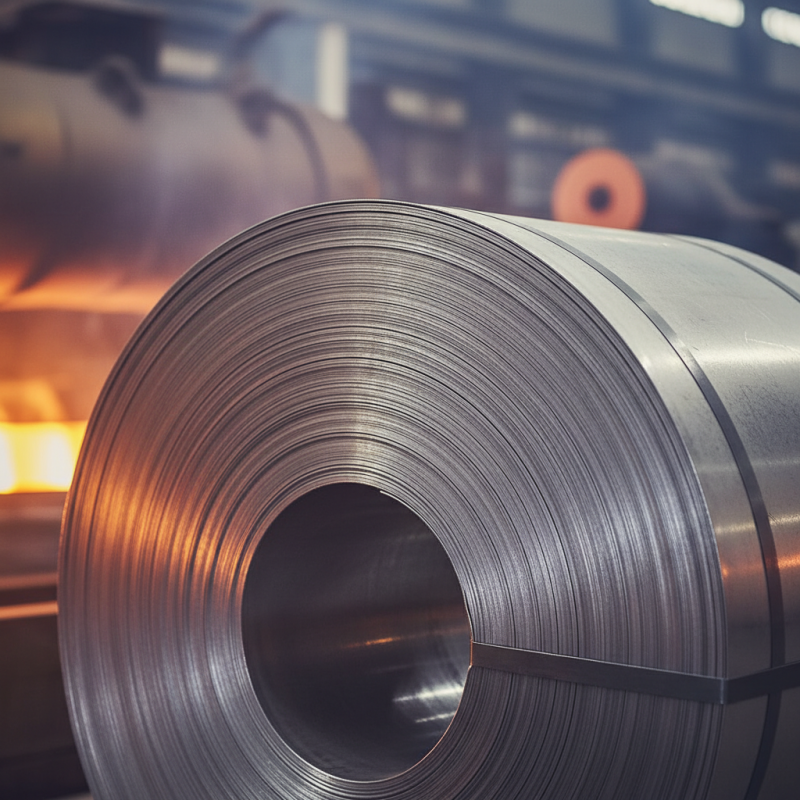
Overview of 310s Stainless Steel: Composition and Properties
310s stainless steel is a high-alloy material, known for its excellent resistance to oxidation and corrosion. This alloy contains significant amounts of chromium and nickel, typically around 24% and 19%, respectively. These elements enhance its strength and resistance to extreme environments. The addition of silicon also improves its resistance to high temperatures, making it suitable for applications in heat exchangers, furnace parts, and kilns.
One interesting aspect of 310s stainless steel is its mechanical properties. It can withstand high-stress conditions without losing its structural integrity. Data from industry reports indicate that 310s maintains excellent toughness even at cryogenic temperatures. This makes it ideal for specialized applications in the aerospace and petrochemical industries. However, despite these advantages, it can be susceptible to certain forms of stress corrosion cracking in some environments, emphasizing the need for careful selection based on the application.
The welding characteristics of 310s stainless steel also deserve attention. While it can be welded using standard methods, achieving optimal results requires attention to detail. Factors such as preheating and post-weld heat treatment can influence its performance. Understanding these nuances is critical for engineers and fabricators to maximize the material's benefits. As with any high-performance alloy, continuous research into its properties is essential to address its limitations effectively.
Heat Resistance of 310s Stainless Steel and Its Performance
310s stainless steel is known for its high heat resistance and excellent oxidation resistance. This alloy contains significant amounts of nickel and chromium. It can withstand temperatures over 1,000°C. This makes it ideal for high-temperature applications.
One key feature of 310s stainless steel is its ability to maintain structural integrity at elevated temperatures. This characteristic is crucial in industries such as petrochemical and power generation. Components like furnace parts and heat exchangers often utilize this material. However, users must be cautious. Extended exposure to high temperatures can lead to oxidation. Regular inspections are essential for maintaining performance.
Tips: Always assess environmental conditions before selecting materials. High heat and corrosive environments can affect longevity. Additionally, consider mechanical stress factors.
Despite its advantages, 310s stainless steel can be brittle at lower temperatures. This aspect requires careful handling during the manufacturing process. Operators should also watch for cracks that may develop over time. Continuing education on best practices in maintenance can help mitigate such issues.
Applications of 310s Stainless Steel in Industrial Settings
310s stainless steel is known for its excellent corrosion resistance and high-temperature strength. These properties make it suitable for various industrial applications. In sectors like petrochemical and power generation, 310s stainless steel is often used in pipelines, heat exchangers, and various components exposed to extreme conditions.
One notable application is in furnace construction. 310s stainless steel can withstand temperatures exceeding 2000°F. This makes it an ideal choice for industrial furnaces where durability is vital. In addition, its resistance to oxidation allows it to perform well in high-temperature environments.
Tip: When selecting materials for high-temperature applications, consider both thermal stability and corrosion resistance.
Another significant use is in industrial kitchens and food processing. 310s stainless steel is easy to clean and maintain. It does not react with acidic foods, ensuring longevity in kitchen environments. Check for adherence to food safety standards in your chosen materials.
Tip: Always verify the specific grade of stainless steel you are using to ensure it meets the necessary safety and performance criteria.
Despite its advantages, remember that 310s stainless steel can be more expensive than other grades. Budgeting for quality materials is crucial in the long run, as they can lead to lower maintenance costs.
Corrosion Resistance Features of 310s Stainless Steel
310s stainless steel is known for its high corrosion resistance. This alloy contains significant nickel and chromium, enhancing its ability to withstand harsh environments. It is ideal for applications in chemical processing, oil refining, and high-temperature settings.
The corrosion resistance features of 310s stainless steel are notable. This material performs well in acidic and salt-rich conditions. It can resist oxidation at elevated temperatures, making it suitable for furnace applications. However, it's essential to consider that while it resists many forms of corrosion, it may not stand up against all chemicals. Testing in specific conditions is advisable.
Tips: When choosing 310s stainless steel, examine the environment. Understand the specific corrosion challenges you may face. If unsure, consult with experts to evaluate your needs. Many applications benefit from this stainless steel, but proper application is crucial. A mismatch can lead to unexpected failures. Always ensure compatibility with your intended use.
Comparative Analysis: 310s Stainless Steel vs Other Grades
The 310s stainless steel coil is renowned for its exceptional high-temperature resistance and oxidation resistance. It contains high levels of nickel and chromium, which enhance its durability. Compared to other stainless steel grades, 310s notably excels in harsh environments. For instance, the oxidation resistance of 310s can withstand temperatures up to 1,200 degrees Celsius. This makes it ideal for applications in furnace construction and heat exchangers.
In a comparative analysis, 310s stainless steel stands apart when contrasted with 304 and 316 grades. According to a report by the International Stainless Steel Forum, 310s offers superior resistance to both oxidation and carburization. While 304 stainless steel performs well in mildly corrosive settings, it lacks the high-temperature capabilities of 310s. Similarly, grade 316 is better suited for marine environments but does not match the heat resistance of 310s. This differentiation is crucial for industries requiring materials that endure extreme conditions.
Though 310s is highly durable, it is essential to consider its cost implications. The high nickel content makes it more expensive than other options. This can be a barrier for some manufacturers. An analysis of industry trends indicates that while 310s offers unparalleled performance, the return on investment must be carefully evaluated. It’s important for engineers and manufacturers to weigh these factors when selecting materials for specific applications.
What is 310s Stainless Steel Coil and Its Applications? - Comparative Analysis: 310s Stainless Steel vs Other Grades
| Grade | Corrosion Resistance | Temperature Resistance (°C) | Applications |
| 310s Stainless Steel | Excellent | 1000-1100 | High-temperature applications, pressure vessels, and chemical processing |
| 304 Stainless Steel | Good | 870 | Food and beverage processing, kitchen equipment, and storage tanks |
| 316 Stainless Steel | Very Good | 870 | Marine environments, pharmaceutical equipment, and chemical processing |
| 321 Stainless Steel | Good | 900 | Aerospace, thermal processing, and exhaust systems |
